Hawaii launches Hawaiian Estuaries Viewer, first statewide public map to protect estuaries
Hawaiʻi Office of Planning and Sustainable Development launched the first statewide estuary map, highlighting Kealakekua and Honuʻapo and noting more than 120 fish species depend on these sites.
The Hawaiʻi Office of Planning and Sustainable Development introduced the first statewide, publicly accessible map of Hawaiʻi’s estuaries, a tool officials say will strengthen protection of irreplaceable estuary ecosystems. The Office framed the Viewer as a resource to help safeguard habitats that support cultural practices and local fisheries.
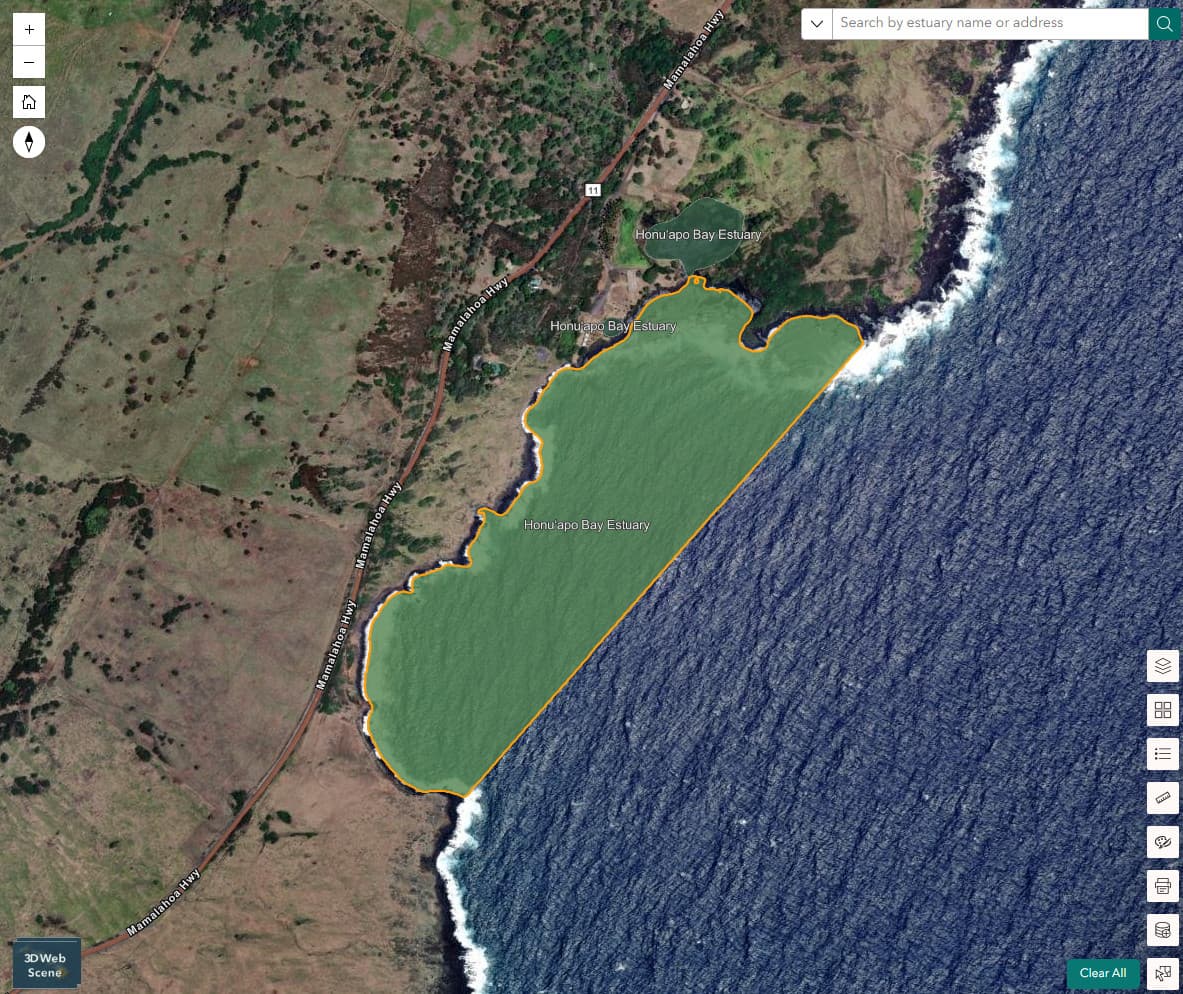
The interactive Viewer covers estuaries across Hawaiʻi, defined as places where fresh water from streams and springs meets salt water from the ocean, and includes examples such as Kealakekua Bay and the Honuʻapo Bay Estuary as visual previews. The Office presented the map as statewide in scope and described estuaries as crucial local places that provide nurseries for marine and freshwater fish and habitat for native and endemic waterbirds.
The Viewer is the product of a partnership among the Hawaiʻi Office of Planning and Sustainable Development, the Coastal Zone Management Program (OPSD‑CZM) and the Department of Land and Natural Resources, Division of Aquatic Resources (DLNR‑DAR). Officials say the partnership built the Viewer to give planners, managers and community members place-based information tied to specific estuary sites.
State officials outlined core features of the platform: the interactive map shows estuaries and their key features, offers search tools, place-based details, and even 3D viewing 'for a more immersive look at each site.' The Office positioned those features as practical tools for on-the-ground decision-making about coastal uses, restoration and cultural stewardship.

The Office emphasized ecological and cultural stakes in its announcement: "These rich, productive ecosystems support cultural practices, provide nurseries for marine and freshwater fish, and offer vital habitat for native and endemic waterbirds," the Office stated. The Office added a numerical underscoring of that reliance: "More than 120 fish species rely on Hawaiian estuaries during their life cycles." The Office wrote, "The Hawaiian Estuaries Viewer strengthens our ability to protect these irreplaceable ecosystems, ensuring that Hawaiʻi’s unique coastal habitats, native species and cultural practices can thrive for generations to come."
The release leaves several operational questions unanswered for practitioners on Hawaiʻi Island and statewide: the Office has not provided a public link or URL to the Viewer in the materials excerpted here, no contact names or spokespersons were listed, and technical details such as data sources, update cadence, funding and terms of use were not included in the announcement. Officials presented the Viewer as a stewardship tool; next steps for training, outreach and specific management actions tied to the map were not specified.
As a first statewide public map of estuaries, the Viewer is being positioned by the Office, OPSD‑CZM and DLNR‑DAR as a new baseline for planning and protection of places from Kealakekua to Honuʻapo, with the Office urging that these landscapes be managed so cultural practices and native species can endure.
Sources:
Know something we missed? Have a correction or additional information?
Submit a Tip