Hawaii Lawmakers Hold Hearings on HB 2505 to Close Mental-Health Gaps
Rep. Adrian Tam says HB 2505 would let community mental-health outpatient programs prepare court certificates to speed treatment for people cycling through jail, Hawaii State Hospital and the streets.
State Rep. Adrian Tam of Waikiki told lawmakers HB 2505 would “connect people to help as quickly as possible, particularly those who are not in a mental state to seek treatment on their own or lack a guardian to do so, and to avoid placing the responsibility solely on psychiatrists and APRNs amid an ongoing health care worker shortage.” The bill would expand who can prepare the court certificates required to place someone into court-ordered treatment.
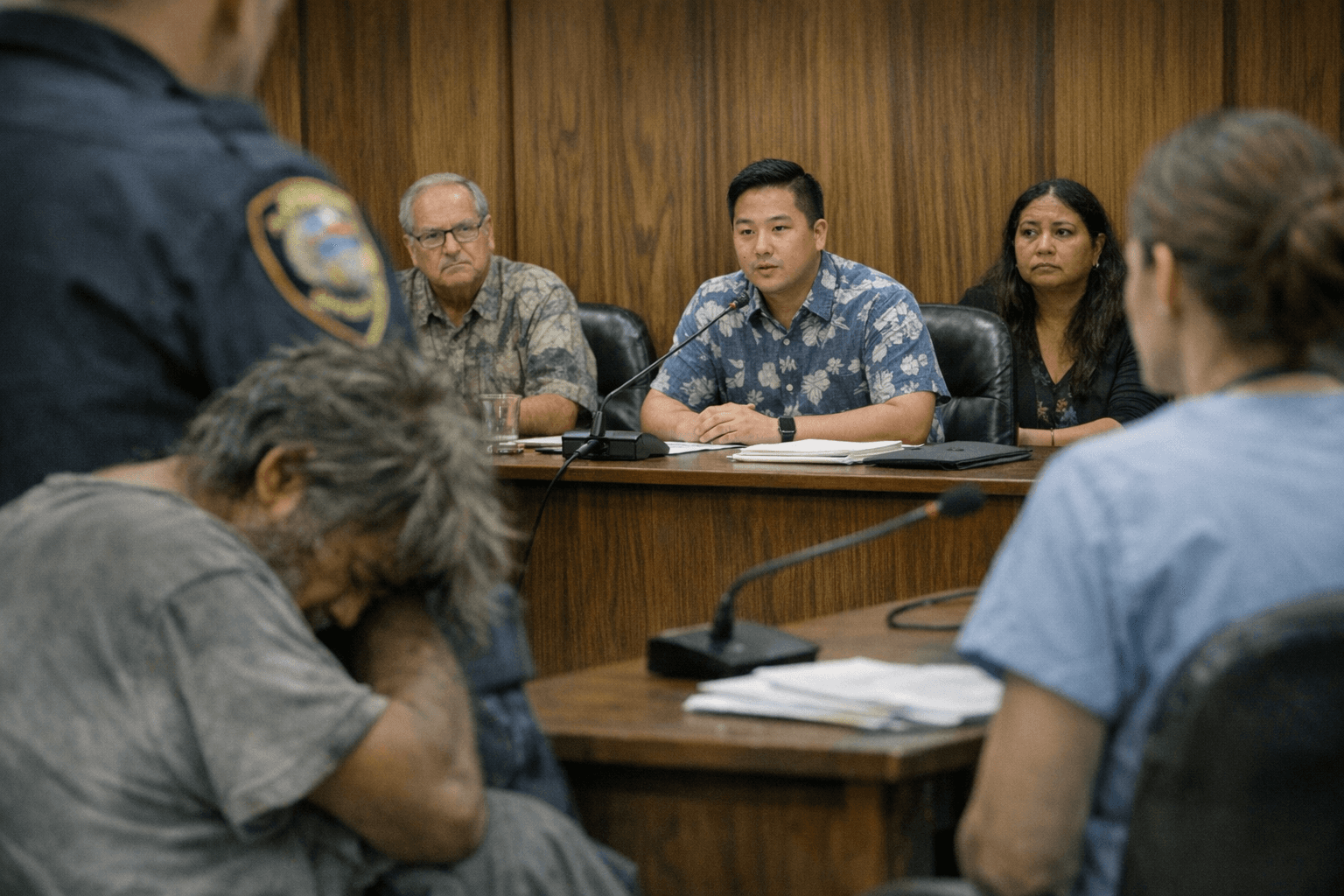
HB 2505, discussed in hearings that lawmakers held and advanced for further discussion on March 2, 2026, would authorize community mental health outpatient programs to prepare those certificates, a task current law largely limits to advanced practice registered nurses on crisis teams. Some lawmakers pushed back at the March 2 session, arguing that even when defendants are repeatedly found unfit to stand trial, few are being placed into court-ordered treatment, creating questions about whether the bill would fix placement and capacity problems.
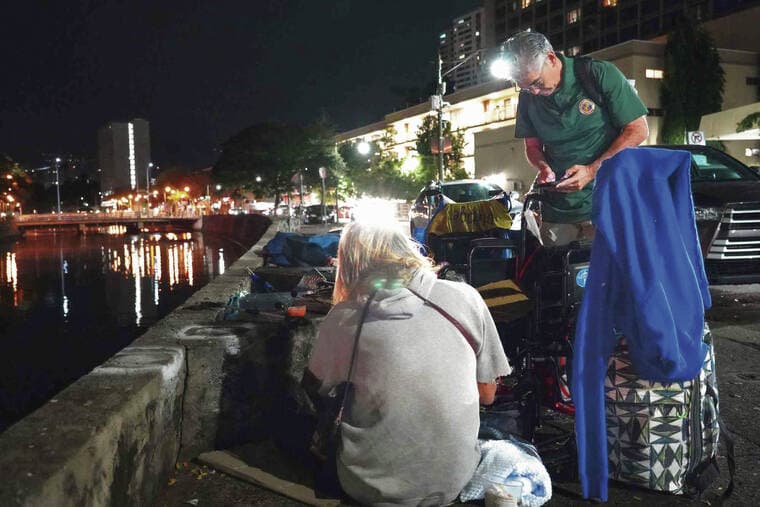
The debate was framed against outreach work on Oahu and in Honolulu’s Chinatown. Photographs and coverage show Hawai‘i Health & Harm Reduction Center workers Shannon Gu and Christina Wang gathering information from Thuy Truong and Salote-Nauleo during a Point in Time Count in Chinatown in 2024, and City Director of Homeless Solutions Roy Miyahira conducting surveys during the January count. Coverage uses the phrase “revolving door” to describe frequent cycling of people between jail, Hawaii State Hospital and the streets as lawmakers weigh community-based certificate authority against systemic gaps.
Corrections system failures and a separate court settlement sharpened the urgency. A class action lawsuit filed in 2019 prompted national experts to inspect Hawaii correctional facilities and produce a report described in news coverage as calling conditions for mentally ill inmates “atrocious.” Department of Corrections and Rehabilitation Director Tommy Johnson told lawmakers the agency plans to increase mental health staffing and “experiment with some new tactics in an effort to reduce the number of suicides.” AP reporting says DCR is seeking more than $2.6 million to hire nearly three dozen new health care workers as part of settlement terms; elsewhere AP states the terms include 35 additional positions and $2.7 million next year. Romey Glidewell, DCR health care division administrator, testified to the House Finance Committee that the proposed hires would include six psychiatrists, nine nurse practitioners with mental health expertise, and 18 registered nurses, a breakdown that sums to 33 positions and does not match the 35 figure reported.
Parallel legislative reforms surfaced during testimony and opinion pieces. Senate Bill 847 would grant trained psychologists limited prescriptive authority; past Hawaii Psychological Association president Nancy Sidun, Psy.D., argued in an op-ed that prescribing psychologists have improved access in federal systems and seven other states and that “research confirms prescribing psychologists are as safe and effective as psychiatrists.” Sidun’s piece included an example of a mother whose child waited four months for ADHD medication and a colleague’s sister who “committed suicide while waiting for psychiatric medication.” Civil Beat commentary framed the problem this way: “In Hawaiʻi, the problem is not a lack of mental health expertise - it is a mismatch between the care people need and how the system allows clinicians to respond.”
Hearings on March 2 advanced discussion but did not resolve the practical questions lawmakers and agencies flagged: the exact statutory language of HB 2505, which community programs would qualify to prepare certificates, the corrected tally and funding request for DCR hires, and whether court-ordered placement rates will change if certificate authority is broadened. How the Legislature resolves HB 2505, the DCR funding requests tied to the 2019 settlement, and SB 847 will determine whether Hawaii moves toward faster community-initiated treatment or continues with the current patterns that advocates say leave people cycling among jail, Hawaii State Hospital and the streets.
Know something we missed? Have a correction or additional information?
Submit a Tip