Hazard Community and Technical College details programs, services, outcomes within KCTCS
Hazard Community and Technical College reported a sharp shift to online learning and mixed student outcomes, affecting access and transfer pathways for Perry County residents.
The proportion of Hazard Community and Technical College students enrolled in online-only classes rose from 29% in FY19 to 47% in FY23, a shift that reshapes how residents access higher education and workforce training in Perry County and the surrounding Appalachian region. That move toward online delivery coincides with gains and setbacks in student outcomes that carry policy and budget implications for local leaders.
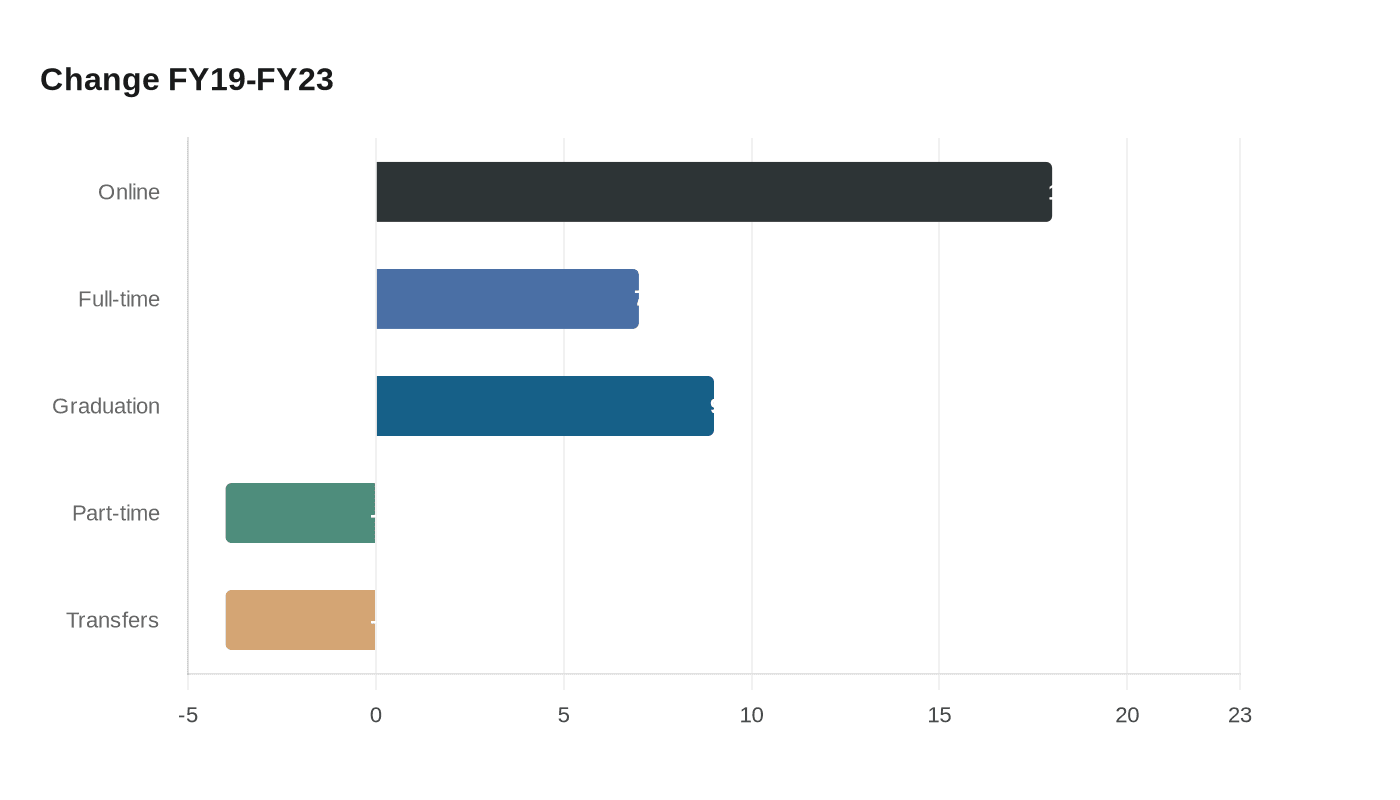
HCTC improved full-time student retention by seven percentage points and increased graduation rates within 150% of allocated time by nine percentage points between FY19 and FY23. At the same time, part-time retention fell four percentage points and the share of associate degree completers transferring to four-year universities declined from 53% in FY19, when HCTC ranked first among KCTCS colleges for transfers, to 49% in FY23, when it ranked seventh. "The proportion of HCTC student headcount enrolled in online-only classes rose from 29% in FY19 to 47% in FY23 as shown in Figure 4," the college materials state; another summary notes the combined retention, graduation, and transfer shifts.

HCTC operates a five-campus network to expand access across Hazard and the counties of Perry, Breathitt, Leslie, and Wolfe, with the main campus at One Community College Drive, Hazard, KY 41701. Main college telephone contact is (606) 436-HCTC and a toll-free line is (855) 6GO-HCTC. HCTC describes the Hazard campus as "the central location and houses institutional services and core programs."
Student support and campus services are a central focus. HCTC materials say, "Supporting HCTC students every step of the way" and "At HCTC, your success is our number one priority." The college lists Deronda Mobelini as Chief Student Services Officer, phone (606) 487-3252, and Scott Gross as Director of Recruitment and Student Engagement, phone (606) 487-3528. Ombudsman services are available across sites; Nena Eddington is listed as General Student Ombudsman, phone 606-487-3311, email nena.eddington@kctcs.edu, office Room 207B FFC, First Federal Center, Hazard Campus. Jama Griffie is listed as Dual Credit Student Ombudsman with phone 606-487-3203 and email jama.napier@kctcs.edu.
Wraparound supports include Success Coaches who "provide broad wraparound services such as tutoring, technology assistance, and connections to other assistance programs and opportunities for which students may be eligible." The college also highlights health and wellness leadership: "HCTC recognizes the importance of health in our service area. The college is committed to providing information and resources to students, staff, and faculty. HCTC leads our community in addressing the health and lifestyle of the population." HCTC lists a Food Pantry heading but published materials did not provide specific contacts or hours; the Behavioral Intervention Team is listed by heading with no operational details in the materials released.
HCTC is part of the Kentucky Community and Technical College System, which provided shared services including ERP, LMS, SIS, legal support, financial aid systems, insurance, accounting, and student services support. KCTCS charged HCTC $2.7 million in FY24 for those system services. The charge and the lack of granular line-item detail raise questions about transparency and budget impact at the local level.
For Perry County residents, the changes mean broader access through online options but also new challenges: broadband and student supports will influence who benefits, part-time students may need targeted retention efforts, and local employers and policymakers should monitor transfer and completion pathways. HCTC contact points above can connect students to services; community leaders will need clearer budget and service breakdowns as decisions about program priorities and regional workforce training evolve.
Sources:
Know something we missed? Have a correction or additional information?
Submit a Tip