Heat and withdrawals reshape French Open as Djokovic chases history
Heat drove the first-day story at Roland Garros as temperatures topped 30C, while Carlos Alcaraz and Arthur Fils withdrew and Novak Djokovic pursued a record 25th major.

Roland Garros opened under a punishing sun, with fans in Panama hats streaming into Stade Roland Garros as a violin version of Coldplay’s Viva la Vida drifted across the grounds and temperatures were expected to climb above 30 degrees Celsius. The scene looked more Riviera than clay-court grind, but the heat carried real consequences: it threatened player recovery, complicated scheduling and raised the strain on fans packed into the stands for the start of a two-week Grand Slam in Paris.
The tournament arrived with its draw already reshaped. Carlos Alcaraz, the twice-champion who lifted the Coupe des Mousquetaires in 2024 and 2025, had withdrawn with a wrist injury, missing Roland Garros for the first time since 2021. French hope Arthur Fils also pulled out after a hip injury suffered in practice at the Rome Masters earlier in May, and Dutch lucky loser Jesper de Jong stepped into his place. Those withdrawals thinned the top end of the men’s field and changed the early path for contenders trying to navigate one of tennis’s most demanding events.
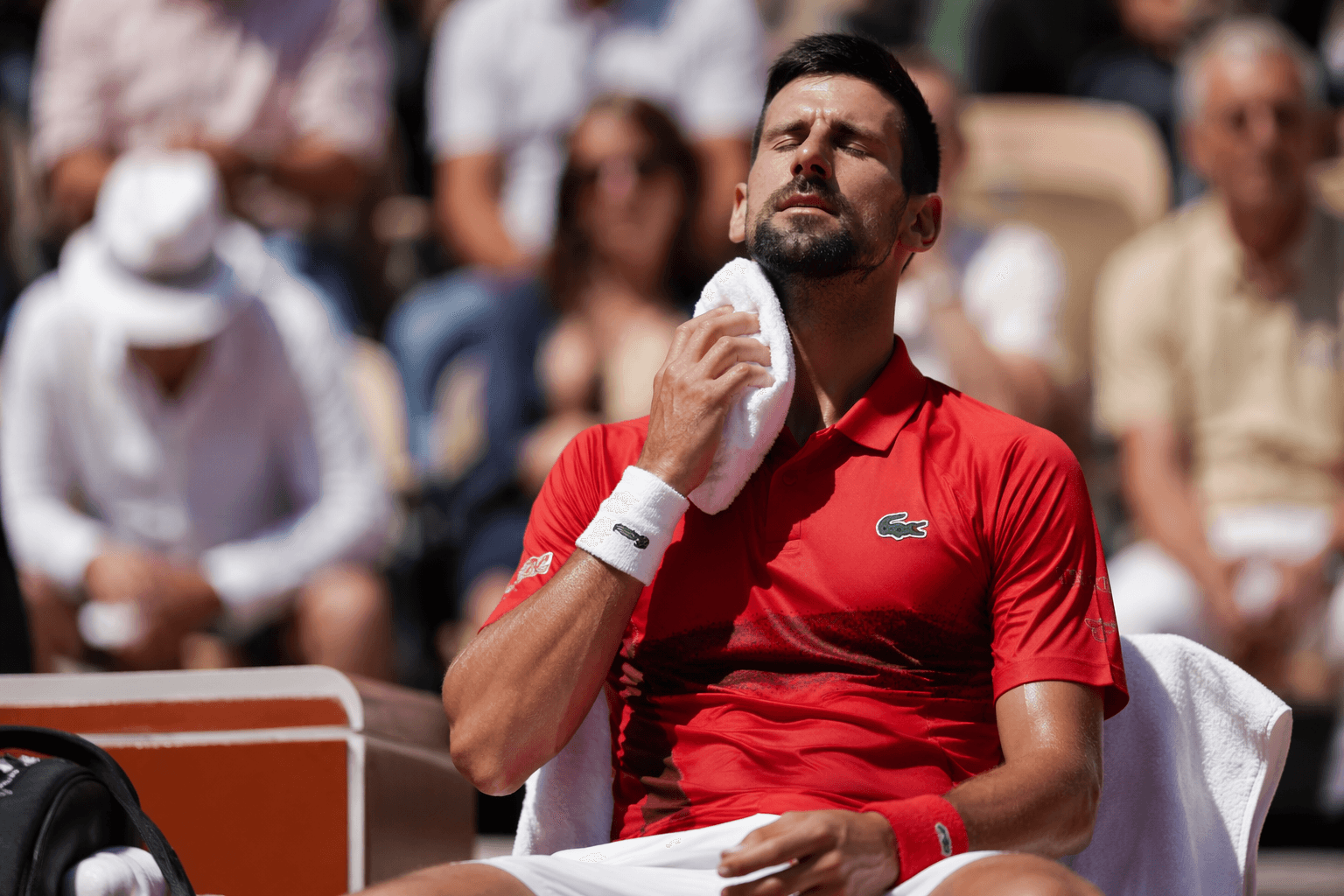
The competitive picture still remained loaded. Jannik Sinner entered as the heavy favorite on the men’s side, while Novak Djokovic was due later in the day against Giovanni Mpetshi Perricard in pursuit of a record-breaking 25th Grand Slam title. Other opening matches included Karen Khachanov against Arthur Gea and Belinda Bencic against Sinja Kraus, with Mirra Andreeva also scheduled to begin her campaign in the women’s draw. The women’s competition looked more open, and the absence of some familiar names gave the first week an unsettled feel before the tournament had fully settled into its rhythm.
That backdrop made the event as much an institutional test as a sporting one. Roland-Garros said opening-week daily capacity had been increased to 20,000 spectators, and 80,000 tickets had already been sold for the first five days. The 2026 prize fund rose to €61.723 million, with the men’s and women’s singles champions each set to earn €2.8 million. Yet the louder story on the opening day was climate pressure: elite tennis was being staged in conditions that tested bodies, altered tactics and forced another look at how marquee tournaments adapt when heat becomes part of the competition itself.
Andreeva offered the clearest early answer on court. She beat Fiona Ferro 6-3, 6-3, extending a clay season that had already made her a constant threat. It was her 16th clay-court win of 2026 and her 12th career victory at the French Open, a reminder that even as the weather and withdrawals reshaped the event, the players best able to absorb the conditions were the ones most likely to keep the tournament’s center of gravity.
This article was produced by Prism’s automated news system from verified source data, official records, and press releases, then run through automated quality and moderation checks before publishing. The system is built and supervised by the people who set the standards it runs under. Read our full AI policy.
Did this article answer your question?
.jpg&w=1920&q=75)