Heat wave at French Open changes clay court play, tests fans
Heat at Roland Garros reached 33 C as players chased ice bags and fans ducked sprinklers on the opening days.

The French Open barely had time to settle in before the heat began reshaping the tournament. Temperatures at Roland Garros climbed to 33 C, or 91 F, during the opening two days of play, a sharp departure from the weather usually expected in late May in Paris.
That kind of heat did not just raise discomfort levels. It changed the court itself. The clay played faster and drier, altering the pace of matches and forcing players to adjust to conditions that felt unlike a normal Paris spring. Between changeovers, players used ice bags around their necks to stay cool, and several said the tournament felt closer to the extreme conditions they had experienced at the Paris Olympics, even though those Games were held in a different season.
The effect reached deep into match rhythm and concentration. Iga Swiatek said the conditions were different from the Olympics because the balls were not the same, a reminder that heat does not affect every surface and piece of equipment in the same way. Daria Kasatkina said the matches became more up and down because focus could disappear suddenly when the body started to overheat. The forecast called for the hot spell to last through the first week, leaving little immediate relief.
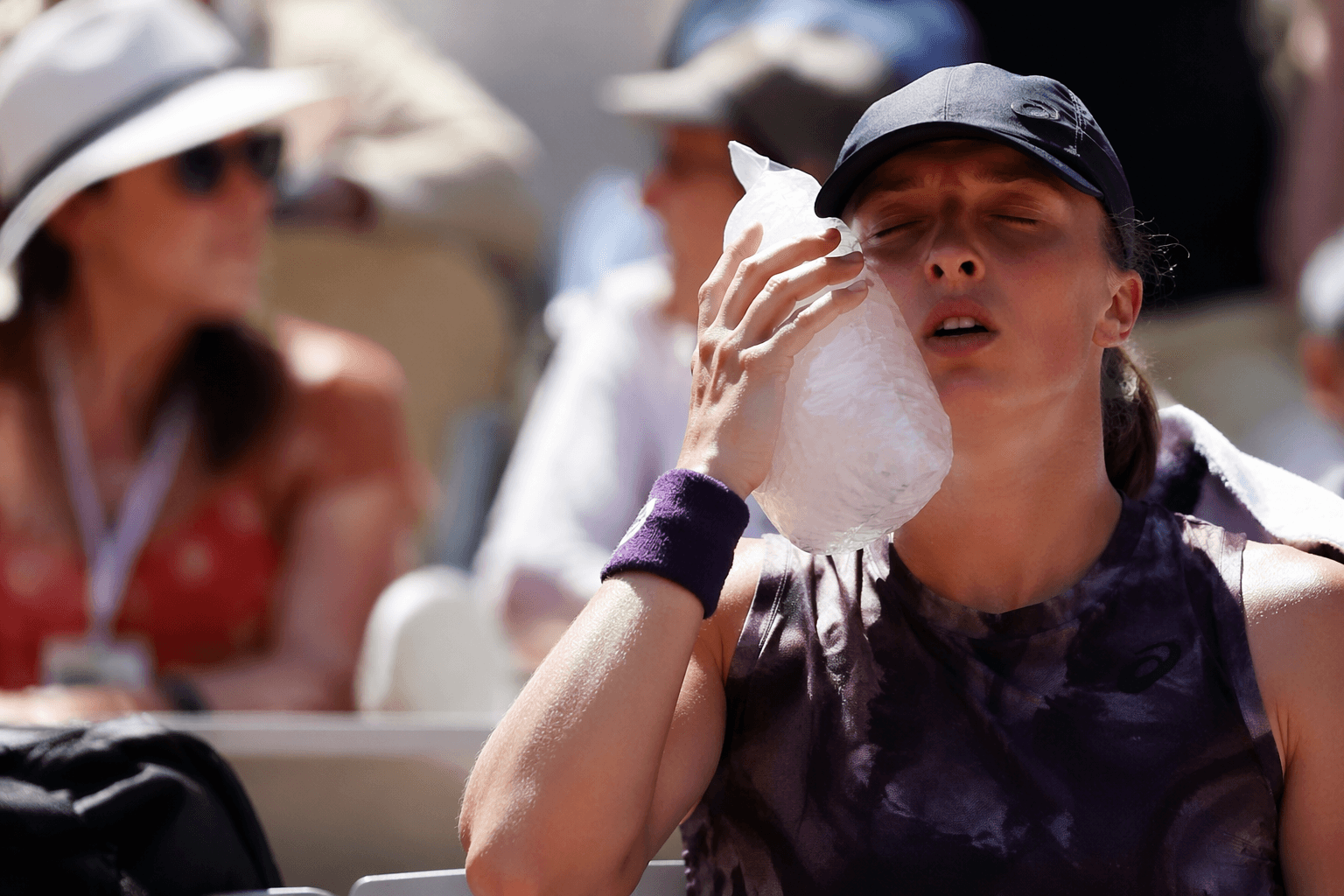
Fans also felt the strain. Spectators gathered under sprinklers to cool off, and when workers watered the courts between sets, they even aimed hoses at fans who were asking to be sprayed down. The scene underscored how a Grand Slam crowd, packed into exposed seating areas and long match sessions, becomes part of the climate problem as well as the tennis spectacle.
The heat was already affecting outcomes and health. Canadian player Gabriel Diallo retired during a match, while Andrey Rublev and Ignacio Buse both needed trainers during a long contest. Buse required a medical timeout and salts and minerals in his water, and Rublev was treated as well. Those moments pointed to the physical cost of competing on clay in rising temperatures, where recovery windows shrink and the margin between survival and collapse can narrow quickly.

Roland Garros has an extreme-weather policy, but the first week showed how demanding a modern tournament can become when heat, clay and a packed schedule collide. The challenge now is not only playing through the weather, but adapting fast enough to protect athletes and spectators as hotter conditions become part of the event itself.
This article was produced by Prism’s automated news system from verified source data, official records, and press releases, then run through automated quality and moderation checks before publishing. The system is built and supervised by the people who set the standards it runs under. Read our full AI policy.
Did this article answer your question?
.jpg&w=1920&q=75)