Heat wave threatens holiday travel as airports protect ramp workers
A heat dome is colliding with the July Fourth travel rush, putting ramp crews on the tarmac in danger as airports race to shield them.

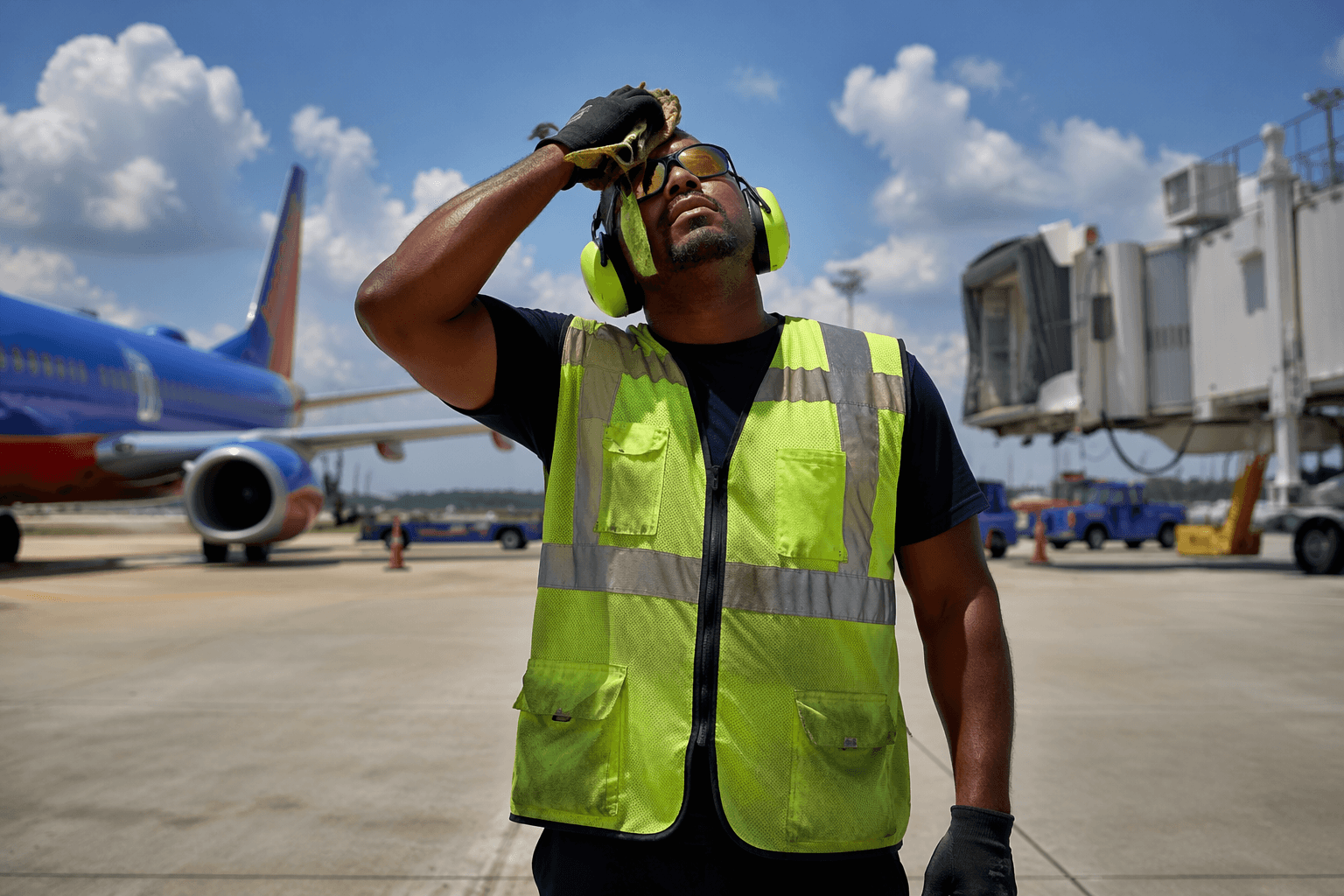
More than half the country was under a heat dome as the July Fourth travel rush began, putting airport ramp crews in the path of record-setting tarmac heat. The workers who load bags, marshal aircraft and keep departures moving are doing that labor in conditions that can turn dangerous in minutes.
Between 2011 and 2022, federal data put the toll at 479 U.S. workers who died from heat exposure, an average of 40 deaths a year. Employers should train workers, provide water and breaks, and use other measures to prevent heat illness and death. OSHA continues to run a National Emphasis Program aimed at outdoor and indoor heat hazards in high-risk industries.
The FAA Reauthorization Act of 2024 included a ramp-worker safety mandate requiring the Federal Aviation Administration to review airport ramp safety and ways to reduce accidents. The FAA held a ramp-worker safety listening session in Washington, D.C., and Notice 8900.749 directed the agency to look for ways to minimize or eliminate ingestion zone and jet blast zone accidents.
In Phoenix, Southwest ground crews were working around 200 flights a day in triple-digit temperatures. Workers at Newark Liberty International Airport and LaGuardia Airport have also pressed for stronger protections, calling for more water, breaks and cooling equipment.
This article was produced by Prism’s automated news system from verified source data, official records, and press releases, then run through automated quality and moderation checks before publishing. The system is built and supervised by the people who set the standards it runs under. Read our full AI policy.
Did this article answer your question?

