Heavy rain, tornadoes trigger flooding across the Midwest
Dry winter soils, fast-rising rivers and a confirmed EF-1 tornado hit the Midwest in sequence, turning one storm pattern into a compound flood threat.
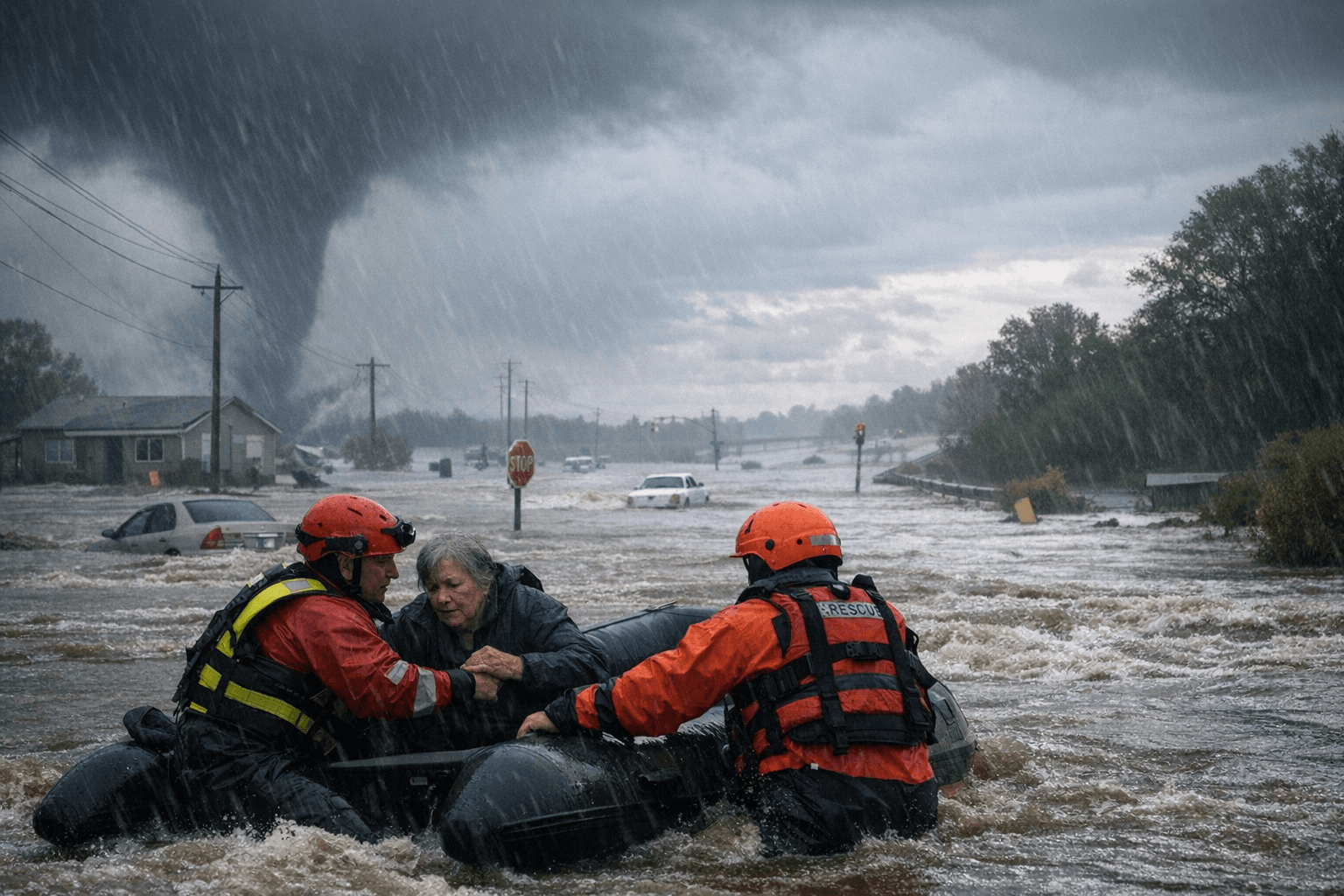
Heavy rain and tornadoes struck the Midwest in rapid succession, and the risk was compounded by what came before: an unusually dry winter, low stream flows and already vulnerable rivers. In Fort Wayne, Indiana, the National Weather Service said the city recorded its 8th driest winter on record, then 2 to 3 inches of rain fell on March 31 over parts of the Maumee River basin and the St. Joseph River basin, sending rivers up quickly before additional rounds of rain pushed flooding farther across the region.
The same pattern carried into Michigan. The National Weather Service confirmed an EF-1 tornado in Wayne County from the April 4 severe weather system, based on damage patterns, radar data and video evidence. A separate cell in Monroe County was determined to be straight-line wind damage. That storm also dropped widespread rainfall totals of 1 to 3 inches, with localized reports reaching 4 inches, following 5-day rainfall totals of 3 to 5 inches across much of Lower Michigan. The sequence left little time for recovery between hazards, with heavy rain, wind damage and tornado debris all arriving in close order.
Indiana faced its own overnight threat as severe weather moved through, with the National Weather Service issuing a tornado watch for much of the state and a flood advisory for northern and north-central Indiana. The combination underscored how quickly spring systems can overwhelm local response, especially when rising water follows damaging wind and tornado warnings are still fresh in memory.
The broader pattern matters because these outbreaks are not isolated. NOAA’s Storm Events Database tracks storms severe enough to cause deaths, injuries, major property damage or major disruption to commerce, a reminder that the Midwest’s spring weather often becomes an emergency management problem as much as a meteorological one. The Weather Prediction Center’s April 13 hazards outlook also pointed to increased chances of high winds over parts of the Plains and Mississippi Valley, with possible heavy precipitation in the Mississippi Valley and the Ohio and Tennessee valleys. For states already coping with saturated ground, rising rivers and wind damage, the next round of storms could again test drainage systems, river forecasts and the capacity of local crews to move from response to recovery before the next warning is issued.
This article was produced by Prism’s automated news system from verified source data, official records, and press releases, then run through automated quality and moderation checks before publishing. The system is built and supervised by the people who set the standards it runs under. Read our full AI policy.
Did this article answer your question?