Hegseth makes military flu shots voluntary amid training outbreak
Pete Hegseth lifted military flu-shot mandates in April, then a Lackland training outbreak swelled to at least 159 cases and two hospitalizations.

Pete Hegseth’s move to make flu shots voluntary for troops landed just as an influenza outbreak was spreading through Basic Military Training at Lackland Air Force Base, where at least 159 recruits had fallen ill and two had been hospitalized. The clash underscored how vaccine policy, force readiness and trainee safety collided inside the military’s largest training pipeline.
Hegseth signed a memorandum on April 20 making the annual influenza vaccine voluntary for all active-duty and reserve component service members, along with Department of War civilian personnel. The directive ordered services to submit any exception requests within 15 days and pointed to updated guidance from the Assistant Secretary of War for Health Affairs on DoD Instruction 6205.02, the Pentagon’s immunization program. Hegseth said the old requirement reflected “absurd, overreaching mandates” and called the flu shot requirement “not rational.”
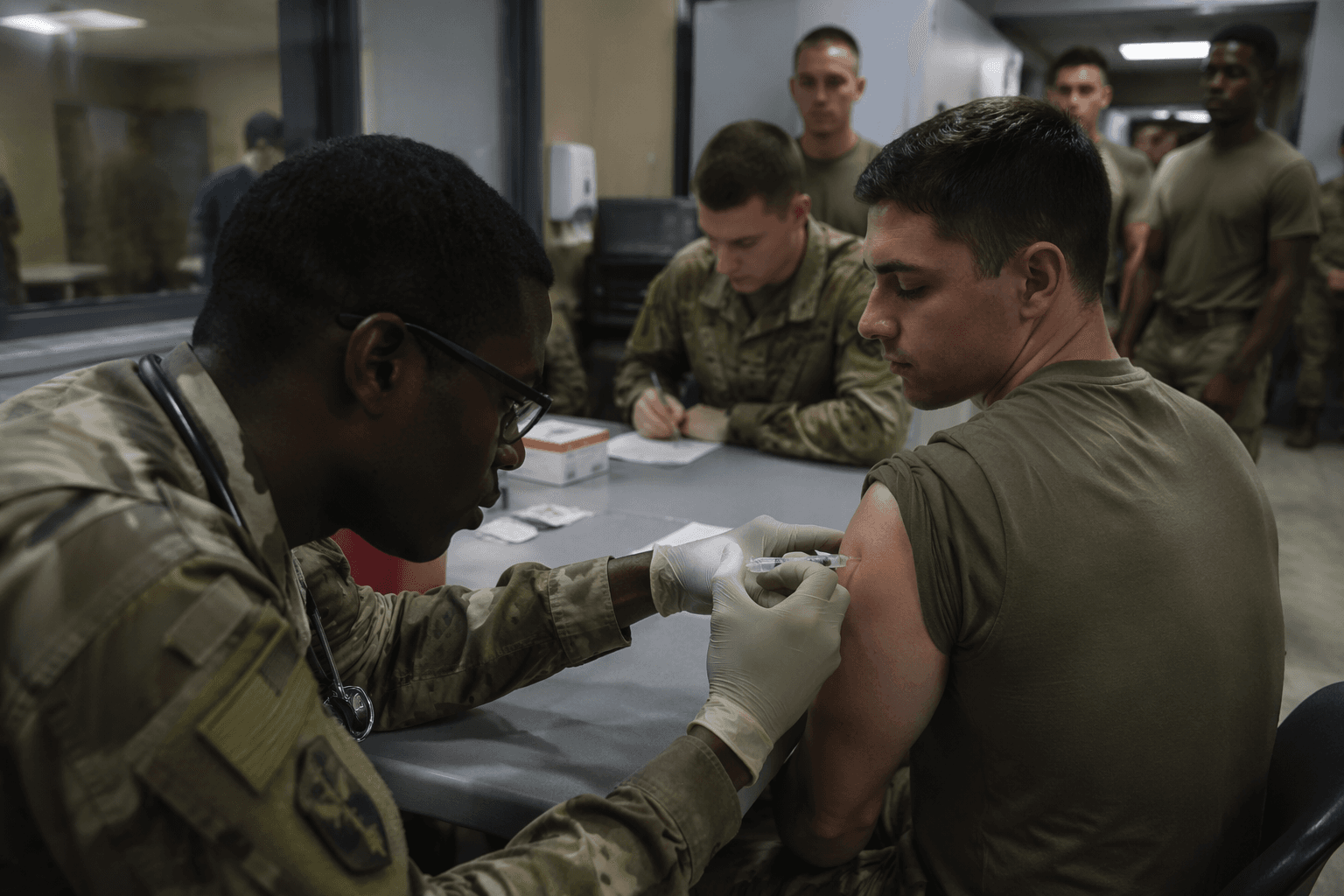
The policy shift fit a wider campaign to roll back vaccine mandates, especially the military’s COVID-19 requirement, and to undo the consequences of earlier enforcement. Hegseth said service members should not be forced to take a vaccine they did not want, even as military health guidance has long warned that seasonal influenza can spread quickly and threaten readiness. The Centers for Disease Control and Prevention still recommends flu vaccination each season for everyone 6 months and older, with rare exceptions.
The warning became more immediate in San Antonio, where the Air Force confirmed a localized outbreak at Joint Base San Antonio’s Basic Military Training at Lackland. By June 18, there were at least 159 known cases among recruits and two hospitalizations, with officials saying the outbreak had been unfolding for about three weeks and could involve more cases than the reported total. Public health teams isolated and treated symptomatic trainees, monitored close contacts and used antivirals such as Tamiflu. Once trainees were cleared, the Air Force said, they would return to training.
The outbreak also drew fresh attention after recruit Keon McDaniel died following a medical emergency on June 12 during his sixth week of basic training. His death remained under investigation at Brooke Army Medical Center. The episode sharpened the stakes of a policy fight that has played out in Washington, where the Pentagon’s rollback of vaccine rules has continued even as military medicine still treats flu vaccination as one of the most effective tools for limiting serious infection and mission risk.
The Department of Defense Education Activity had not immediately said whether the change would alter flu-shot requirements for its own staff and students. The policy now leaves military leaders balancing individual choice against a seasonal virus that can spread fast through barracks, training halls and the force itself.
This article was produced by Prism’s automated news system from verified source data, official records, and press releases, then run through automated quality and moderation checks before publishing. The system is built and supervised by the people who set the standards it runs under. Read our full AI policy.
Did this article answer your question?