Hegseth says Iran still has missiles, softening claims of total destruction
Hegseth first said Iran’s missile program was “functionally destroyed.” A week later, he said Iran was still “digging out” missiles and launchers.

Pete Hegseth is now acknowledging that Iran still has missiles and launchers, a sharp shift from his earlier claim that the country’s missile program was “functionally destroyed.” The contrast has sharpened questions about how much damage the U.S. and Israeli bombing campaign actually inflicted on Iran’s arsenal and how confidently Washington is describing the war’s aftermath.
A week earlier, Hegseth said Iran’s stockpiles were depleted, decimated and ineffective, and that the country had “no air defenses.” He also said Iran’s missiles, missile launchers and drones were being destroyed or shot out of the sky. On April 16, Hegseth said Iran was “digging out” its remaining missiles and launchers, while still insisting the country no longer had the capacity to replenish either its offensive or defensive systems.
That more cautious framing sits uneasily beside U.S. intelligence reporting that has painted a less total picture of the strikes. Intelligence assessments said roughly half of Iran’s ballistic missile launchers were still intact despite weeks of bombardment, and that thousands of one-way attack drones remained in the arsenal. Another intelligence summary said Iran retained thousands of ballistic missiles and could recover launchers from underground storage sites. One report described Iran’s missile force as significantly degraded but still operational.
Those estimates matter because they shape judgments about whether Iran still can retaliate, how quickly it could rebuild, and whether ceasefire or diplomacy efforts are being made on the basis of a realistic battlefield picture. If Iran still has thousands of missiles and enough launchers to recover from hidden sites, then “decimated” means damaged, not eliminated.
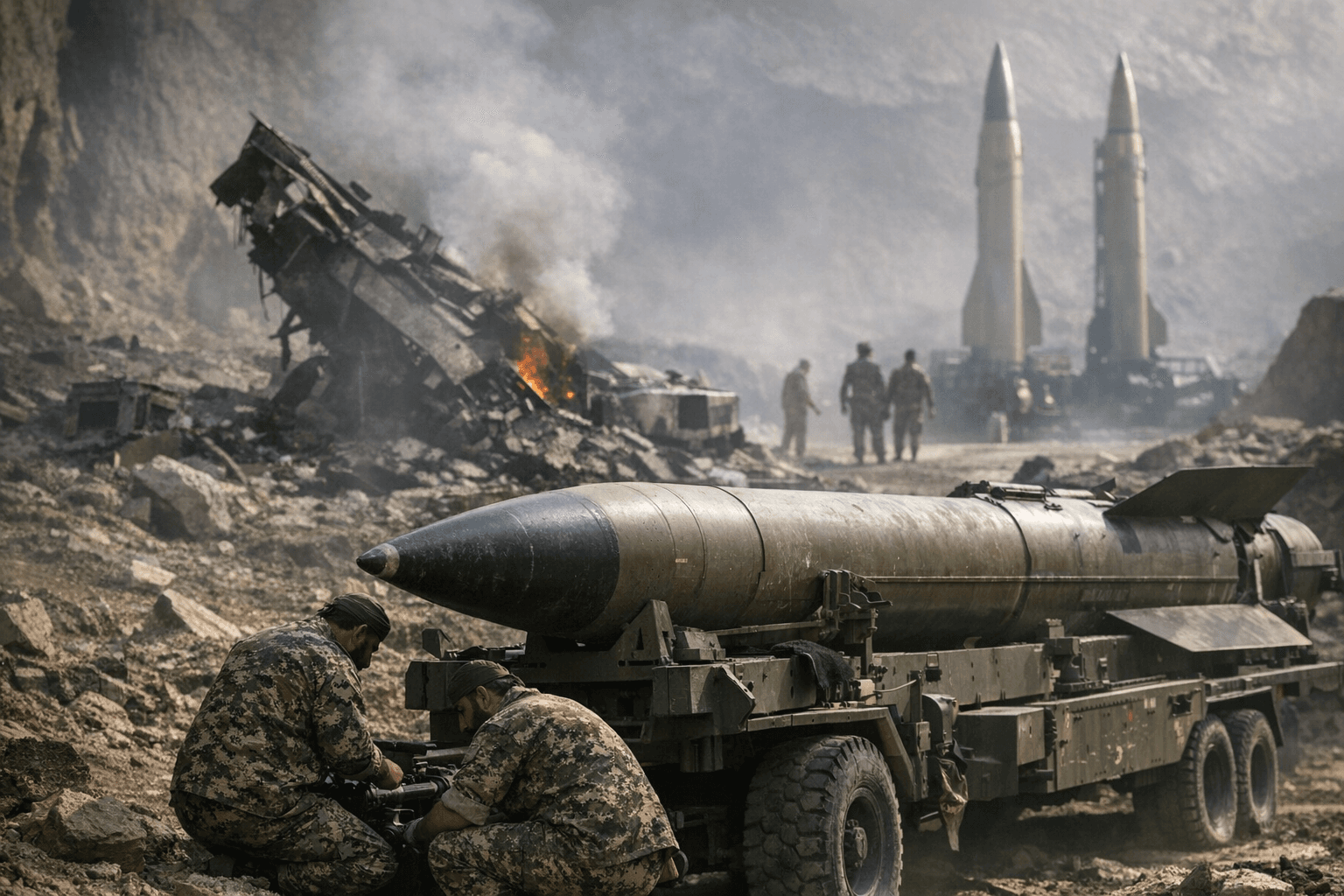
The dispute also goes to credibility. The Trump administration has sought to present the U.S.-Israel campaign, known in recent reporting as Operation Epic Fury, as proof of overwhelming military success. But the conflicting statements from Hegseth and the intelligence picture suggest the damage to Iran’s arsenal may be serious without being decisive. Some reports have placed Iran’s pre-conflict missile stockpile at around 2,500, with more than 1,000 medium-range ballistic missiles still left. That would leave Iran weakened, but not stripped of the ability to threaten the Middle East, including shipping lanes near the Strait of Hormuz.
For policymakers, the gap between triumphal rhetoric and intelligence reporting is not a semantic problem. It is the difference between declaring an enemy broken and recognizing an adversary that still has enough firepower to recover, retaliate, and shape the next phase of the conflict.
This article was produced by Prism’s automated news system from verified source data, official records, and press releases, then run through automated quality and moderation checks before publishing. The system is built and supervised by the people who set the standards it runs under. Read our full AI policy.
Did this article answer your question?

