Hegseth tells West Point graduates they’re ready for war, rejects woke ideology
Pete Hegseth used West Point’s rainy graduation to attack “woke” ideology, even as the Army said it had met its recruiting goal months early.

Pete Hegseth turned West Point’s graduation stage into a broader argument about the military itself, telling the Class of 2026 that the Army was built for combat, not identity politics, during a ceremony held Saturday at Michie Stadium in West Point, New York. The message landed in heavy rain, but the setting was ceremonial and deliberate: 998 cadets completed 47 months of training and were commissioned as second lieutenants before families, commanders and academy leaders.
West Point had scheduled the graduation with gates opening at 7 a.m. and buses beginning at 6:30 a.m., and the academy livestreamed the event on its YouTube channel and the U.S. Department of War website. That public stage gave Hegseth a national audience for remarks that rejected DEI and what he called “woke” ideology in the military, reflecting the Trump administration’s broader effort to strip such ideas from the armed forces.
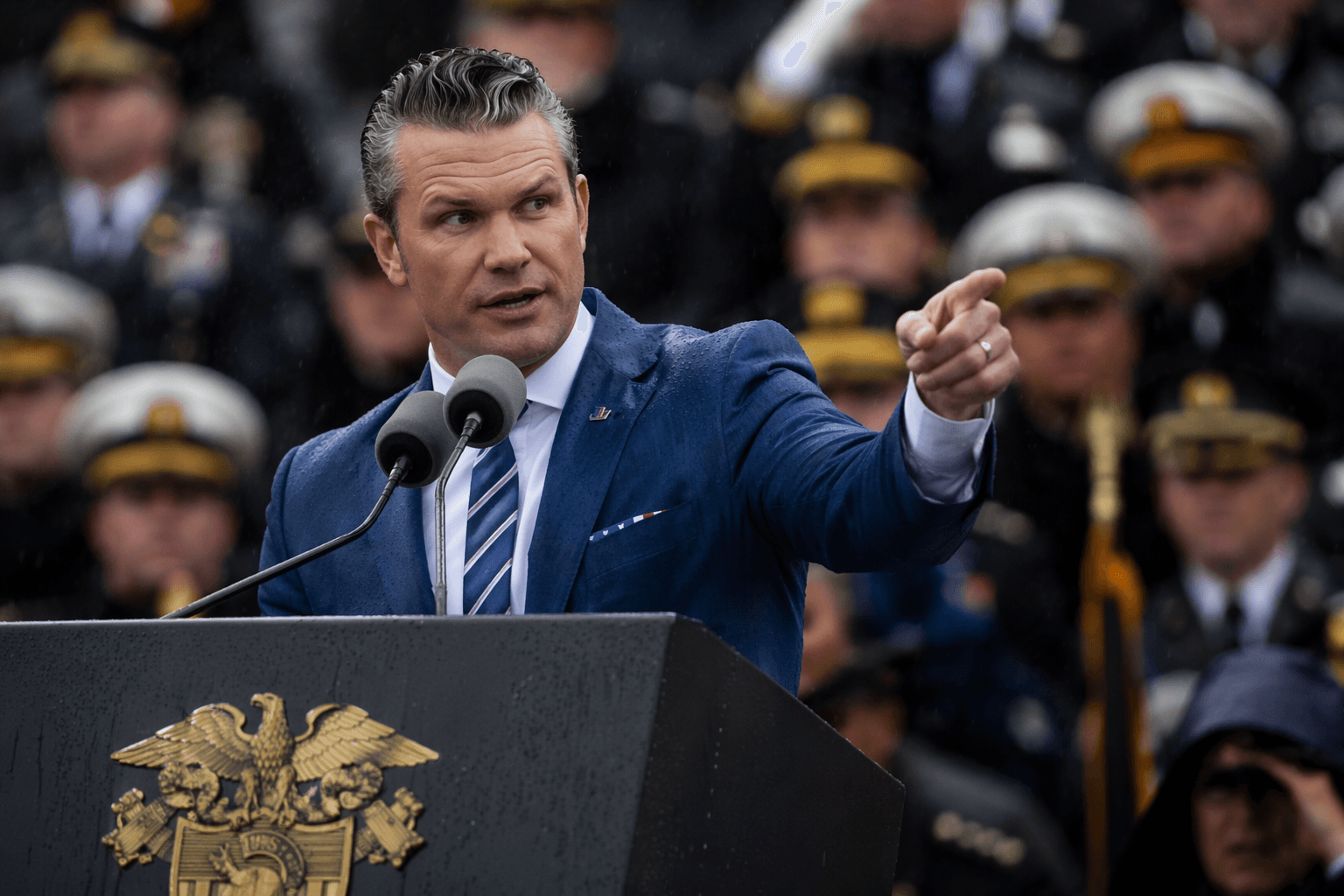
His sharpest line framed the issue as one of battlefield reality, not campus politics. “The battlefield does not grade on a curve, and you can’t throw your pronouns at the enemy,” Hegseth told the cadets, according to coverage of the speech. Multiple outlets also reported that he told graduates they were “ready” for war and that the Army was “not an army of woke,” underscoring how closely the ceremony was tied to a larger ideological campaign.
The Army’s own numbers offered a counterpoint to the rhetoric. On the same day, Army Public Affairs said the service had met its fiscal year 2026 active-duty recruiting goal more than four months early, signing contracts with more than 61,500 future soldiers. That figure complicates any simple claim that ideological purification is the path to strength. The service is already drawing recruits in sufficient numbers, even as Pentagon leaders use one of the military’s most visible traditions to define fitness, merit and readiness in ideological terms.
West Point describes graduation week as the culmination of a 47-month leadership development experience, and for the Class of 2026, that transition was immediate. The speech made clear that Hegseth sees those new officers not just as graduates, but as symbols of a military culture he wants remade around discipline, combat readiness and a narrower definition of service.
This article was produced by Prism’s automated news system from verified source data, official records, and press releases, then run through automated quality and moderation checks before publishing. The system is built and supervised by the people who set the standards it runs under. Read our full AI policy.
Did this article answer your question?

