Heidi Alexander urges Starmer to set timetable amid Labour revolt
Heidi Alexander privately urged Keir Starmer to set a departure timetable as Andy Burnham’s victory fuelled Labour fears that succession planning has already begun.
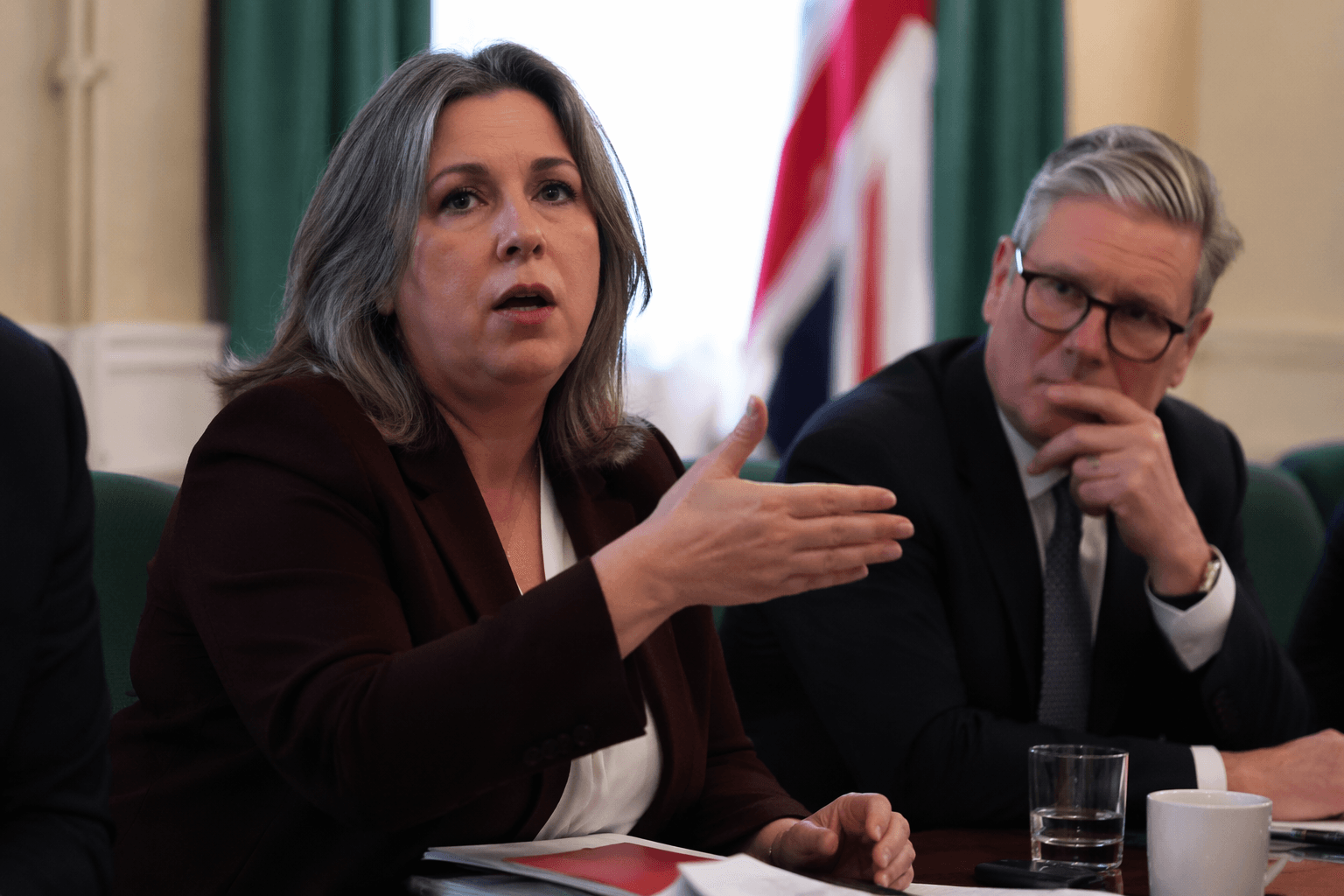
Pressure on Keir Starmer widened into the cabinet on Thursday as transport secretary Heidi Alexander was reported to have privately told him to set out a timetable for leaving office. The intervention landed just as Andy Burnham’s Makerfield by-election win gave his supporters fresh momentum, sharpening a Labour argument that has moved beyond frustration and into open preparation for a post-Starmer era.
A spokesperson for Alexander said the discussion took place in private as part of wider cabinet calls and declined to spell out what was said. But the significance was clear inside Westminster: the issue is no longer simply whether Starmer is under strain, but whether senior figures are trying to manage an orderly transition before the party’s authority fractures further.

Burnham’s camp has been seeking about 200 Labour MPs to back him, close to half of the party’s Commons ranks, a sign of how ambitious the challenge has become. Under Labour rules, a formal leadership contest is triggered only if 81 MPs, or 20% of the parliamentary party, back a challenger. That leaves Burnham’s allies short of the threshold, but still far enough advanced to turn speculation into hard numbers.
The pressure on Starmer has been building since the poor local and devolved election results in May, when more than 70 Labour MPs publicly urged him to step down. Later counts put the total closer to 100, and in some accounts above 95, as MPs openly called for either his resignation or a timetable for it. Starmer has said he would fight any leadership challenge and told the BBC he was elected at the 2024 general election and still had more to do.
Burnham’s path back to Westminster was deliberately created when Labour MP Josh Simons resigned to make room for him in Makerfield, a move that underlined how organised the challenge had become. Burnham won the seat on June 18 with 24,927 votes, 54.8% of the vote, a majority of 9,231 and turnout of 58.75%. That result has now become the focal point of Labour’s internal crisis, because a return to the Commons would clear the way for Burnham to stand if enough MPs decide Starmer’s position has become untenable.
For Starmer, the fight is about more than one by-election or one private conversation. It is about whether Labour can still present a disciplined government in waiting, or whether the party has already started to behave like a movement planning its next leader in plain sight.
This article was produced by Prism’s automated news system from verified source data, official records, and press releases, then run through automated quality and moderation checks before publishing. The system is built and supervised by the people who set the standards it runs under. Read our full AI policy.
Did this article answer your question?

