Herzog’s Cave of Forgotten Dreams returns in IMAX restoration
A 32,000-year-old cave gallery is heading back to the screen in 6K IMAX, widening access to art sealed by rock for 20,000 years.

The oldest known figurative art is returning in a format built for spectacle. Werner Herzog’s Cave of Forgotten Dreams is being reissued in a 6K restoration and full IMAX presentations, turning the tightly guarded Chauvet-Pont d’Arc cave into a mass-market event for viewers who will never stand inside the original chamber.
That cave, in the Ardèche region of southern France near Vallon-Pont-d’Arc, holds what UNESCO describes as the earliest-known and best-preserved figurative drawings in the world. Its paintings date to the Aurignacian period, roughly 30,000 to 32,000 years before present, and the cave itself was sealed by a rock fall about 20,000 years ago. That accident of geology preserved a record of human expression older than writing, agriculture or cities.
The modern story began on Sunday, December 18, 1994, when Jean-Marie Chauvet, Éliette Brunel and Christian Hillaire discovered the cave during a private speleological exploration. The site is so carefully protected that access remains tightly restricted, and the restrictions helped drive the creation of the Grand Projet Espace de Restitution de la Grotte Chauvet, a facsimile site and interpretation center designed to let visitors experience an approximation of the original while leaving the cave itself undisturbed. The cave was later inscribed on the UNESCO World Heritage List in 2014.
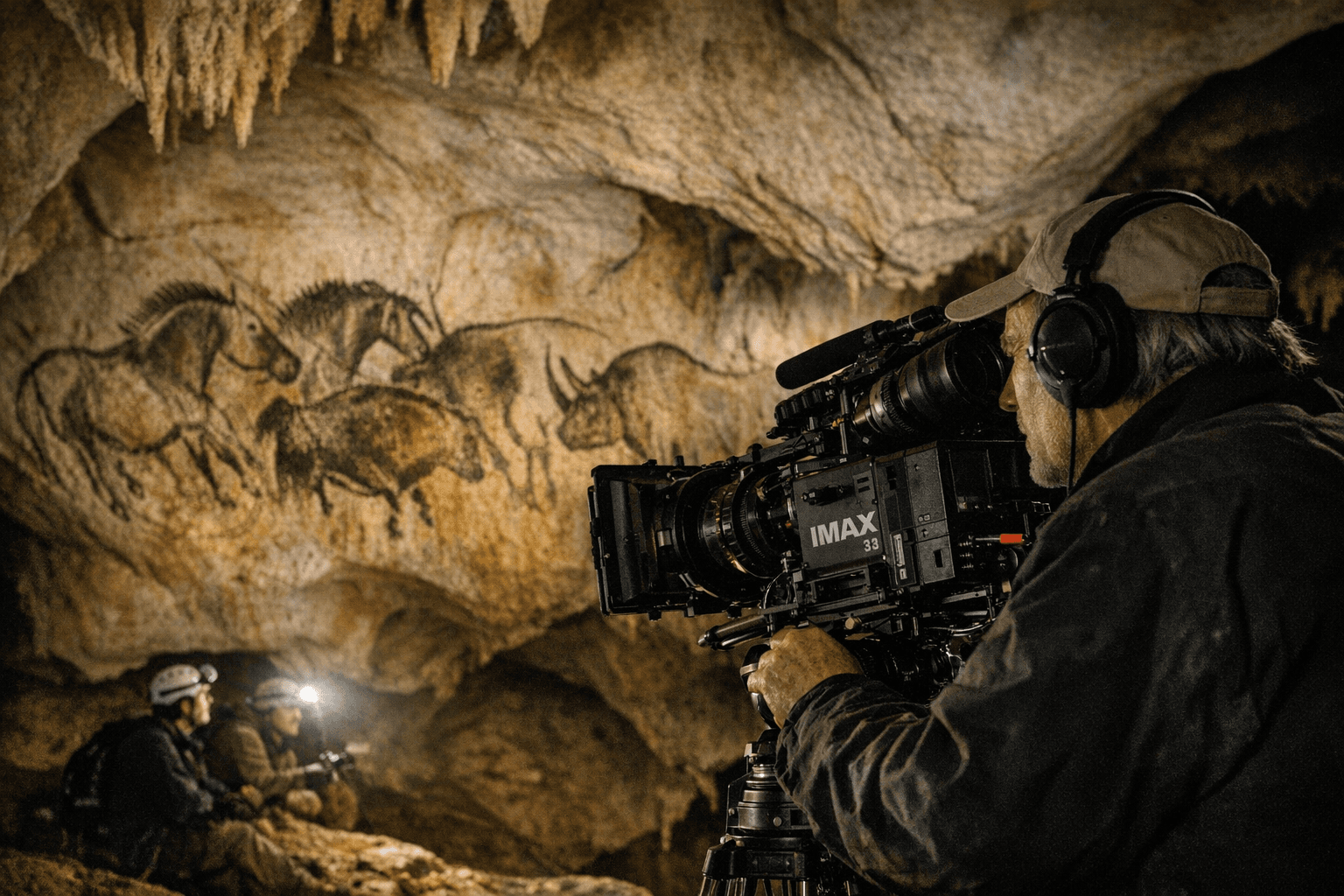
Herzog gained rare access more than a decade after the discovery and turned that visit into Cave of Forgotten Dreams, a 3D documentary that premiered at the Toronto International Film Festival on September 13, 2010 and opened in the United States on April 29, 2011. The film became one of the director’s most striking visual essays, less a travelogue than a meditation on distance, preservation and the fragile fact that the first recorded images in human history survived at all.
The new release changes the terms of access again. IFC is issuing the film as a 6K restoration, while IMAX is presenting it as fully restored for the format and framing it as an expedition into France’s Chauvet Cave, where art began. The upgrade promises greater clarity, depth and scale than the original release, but it also underlines the central tension of the project: technology can widen the audience for humanity’s oldest cultural record, yet it can never fully replace the physical secrecy, silence and scale of the cave itself.
This article was produced by Prism’s automated news system from verified source data, official records, and press releases, then run through automated quality and moderation checks before publishing. The system is built and supervised by the people who set the standards it runs under. Read our full AI policy.
Did this article answer your question?