HHS launches AI system to flag fraud in federally funded health programs
HHS rolled out AERO to scan five years of audit history in all 50 states, while hundreds of grantees sit on overdue filings and unresolved findings.

The Department of Health and Human Services is betting that software can do what years of manual oversight have not: spot fraud, missing filings and recurring weaknesses across the government’s health spending footprint before problems harden into losses.
On May 21, HHS launched AERO, short for Audit Enforcement and Risk Oversight, an artificial-intelligence-led initiative that will review at least five years of single-audit history across all 50 states. The department said it has already sent letters to every state governor and treasurer warning that chronic audit noncompliance, unresolved findings and late submissions will no longer be tolerated.

The scale of the backlog is the reason HHS says it needs a more aggressive system. The department said hundreds of grantees have failed to file required audits, with some reports overdue by more than two years. HHS also said some audit findings have lingered unresolved for three, four or even five years, a sign that the usual review process has not forced enough corrective action.
AERO is meant to sharpen that process, not replace it. HHS said the system will help prioritize oversight and identify cases where money may be at risk, including state Medicaid programs and federal grantees in research, addiction services and other areas. But the promise of machine-assisted enforcement brings its own test: whether an algorithm can separate genuine risk from paperwork noise without sweeping up providers or states that are already struggling to keep up with complex federal rules.
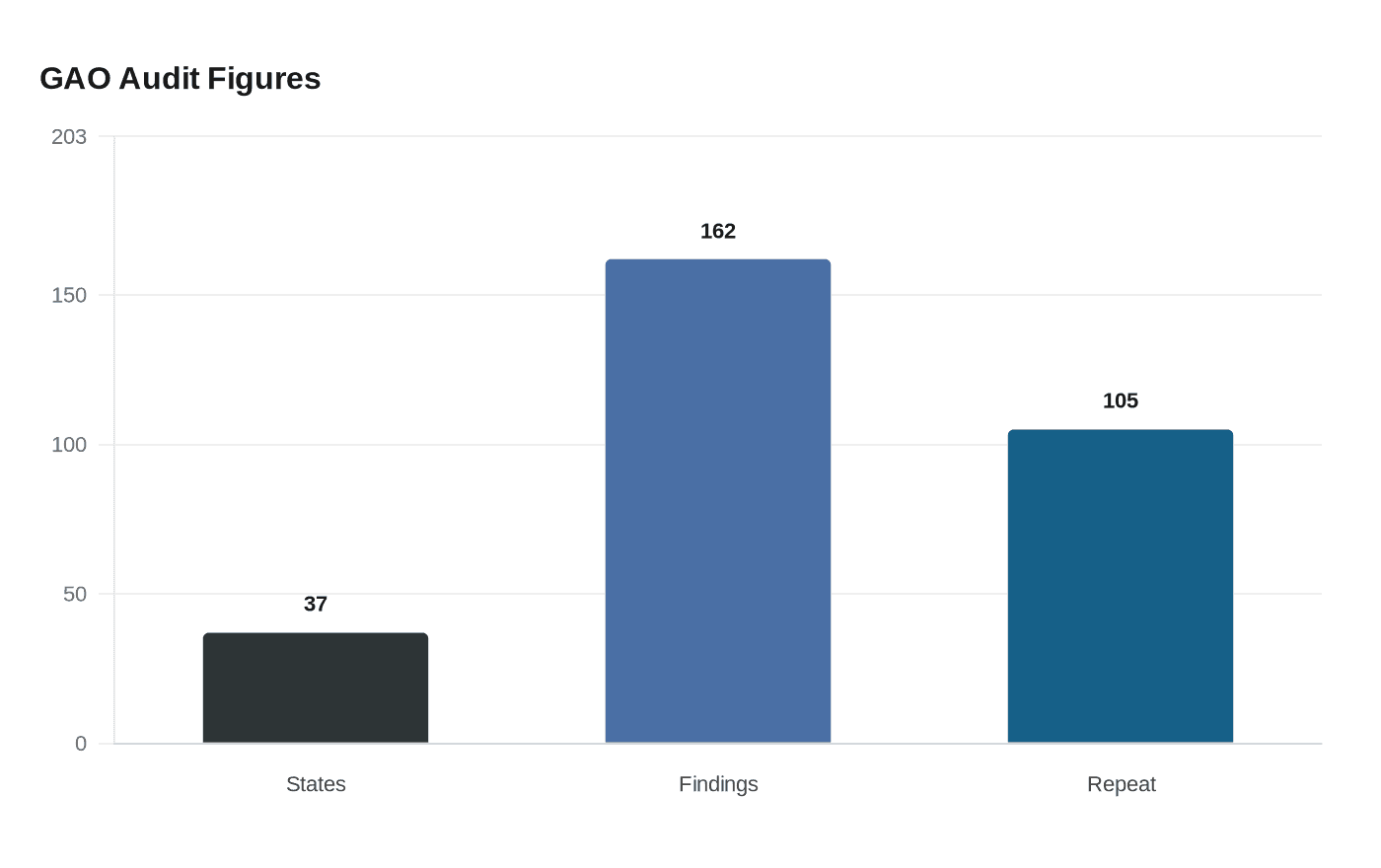
That question matters because the audit system HHS is targeting is the backbone of federal grant oversight. The HHS Office of Inspector General defines a single audit as an organization-wide audit of a non-federal entity’s financial statements and expenditures of federal awards. GAO has said the Single Audit Act requires states and other entities spending $1 million or more in federal awards each year to undergo such an audit, and it found 37 states with 162 TANF audit findings, including 105 that were the same as or similar to prior-year findings.
The enforcement push is not isolated. On May 13, the Centers for Medicare & Medicaid Services imposed a six-month nationwide moratorium on new Medicare enrollment for hospices and home health agencies, saying it was coordinating with Vice President JD Vance’s Anti-Fraud Task Force and would intensify targeted investigations and data analytics during the freeze. Together, the moves show an administration trying to fuse automation with old-fashioned enforcement across health care finance.
Gustav Chiarello, HHS’s assistant secretary for financial resources and chief financial officer, said taxpayers deserve to know their dollars are being spent as intended, and said years of audit reports have documented serious vulnerabilities and failures in oversight. The real test for AERO will be whether it improves accountability without turning algorithmic suspicion into a shortcut for enforcement.
This article was produced by Prism’s automated news system from verified source data, official records, and press releases, then run through automated quality and moderation checks before publishing. The system is built and supervised by the people who set the standards it runs under. Read our full AI policy.
Did this article answer your question?


