High Avalanche Warnings as Storm Triggers Large Slabs Near Loveland Pass
CAIC warns avalanche danger will rise to High (Level 4) across most Colorado mountains as a powerful winter storm piles load on weak layers; large slabs slid in No Name Gulch on Feb. 5.

The Colorado Avalanche Information Center has issued widespread avalanche watches and warnings and says avalanche danger will rise to high, or Level 4 of 5, throughout most of the state’s mountain region by Wednesday as a powerful winter storm moved across Colorado. The center’s forecast follows a Tuesday online map that already showed mostly Considerable danger and multiple warning icons across the range.
The CAIC’s online forecast map on Tuesday showed mostly considerable avalanche danger, level 3 of 5, and was lit up with exclamation marks announcing avalanche warnings and watches in many regions. The center has issued avalanche watches and warnings for much of the western part of the state, including the Steamboat Springs and Aspen areas, where officials warned of a high potential for human-triggered avalanches that could prove deadly.
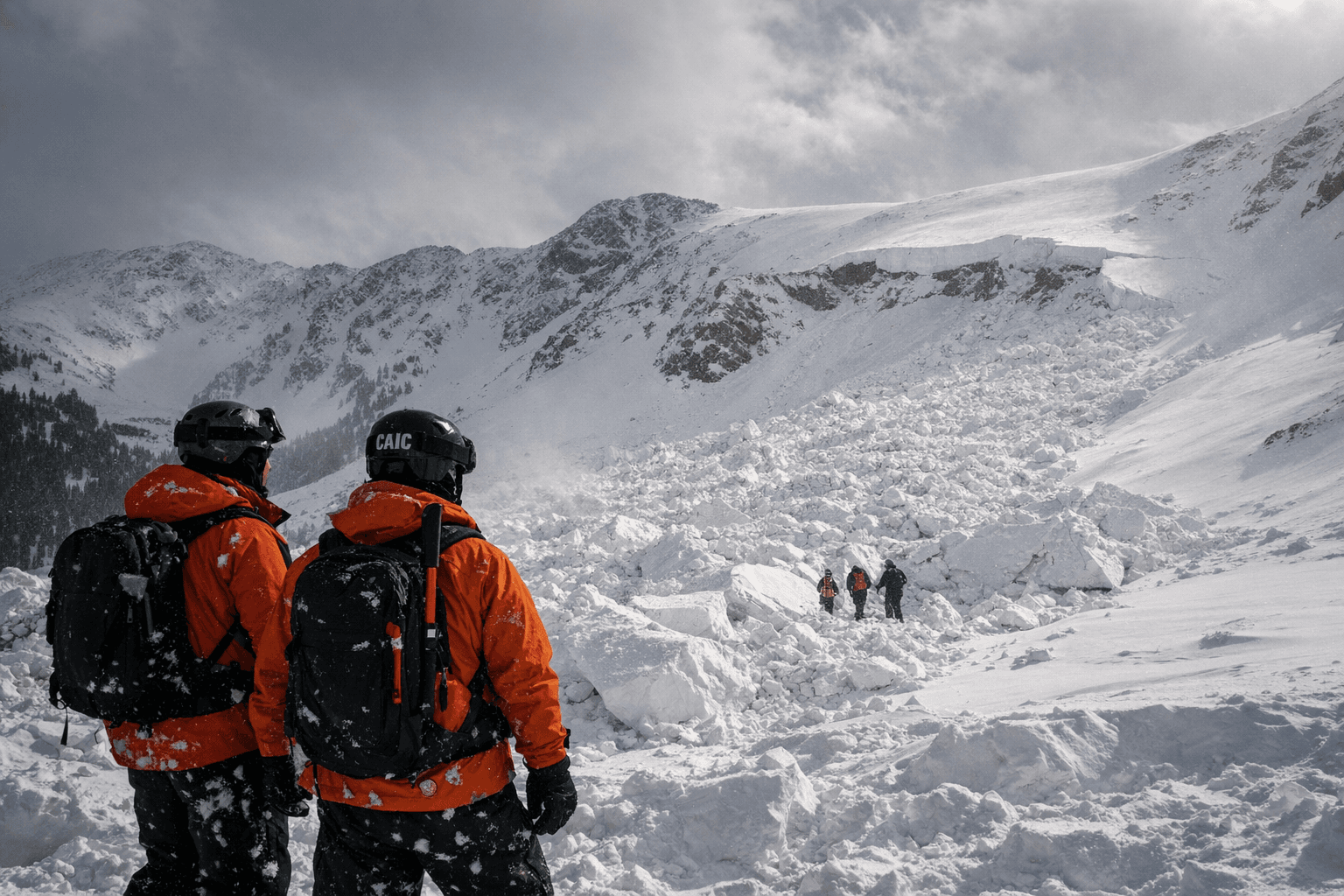
State specialists point to a persistent weak layer and slab problem as the immediate cause of the heightened risk. These large avalanches in No Name Gulch near Loveland Pass slid on Feb. 5, 2026. The Colorado Avalanche Information Center says these avalanches are an indication that the state's persistent slab problem, caused by a persistent weak layer in the snow, is alive and well. Deputy director Brian Lazar added that “we’re still putting a significant load on a snowpack that is plagued with some really fragile weak layers.”
Lazar warned that eastern ranges may not meet formal warning criteria but are far from safe. “Areas further east like Summit County and the Front Range may fall a little short of reaching avalanche warning criteria, which means high avalanche danger, but that doesn’t mean it’s safe by any stretch,” he said. Lazar also urged caution around increased recreation levels: “I know there is a lot of pent up demand. It is really good to see more wintry conditions but this week and into the weekend are going to be particularly dangerous,” and he noted that “even after natural avalanches have mostly run their course, a lot of slopes are going to remain ripe for human-triggered avalanches.”
CAIC director Ethan Greene said operational mitigation is underway with state partners. “It’s an intense week, with rising avalanche danger in most of the state,” Greene said, and confirmed CAIC is working with the Colorado Department of Transportation to do avalanche mitigation in some regions. “That can include triggering avalanches to protect state and federal highways.” Greene added practical guidance for resort users: “So if someone is going to a ski area, they really just need to make sure that they are staying on open trails because the ski area will close areas in preparation to do avalanche work.”
The avalanche season has already been active; CAIC recorded 1,644 avalanches statewide so far in 2026 and officials estimate they capture only about 20% of total activity. Outside Colorado, the risk picture remains acute: on Wednesday morning nine backcountry skiers near Lake Tahoe were still missing after an avalanche, six others were rescued, and a search was underway in challenging conditions, according to the Associated Press. Check the CAIC online forecast map and local ski-area advisories for current warnings and closures; the No Name Gulch photo credited to Colorado Avalanche Information Center/Courtesy photo illustrates why officials say caution is critical now.
Know something we missed? Have a correction or additional information?
Submit a Tip