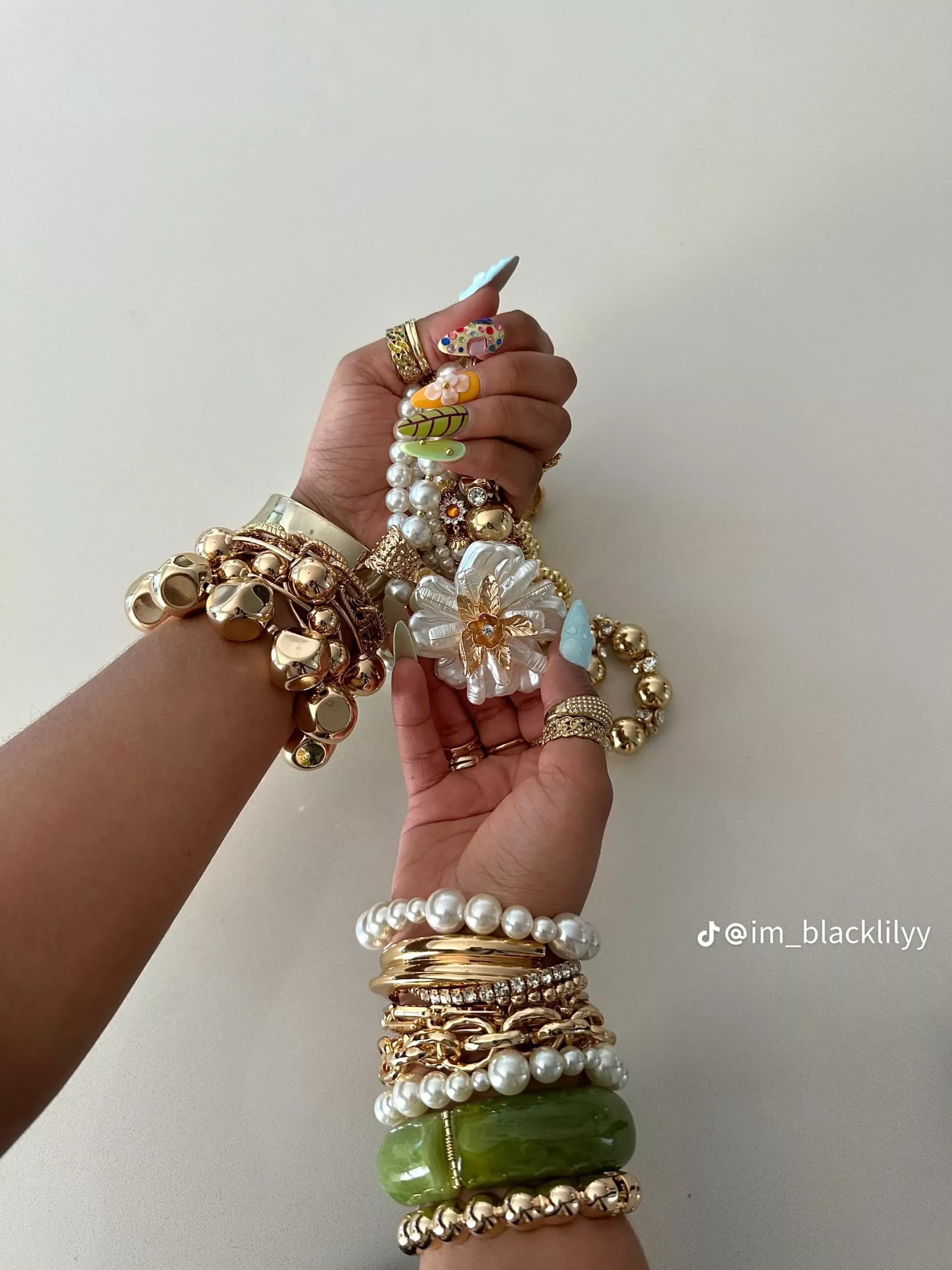
Historic Gold Spike Tops $5,000, Upends Slim Chains and Thin‑Band Rings
A mid-February spike pushed spot gold above $5,000, briefly to $5,102/oz, sharply compressing margins and upending slim gold chains and thin‑band rings.

A mid‑February surge in the gold market hit jewelers where it hurts: margins and assortment plans for delicate minimalist lines. Prism News reported that “the mid‑February spike in gold spot prices sharply compressed margins for many jewelers and directly disrupted assortment planning for delicate minimalist lines,” a disruption that retailers say targeted slim gold chains and thin‑band rings in particular.
The price move was historic in scale. INSTOREMAG headlined “Gold Tops $5,000: What the Historic Price Surge Means for Jewelry Retailers” and noted that “Gold crossed $5,000: … Spot gold briefly touched $5,102 an ounce, capping an 8 percent gain last week alone and putting the metal on track for its strongest annual performance since 1979.” That intra‑week volatility has narrowed the window for accurate quoting and inventory valuation across retail and wholesale channels.
On the sales floor, the immediate tilt is away from gram‑heavy items. RcJewelry lists the best sellers during high gold price periods as “lightweight gold chains, minimalist rings, everyday earrings, gold‑plated jewelry, and mixed‑metal designs that offer visual appeal without excessive gold weight.” Retailers reporting turnover headaches say they are rethinking price architecture so entry‑level customers do not face sudden cost jumps when replacement gold costs spike.
Designers and bench jewelers are adapting day to day. INSTOREMAG framed the situation bluntly: “For jewelry retailers, this isn’t a market curiosity or an investor’s story. It’s a moment that lands squarely at the intersection of pricing, inventory, margin management, and customer psychology. In other words, it’s personal.” In Chicago, Ellie Thompson of Ellie Thompson + Co. says “pricing unpredictability has forced her to rethink how she quotes projects,” a change that has shifted some commissions toward deposit‑backed, made‑to‑order workflows to avoid carrying volatile metal exposure.

Wholesalers are feeling the strain as well. RcJewelry warns that inventory risk has risen and lists “Inventory Management Becomes Critical,” “Flexible Pricing Models,” and “Many wholesalers now adjust pricing more frequently, reflecting real‑time gold market changes.” The wholesaler playbook now often includes smaller lots, faster turn cycles, and a steady pipeline of custom pieces to keep capital working rather than tied up in slow‑moving, high‑value stock.
Supply side factors are tightening the backdrop. RcJewelry highlights “Limited Mining Supply,” noting that rising extraction costs and the lack of large new discoveries keep new metal scarce and contribute to upward pressure on spot prices. That scarcity, combined with investor flows, has pushed retailers to emphasize alternatives while protecting margins.
Operationally, shops are executing measures spelled out in trade guidance: “diversifying into silver and alternative metals, offering lightweight designs, optimizing inventory turnover, and educating customers on the value of design, purity, and craftsmanship rather than weight alone.” As the market tracks the $5,000 threshold and beyond into 2026, those moves will determine which brands preserve margins and which must rebuild assortments around design rather than raw gold content.
Know something we missed? Have a correction or additional information?
Submit a Tip