Hochul aid, luxury second-home tax help Mamdani close budget gap
Hochul’s aid and a new tax on luxury second homes helped erase New York City’s budget hole, shifting the burden to Albany and ultrawealthy nonresidents.
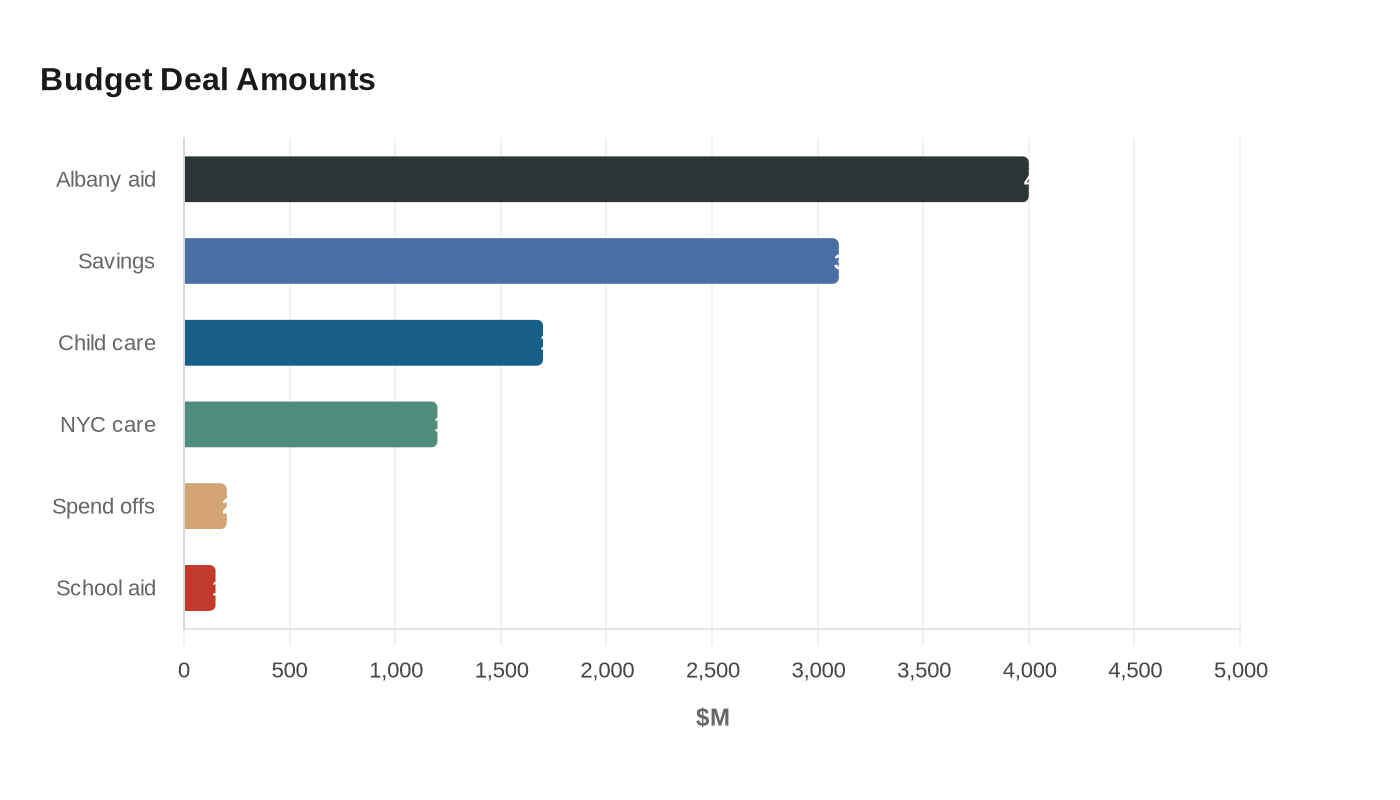
A new $4 billion infusion from Albany, paired with a first-in-state tax on luxury second homes, gave Zohran Mamdani the cushion he needed to balance New York City’s $125 billion budget without a property-tax hike or a deeper pull from reserves.
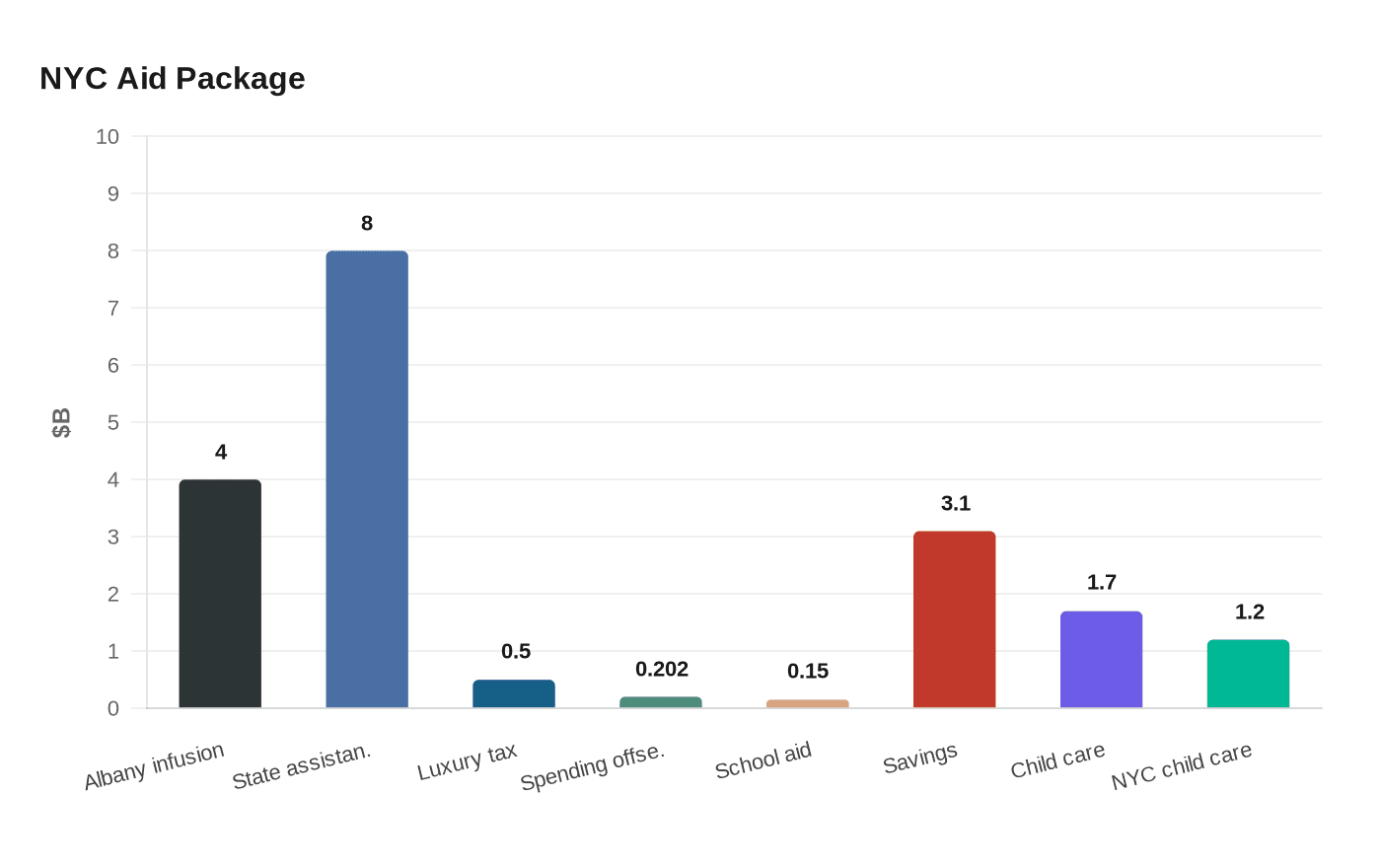
Kathy Hochul and Mamdani announced the package on May 12, 2026, saying the total new state assistance to New York City now approaches $8 billion over two years. The deal includes about $500 million a year from a pied-à-terre tax on city homes valued at $5 million or more when the owner’s primary residence is outside New York City. City Hall said the measure is expected to be the first pied-à-terre tax in New York State and that polling cited by the mayor’s office showed 93% support among New Yorkers.
The latest agreement also adds $202 million in actions to offset recurring spending obligations, $150 million in additional school aid, and more than $3.1 billion in state-authorized savings, including pension restructuring and class-size flexibility. Hochul’s office said her administration has increased funding support to New York City by 33% since taking office. It has also proposed $1.7 billion in higher child-care funding statewide, including $1.2 billion directly for New York City’s 2-care and 3-K expansion.
The budget breakthrough came after months of warning that the city’s fiscal problem could force painful choices. Mamdani’s February preliminary budget said the inherited gap had been more than $12 billion and had fallen to $5.4 billion after savings and more than $1 billion in additional state aid. City officials had also said the city might need a 9.5% property-tax increase if Albany did not step in.
The new arrangement changes the politics of who pays to keep the city solvent. Instead of a broad property-tax increase on ordinary homeowners, the city and state are leaning on recurring state help and a levy aimed at wealthy second-home owners, many of whom are nonresidents. City Hall has argued that the money will help protect policing, parks, education and child care while keeping the city from draining reserves to paper over short-term pressure.
The plan is also likely to sharpen conflict with high-end property owners. Ken Griffin, whose $238 million Midtown penthouse was singled out by City Hall as a likely target, has already attacked Mamdani’s approach and warned it could push investment and jobs out of New York City. For now, the deal closes the immediate gap. The harder test is whether a mix of Albany aid, savings and a narrow luxury tax can hold back the city’s structural budget pressure beyond this year.
This article was produced by Prism’s automated news system from verified source data, official records, and press releases, then run through automated quality and moderation checks before publishing. The system is built and supervised by the people who set the standards it runs under. Read our full AI policy.
Did this article answer your question?

