Home Depot Associates Report Inconsistent Return Procedures, Raising Loss Prevention Concerns
An associate reported inconsistent return procedures at Home Depot, raising frontline concerns about loss prevention, training, and customer-facing consistency.

An associate raised concerns after noticing frequent manual handling and apparent inconsistencies in how returns were processed and accepted, prompting a wave of responses from other employees. The replies described wide variation across stores - some locations taking a broad approach to approving returns while others enforced stricter checks - creating confusion among frontline teams and drawing attention to loss prevention risks.
Workers reported that the same item or customer interaction could be handled very differently depending on the store or the associate on duty. Several associates pointed to scanner behavior and training gaps as likely contributors, saying that inconsistent scanner prompts or reliance on manual overrides made it unclear what the correct procedure was. That uncertainty pushed more decisions onto frontline staff and left asset protection priorities unsettled.
The immediate impact is operational and cultural. On the shop floor and at the returns desk, associates are spending more time resolving exceptions and explaining policies to customers, adding to already busy Front End workloads. Variability in enforcement can also create friction with customers who are used to a particular standard, and it can undermine morale among workers who must justify why one store accepted a return while another did not. For loss prevention teams, inconsistent processing increases the potential for shrink and for patterns of exploitable behavior to emerge.
Training and policy clarity were recurring themes. Associates described situations where local practice appeared to diverge from corporate expectations, and where peers relied on manual processes rather than standardized point-of-sale workflows. Without a clear, consistent process for returns - including consistent use of scanners and defined thresholds for exceptions - stores risk creating loopholes that are difficult for asset protection to monitor.
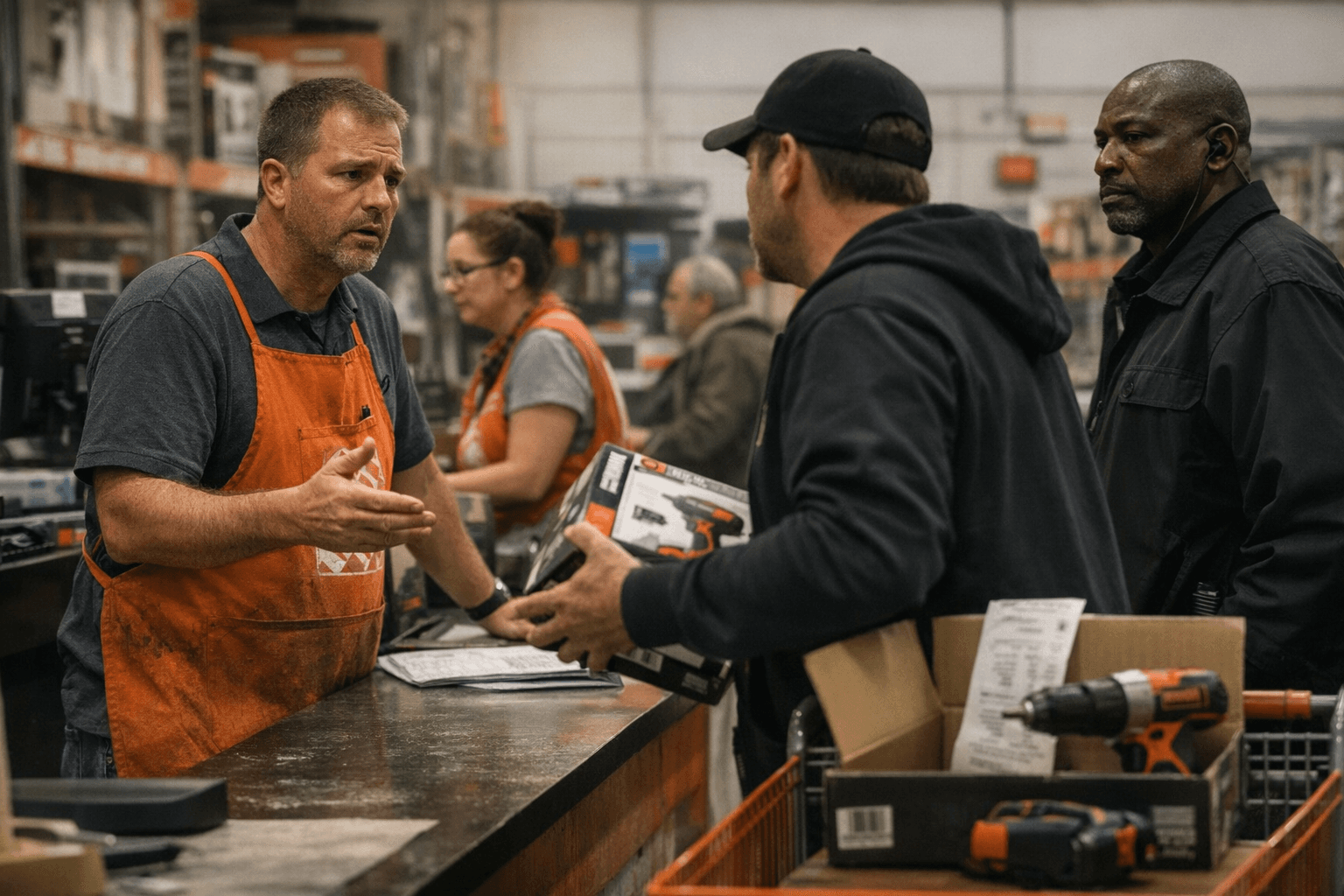
Home Depot’s returns policy and loss prevention framework rely on consistent execution at the register and returns desk. When execution varies, so does the ability of regional managers and asset protection to measure shrink, audit compliance, and provide fair enforcement. Associates said they wanted clearer guidance, more consistent scanner and point-of-sale behavior, and training that addresses the gray areas employees face during customer interactions.
For associates and managers, the story underscores the practical effects of uneven policy enforcement: extra time on tasks, elevated customer conflict, and increased risk of shrink. What comes next will be whether management supplies clearer direction, targeted training, or tighter point-of-sale controls to reduce manual overrides and restore consistent customer-facing procedures. For frontline workers, a standardized approach would mean fewer ad hoc decisions and a more defensible stance on returns and loss prevention.
Sources:
Know something we missed? Have a correction or additional information?
Submit a Tip