House and Senate move to force war powers votes amid Iran strikes
Lawmakers moved on March 2 to force votes limiting the president’s ability to expand military action as U.S. strikes on Iran continue and leaders warn of a widening campaign.
Lawmakers in both chambers moved on March 2 to force consideration of war powers measures intended to restrict the president’s ability to continue large-scale military action as U.S. military strikes on Iran continue and American forces are "engaged in a rapidly evolving campaign."
House Democratic Leader Hakeem Jeffries said a bipartisan coalition is working to force a vote "as soon as next week" to bar further strikes against Iran without congressional authorization. "The American people don't want another failed forever foreign war, particularly in the Middle East, when we know the outcome is likely to be disastrous," Jeffries said at a press conference. "What we've got to do right now, of course, is to do everything we can to prevent that from happening. It would be reckless. It would be dangerous. It would be harmful to America's national security interests."
Officials said President Trump ordered strikes on Tehran, and congressional sources confirmed the full House and Senate have not received a comprehensive briefing on the operation. A classified update was delivered to the Gang of Eight earlier in the week, congressional aides said, but leadership has not provided a full accounting to all members, and several lawmakers said they were not consulted in advance.
The push for floor action comes amid an unusual cross-party alignment. Democrats and at least three Republicans, Rep. Thomas Massie, Sen. Rand Paul and Rep. Warren Davidson, have questioned the legality of the strikes and warned that the president acted without consultation and without an imminent threat. Rep. Ro Khanna called the attack "a slap in the face of the United States Congress" and said "the president has launched an illegal war when there is no imminent threat."
Procedural timing remains fluid. Jeffries pledged an effort to force a vote "as soon as next week," while congressional sources said votes to require congressional approval for further military action were already set for midweek, setting up an immediate test of majority sentiment and party discipline. One senior GOP lawmaker described the votes as "a major test of loyalty for some of the GOP's far-right flank."
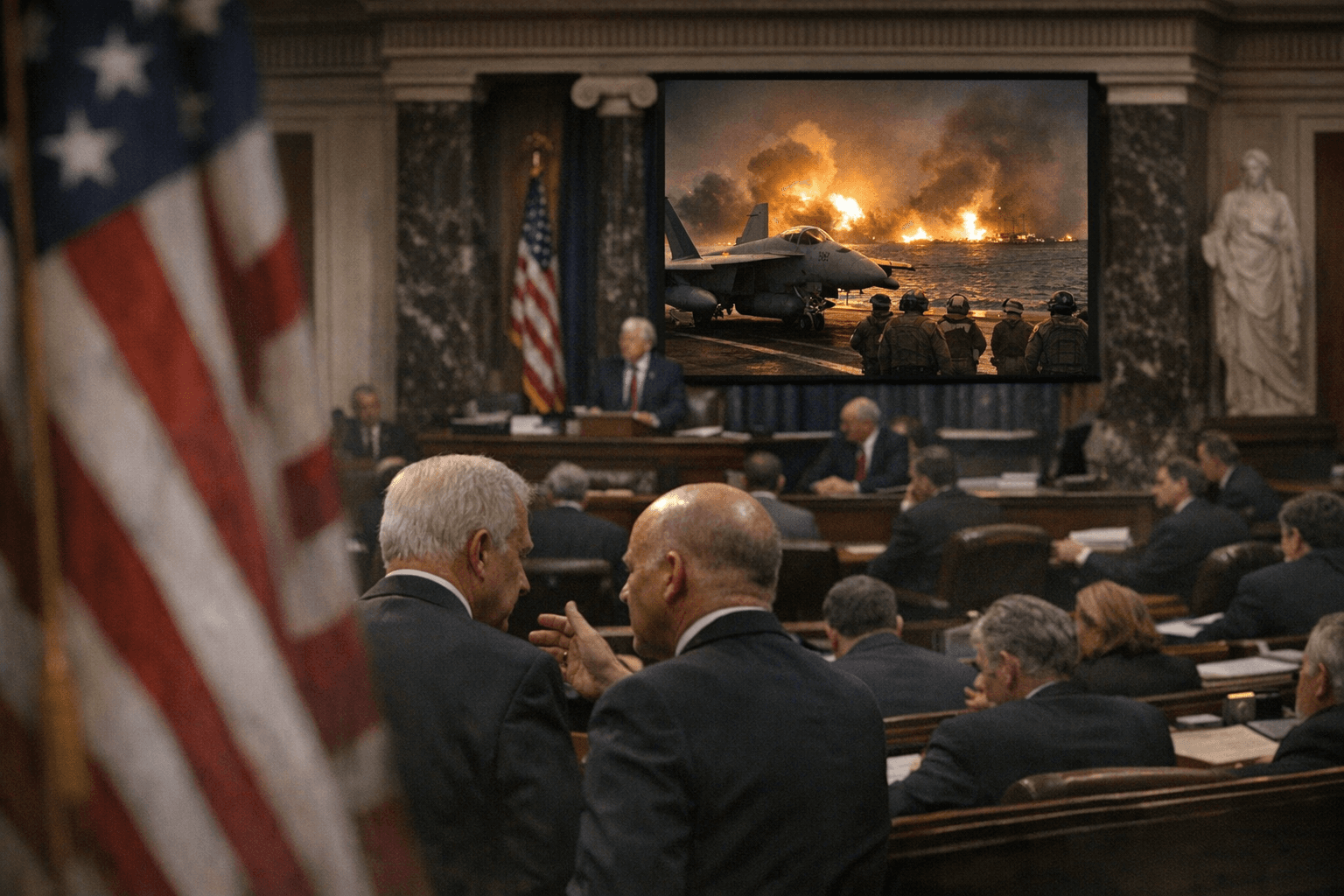
Legal and constitutional stakes are central to the debate. The 1973 War Powers Resolution requires the president to notify Congress within 48 hours of committing armed forces and bars forces from remaining in combat beyond 60 days, plus a 30-day withdrawal period, without congressional authorization. Dan Urman, director of the law and public policy minor at Northeastern University, noted that the resolution "has never been tested on the merits in court" and cautioned that courts "look for ways to punt and avoid lawsuits" involving the president's use of military force.
Urman also warned of practical strains if the campaign continues. "Everyday the fighting continues, the strain on weapons stockpiles and production capacity is likely to intensify as the administration pursues Trump's war aims," he said.
If congressional measures pass, experts warned, they could precipitate a constitutional confrontation over separation of powers and reshape how future administrations seek authorization for use of force. For now, votes expected this week or next will determine whether Congress attempts to reassert statutory limits or whether the executive branch continues to press the campaign without broad legislative backing.
This article was produced by Prism’s automated news system from verified source data, official records, and press releases, then run through automated quality and moderation checks before publishing. The system is built and supervised by the people who set the standards it runs under. Read our full AI policy.
Did this article answer your question?

