House Finance Committee Hears DNR Forecast of 465,000 BPD, Cites Milne Point
DNR projected about 465,000 barrels per day, pointing to Milne Point work; the House Finance Committee probed data reliability and what the forecast means for North Slope investment and local budgets.
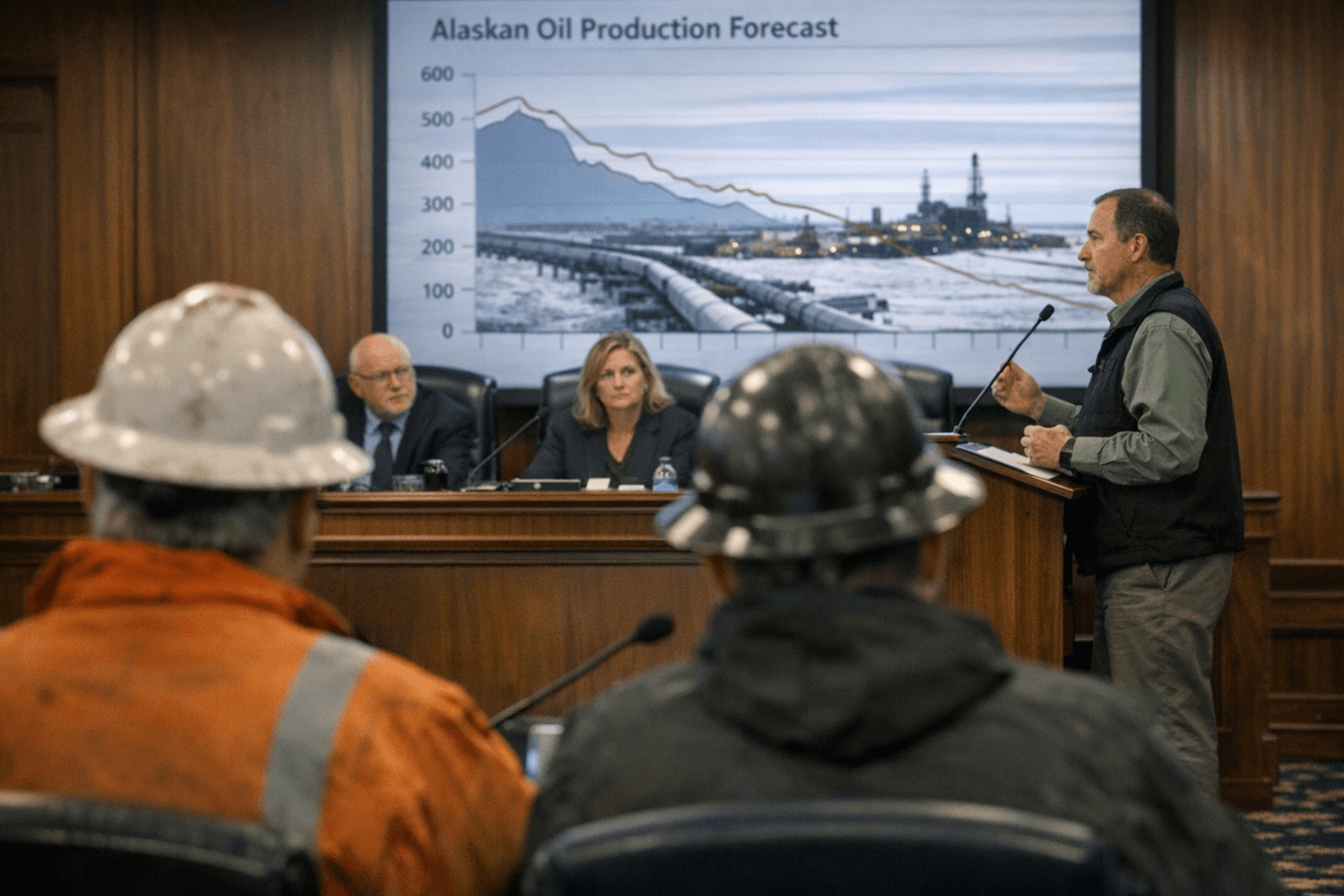
Department of Natural Resources officials presented a bullish oil outlook to the Alaska House Finance Committee during a teleconference that highlighted on-the-ground activity on the North Slope as the driver. The DNR FY2026 forecast cited roughly 465,000 barrels per day of Alaska production and singled out Milne Point improvements and other field projects as concrete evidence that output gains are not merely theoretical.
Committee members pressed DNR staff on the datasets behind the projection and on the durability of the assumptions underpinning the forecast. Lawmakers sought clarity about which projects and timelines feed into the numbers, and they questioned how sensitive the overall forecast is to delays or cost increases on the North Slope. The exchange framed the forecast as more than an engineering estimate - it is the basis for fiscal planning and for legislative choices about how to keep Alaska competitive for oil investment.
For North Slope Borough residents, the forecast has immediate policy consequences. Higher production projections shape state revenue expectations that influence municipal aid, capital project planning, and service budgets in borough communities. Sustained activity at Milne Point and adjacent pads also translates to local jobs, contractor opportunities, and demands on infrastructure such as roads, air service, housing and workforce supports. DNR and legislators discussed those boots-on-the-ground realities as evidence supporting the numerical outlook.
The committee discussion linked the forecast to broader policy levers that affect the investment climate on the North Slope. Questions raised included the role of permitting timelines, fiscal terms and incentives, and infrastructure capacity in attracting the necessary capital to realize the forecasted production. Members framed these levers as central to converting potential into sustained production, and they signaled attention to the tradeoffs between short-term revenue goals and long-term competitiveness.
DNR presenters referenced their FY2026 dataset work while fielding scrutiny from Finance Committee members about assumptions and contingency risks. The dialogue made clear that forecasting is an iterative process tied to evolving project schedules, cost pressures and market conditions. Committee scrutiny focused on ensuring that policymakers and borough officials have reliable information for budgeting and for shaping policy that affects the North Slope economy.
What comes next for residents and local leaders is continued oversight and follow-up. The forecast will feed into legislative budget discussions and into any deliberations about policy adjustments aimed at sustaining investment on the North Slope. For communities in the borough, the practical questions will be whether planned activity at Milne Point and other sites translates into the jobs, contracts and public revenues necessary to support local priorities.
Sources:
Know something we missed? Have a correction or additional information?
Submit a Tip