House panel advances bill to end twice-yearly clock changes
A House panel backed year-round daylight saving time 48-1, but the bill still faces a split over which fixed clock Americans should keep.

A House committee moved to end the twice-yearly clock change, but the larger fight over what comes next is still blocking a final deal. The House Energy and Commerce Committee approved the Sunshine Protection Act on May 21 by a 48-1 vote, sending a familiar idea forward with clear political momentum and an equally familiar legislative obstacle.
The bill would keep daylight saving time in effect all year. It is likely to be folded into a broader transportation measure before it reaches the full U.S. House of Representatives and then the Senate, where it would still need to clear another round of votes before it could go to President Donald Trump. Trump endorsed the committee action on social media, underscoring how popular the issue remains even after years of failure in Congress.
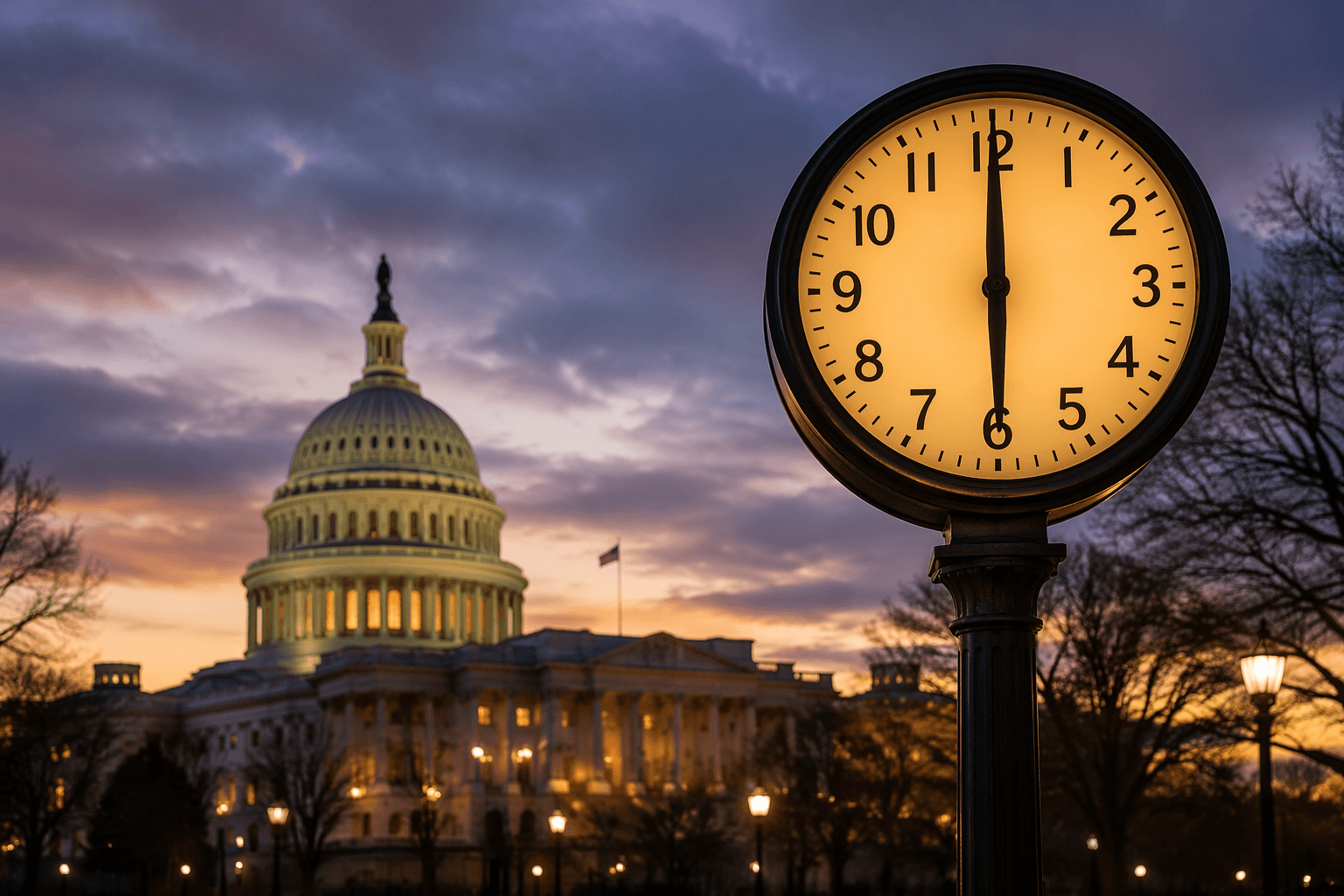
That gap between public support and legislative action has defined the debate for years. Federal law, under the Uniform Time Act, sets the start and end dates for daylight saving time, and the U.S. Department of Transportation says states may exempt themselves from observing it. But states cannot unilaterally adopt permanent daylight saving time, which is why state-level enthusiasm has not produced a nationwide shift.
The National Conference of State Legislatures says Florida became the first state to enact legislation in 2018 to permanently observe daylight saving time, pending federal approval. Since then, 19 states have enacted similar legislation to take effect if Congress allows it. The state movement shows broad frustration with the spring and fall switch, but it also shows the limits of state power in a system where one federal rule still governs the national clock.
The policy fight is not simply about ending the time change. It is about which permanent system would do the least harm. The American Academy of Sleep Medicine supports permanent standard time, not permanent daylight saving time, arguing that standard time better matches human circadian biology. The group says the spring shift has been linked to higher risks of heart attacks, stroke, atrial fibrillation-related admissions, traffic accidents and sleep loss, with teenagers and night-shift workers especially vulnerable.
Congress has stumbled on that very split before. The Senate passed a version of the Sunshine Protection Act in March 2022 by unanimous consent, but the House never acted before the bill expired. Congress.gov shows the Sunshine Protection Act of 2023 was introduced in the Senate on March 1, 2023 and referred to the Senate Committee on Commerce, Science, and Transportation, but it too did not become law.
There is also a cautionary precedent from the 1970s, when the United States briefly tried year-round daylight saving time during the energy crisis after Richard Nixon signed an emergency bill. Public support quickly fell after parents complained about children going to school in darkness and safety worries mounted. That history still hangs over the current push, reinforcing the central problem in Washington: Americans may hate changing clocks, but Congress still cannot agree on the permanent hour that should replace them.
This article was produced by Prism’s automated news system from verified source data, official records, and press releases, then run through automated quality and moderation checks before publishing. The system is built and supervised by the people who set the standards it runs under. Read our full AI policy.
Did this article answer your question?

