House passes symbolic war powers curb on Trump’s Iran strikes
The House narrowly backed a war powers rebuke of Donald Trump, but the 215-208 vote was only a first hurdle against Iran and faces a Senate wall.
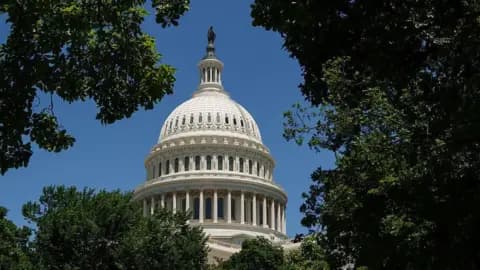
The House of Representatives voted 215-208 on Wednesday to limit President Donald Trump’s ability to carry out further military action against Iran, delivering a rare bipartisan rebuke as the war entered its fourth month. Four Republicans, Warren Davidson of Ohio, Brian Fitzpatrick of Pennsylvania, Tom Barrett of Michigan and Thomas Massie of Kentucky, joined Democrats in support; seven members did not vote.
The measure would require Trump to withdraw U.S. troops from the conflict or seek congressional authorization before continuing. In practical terms, though, the vote remained largely symbolic. The resolution still needs Senate approval, and even if the Senate were to act, it would almost certainly face a presidential veto. The fight also raised a deeper constitutional question that has shadowed the debate from the start: whether war powers resolutions can truly constrain a commander in chief determined to keep using military force.

For Congress, the vote was as much about assertion as outcome. It was the first time the House approved a war powers resolution on Iran after three earlier attempts failed, and House Republican leaders had previously delayed a floor vote when it appeared likely to pass. Speaker Mike Johnson had tried to stop the measure from reaching the floor at all, a sign of how forcefully the White House and its allies opposed congressional intrusion into the war-making arena.
The Senate has followed a similar path, advancing a separate but related resolution in a procedural vote after seven earlier attempts failed. No further Senate vote had been scheduled, leaving the House action without an immediate path forward. That pattern explains why lawmakers have increasingly resorted to symbolic votes in national security fights: they can register opposition, test party discipline and force a public accounting, even when the Constitution and the veto pen limit what they can actually stop.
Democratic Rep. Gregory Meeks led the House effort and called the passage a significant bipartisan rebuke of Trump’s war policy. Trump answered on Truth Social on Thursday, calling the vote “unpatriotic” and attacking the four Republicans as “grandstanders,” saying they should be ashamed of themselves. The exchange underscored both the political cost of confronting presidential military authority and the narrow space Congress still has to challenge it.
This article was produced by Prism’s automated news system from verified source data, official records, and press releases, then run through automated quality and moderation checks before publishing. The system is built and supervised by the people who set the standards it runs under. Read our full AI policy.
Did this article answer your question?

