House passes symbolic war powers rebuke with rare bipartisan support
The House voted 215-208 to rebuke Trump’s Iran strikes, but the measure was symbolic and unlikely to change the war’s course.
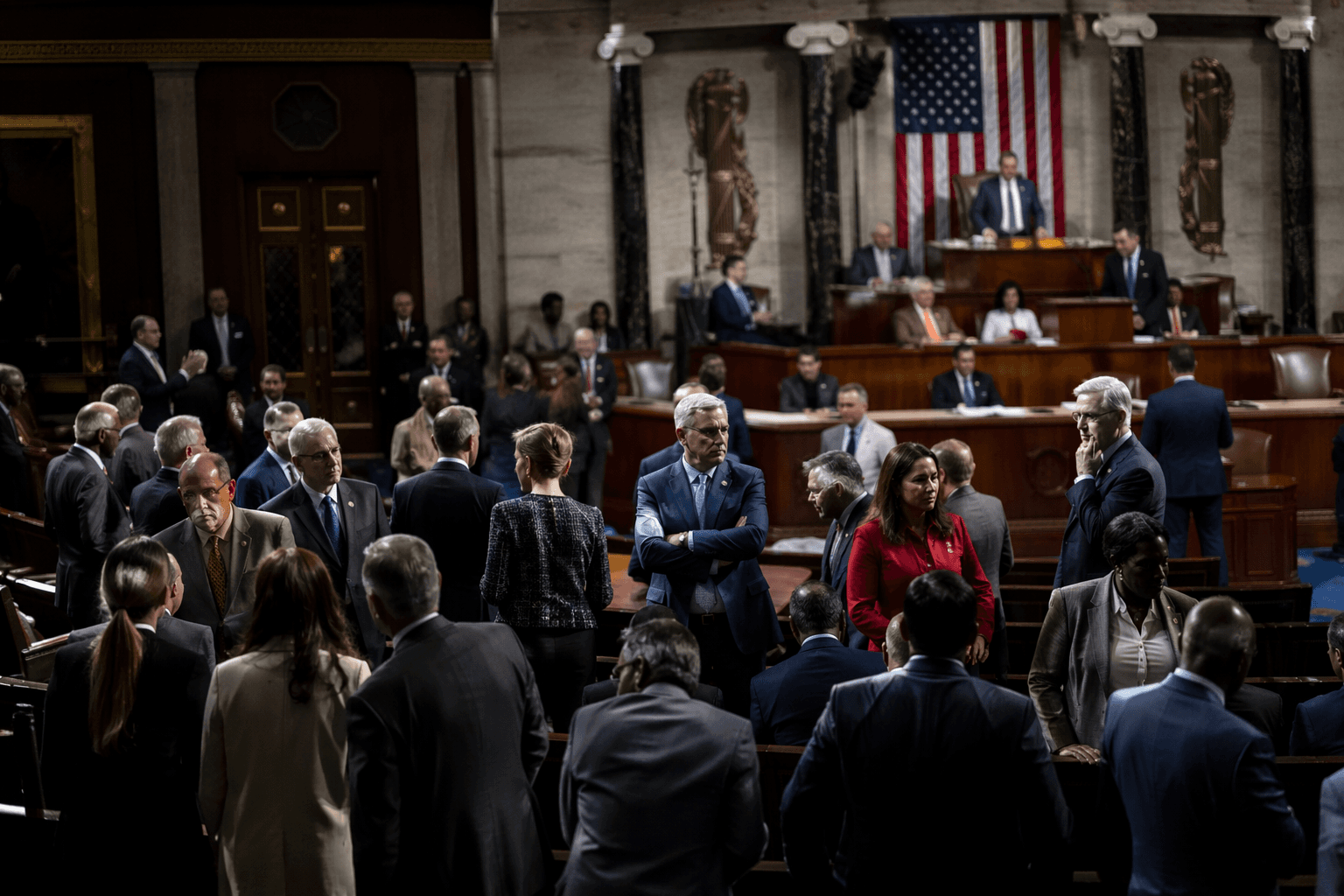
Congress asserted its war powers on Wednesday, but the House vote over Iran was designed more to register discomfort than to stop the fighting. The chamber approved the resolution 215-208, yet the measure was a concurrent resolution, meaning it would not need President Donald Trump’s signature even if the Senate passed it and it could still be blocked by a veto.
The margin included four Republicans breaking with their party: Thomas Massie of Kentucky, Brian Fitzpatrick of Pennsylvania, Tom Barrett of Michigan and Warren Davidson of Ohio voted with Democrats. Jared Golden of Maine, who had opposed earlier attempts, switched sides and backed the measure, giving House Democrats unanimity. Gregory Meeks of New York, the top Democrat on the House Foreign Affairs Committee, introduced the resolution.
The vote came after House GOP leaders had already tried to slow it down, including by canceling a planned vote before the Memorial Day recess when it appeared to have the support to pass. Applause erupted after passage, a sign of how unusual it was for the House to formally rebuke a sitting president on war powers. The underlying clash was sharper because Congress had not formally authorized the conflict, even as the administration argued that a fragile ceasefire stopped the War Powers clock in early April. Reporting from the region indicated that both sides continued trading attacks.

The legal fight turns on the 1973 War Powers Resolution, enacted over President Richard Nixon’s veto after Vietnam-era disputes over executive war-making. The law generally gives a president 60 days to use force before seeking congressional authorization, with up to 30 additional days to wind down U.S. involvement. By the administration’s reading, the clock paused in early April; by critics’ account, the conflict was already more than 90 days old and still active.
The House vote followed a similar push in the Senate, where a procedural measure advanced last month after four Republicans broke ranks, though no final vote has been scheduled. Even if both chambers approved the resolution, it would almost certainly face a veto from Trump, and Congress does not have the two-thirds support needed to override it. House Democratic Leader Hakeem Jeffries said the war had cost taxpayers more than $100 billion, while Speaker Mike Johnson defended Trump’s strikes, saying Iran had “declared war on us” 47 years ago and that the president was acting to keep Americans safe. The result was a bipartisan warning shot, but one with no enforcement mechanism behind it.
This article was produced by Prism’s automated news system from verified source data, official records, and press releases, then run through automated quality and moderation checks before publishing. The system is built and supervised by the people who set the standards it runs under. Read our full AI policy.
Did this article answer your question?

