House rejects Johnson’s plan to tie voting bill to defense measure
A 14-Republican revolt sank Mike Johnson’s bid to bundle the SAVE America Act with the defense bill, freezing floor action before the July 4 recess.

House Republicans blocked Speaker Mike Johnson’s plan to attach the SAVE America Act to the annual defense policy bill on Tuesday, defeating the procedural rule 224-198 and sending 14 Republicans into the opposition column with Democrats. The vote stopped work not only on the National Defense Authorization Act but also on other House business scheduled before the July 4 recess.
Johnson had tried to use an unusual maneuver known as MIRVing, or merge onto the rule, to move the NDAA and the voting bill to the Senate as a single package. The SAVE America Act would require documentary proof of U.S. citizenship to register for federal elections and photo identification to cast a ballot, but the version Johnson wanted to attach did not include Donald Trump’s demand for near-total restrictions on mail voting.
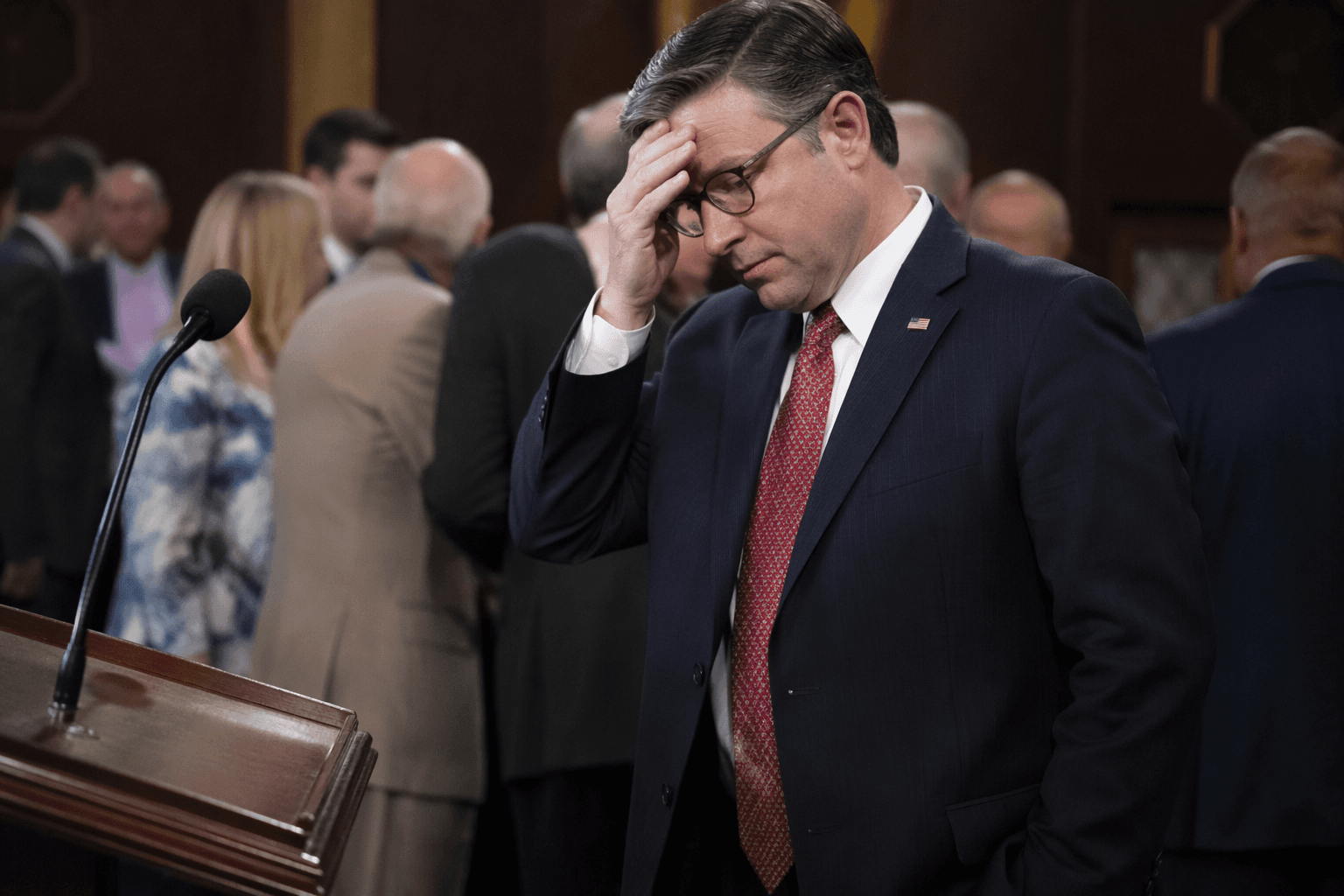
The revolt exposed how a small bloc can still dictate terms inside the House GOP even after months of warnings from leadership. Anna Paulina Luna led opposition to Johnson’s approach, saying the elections bill needed to be baked into the NDAA text so the Senate could not strip it out later. Steve Scalise, Chip Roy, Andy Harris, Tim Burchett, Ralph Norman and Byron Donalds were among the Republicans caught in a broader fight that has repeatedly disrupted floor action. The House Freedom Caucus has also pressed for harder line tactics as Johnson tried to hold together a conference split over the bill.
The standoff matters far beyond one procedural vote. Trump has called the SAVE America Act his No. 1 legislative priority, and House hard-liners have used the measure to pressure Senate Republicans, where the bill has stalled for months amid internal GOP divisions and unified Democratic opposition. The NDAA is normally one of the most bipartisan bills Congress handles, typically passing with broad support, which is why tying it to a partisan elections fight risked blowing up the floor schedule and alienating Democrats before the Senate ever saw it.

Johnson has also floated a separate plan to move a slimmed-down SAVE America Act through budget reconciliation later in 2026, but hard-liners have rejected that path. For now, the failed rule leaves Johnson with a frozen floor, a fractured majority and a defense bill that remains hostage to the same GOP divide that has turned the elections measure into a recurring test of his leverage.
This article was produced by Prism’s automated news system from verified source data, official records, and press releases, then run through automated quality and moderation checks before publishing. The system is built and supervised by the people who set the standards it runs under. Read our full AI policy.
Did this article answer your question?

