Houston leads nation in pickleball sites as demand outpaces public courts
Houston now has nearly 60 pickleball facilities and a growing private-club boom, reshaping local recreation and straining public access.

Houston now leads the nation in the number of pickleball facilities, with nearly 60 sites across Harris County and more openings planned for 2026. The sport’s post-pandemic boom, small court footprint and multigenerational appeal have combined to create a rapid expansion of private clubs, conversions of tennis courts and a rising calendar of tournaments that are reshaping how residents get on the court.
Private operators have been the most aggressive developers, opening venues that layer food, beverage and social programming onto play. Those business models are outperforming simple court rentals because they capture additional spending from memberships, events and on-site hospitality. The city’s role has shifted toward preservation of public play: Parks and Recreation officials have accelerated plans to refurbish underused tennis courts into dedicated pickleball courts and to add more public reservation times, even as supply still lags demand.
The county and city both host professional events and national-caliber tournaments, and Houston is home to the Houston Hammers franchise, factors that raise the region’s profile and draw out-of-town players. Tournament weekends contribute hotel stays, restaurant traffic and ancillary spending in surrounding neighborhoods, though much of that economic gain has accrued to private venues and event promoters rather than directly to public programs.
For residents the immediate friction is access. Public courts are often overbooked during peak hours, pushing casual and lower-income players toward private clubs with membership fees. The conversion of tennis courts helps increase capacity because pickleball requires less space, but converting courts redirects resources and can create tensions among tennis players and neighborhood groups. Parks staff are balancing those tradeoffs while facing budgetary and maintenance constraints.
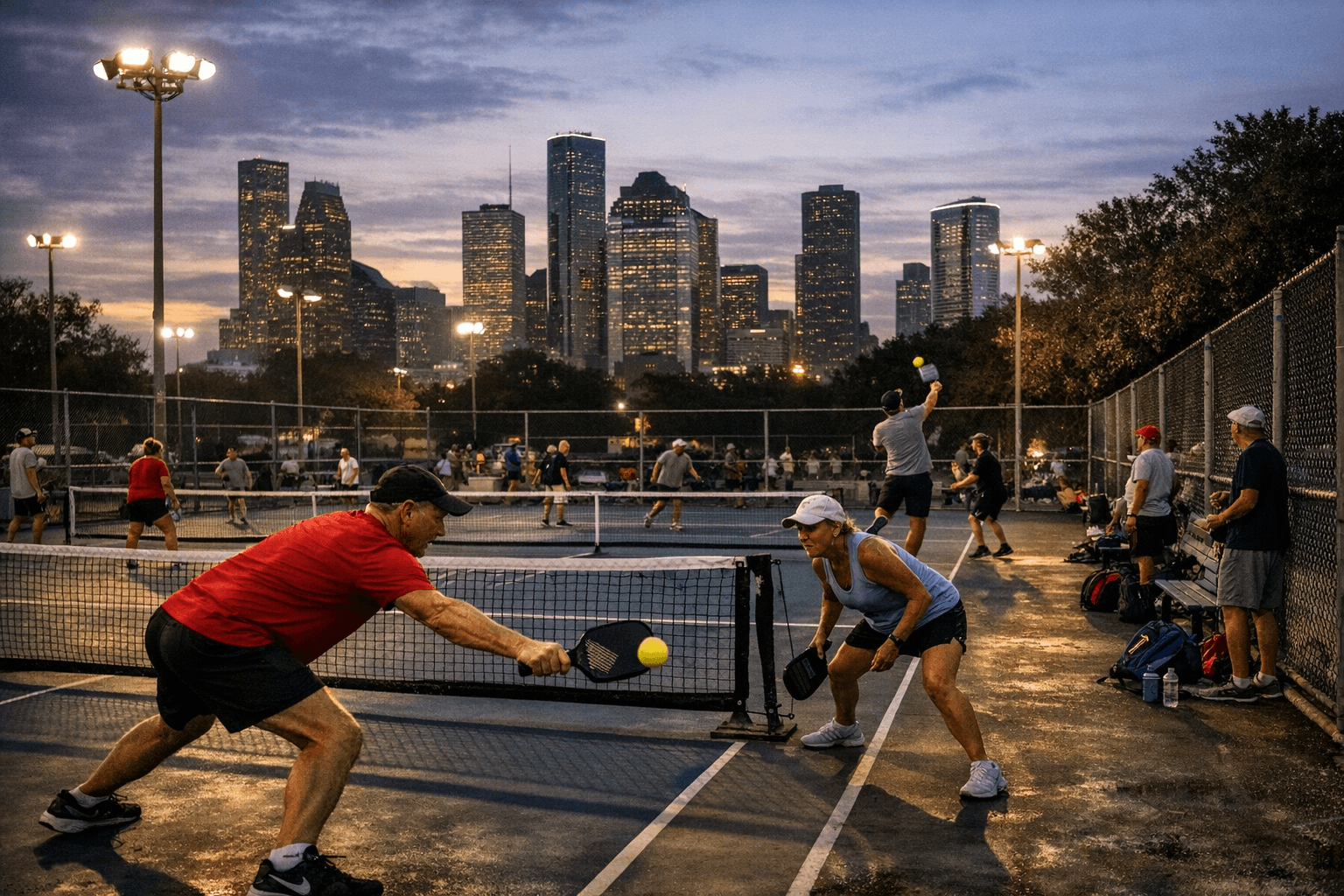
From a market perspective, the growth carries familiar dynamics: specialized amenities attract discretionary spending and can raise nearby property values, while membership-based clubs deepen revenue per customer but limit universal access. For local policymakers the challenge is twofold: expand low-cost public play options to preserve equitable access, and design permitting and zoning rules that capture some community benefit from private developments that use public infrastructure for tournaments.
Looking ahead to 2026 and 2027, expect continued private investment in mixed-use pickleball venues, more tennis-to-pickleball conversions in neighborhood parks and an expanding event calendar that will keep pressure on courts during evenings and weekends. If public investment does not keep pace, access will increasingly shift toward fee-based models. For Harris County residents who play, register early for public slots, monitor park reopening schedules and watch for community meetings where conversion plans and court allocations will be decided.
Sources:
Know something we missed? Have a correction or additional information?
Submit a Tip