Houston’s World Cup fever reflects city’s global diversity
Houston's World Cup crowds show how a global tournament can feel local, with immigrant neighborhoods, multilingual fans and a free East Downtown festival.
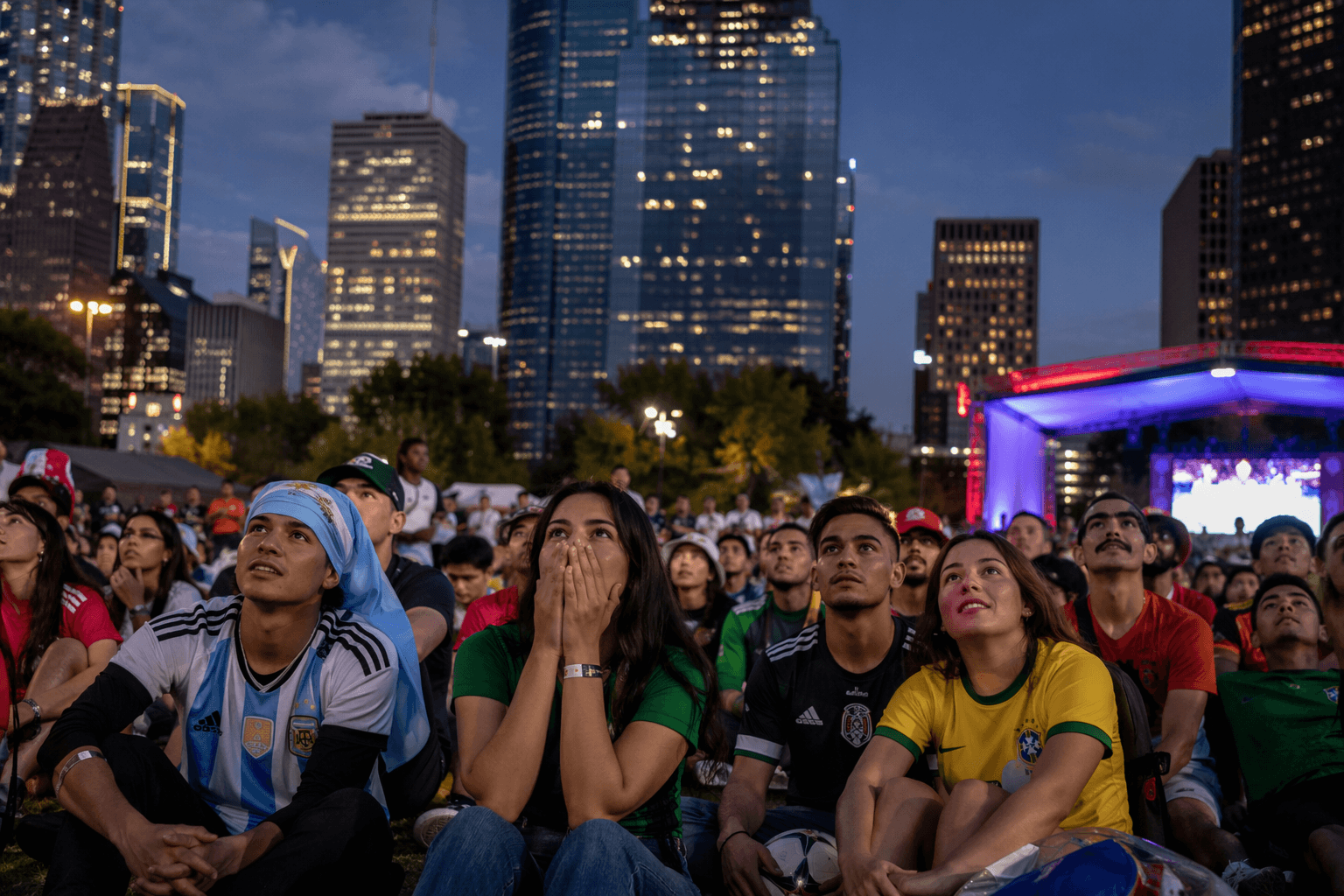
Houston’s World Cup moment is not being delivered from above, it is being built from the city’s own streets, languages and neighborhood habits. In a place where roughly a third of residents were born outside the United States and at least 145 languages are spoken, the tournament has become less like an imported spectacle and more like a public mirror of everyday life.
A city that already speaks World Cup
Houston’s appeal as a host city starts with scale and diversity. The city’s facts page describes Greater Houston as the most ethnically diverse metropolitan area in the United States, and city demographics put the population at 2,392,327. That density of backgrounds matters because it explains why the fan scene feels immediate rather than staged: Mexican heritage is visible in the sea of green jerseys, while supporters from Turkey, Iran, South Korea, Canada and elsewhere fill the same public spaces.
Reuters described the scene as having a distinctly international flavor, and that is the right frame for reading Houston’s version of the tournament. This is a city with 90 nations represented through consular presence, a major medical hub, an energy economy, and a location close to Latin America. Those traits do more than attract visitors; they shape how the city receives them, turning the World Cup into a civic event that reflects who already lives here.
East Downtown becomes the public square
The clearest expression of that civic identity is the FIFA Fan Festival in East Downtown. The festival runs June 11 through July 19, is free to the public, and is open every match day, giving fans a 34-day gathering place that lasts beyond Houston’s final scheduled match. Houston is also hosting seven World Cup matches at NRG Stadium, on June 14, June 17, June 20, June 23, June 26, June 29 and July 4, which means the festival and the stadium schedule work together rather than competing for attention.
That public space has been busy enough to force hard limits. Local reporting says the fan festival reached capacity on opening day, and organizers temporarily stopped admitting new fans as crowds surged into East Downtown. Houston Host Committee figures say the festival drew 107,622 attendees from June 11 through June 17, about 30 percent above projections, while FIFA said its global Fan Festival program had already passed 2 million visitors after the first round of matches.
For people shut out of expensive stadium seats, the free festival is the city’s main gateway into the tournament. Earlier coverage framed it as an alternative for fans priced out of tickets that can run into the hundreds of dollars, and that detail matters because it shows how access, not just enthusiasm, is shaping the local World Cup economy.
How immigrant communities are remaking the event
What makes Houston’s fan culture stand out is the way immigrant communities are not simply attending the World Cup, but actively defining its tone. The festival has paired match watch parties with Tejano, Bollywood and other performances, creating a schedule that feels closer to a neighborhood celebration than a standardized FIFA production. During one Egypt match, organizers even set up a prayer room and a foot-washing area for Muslim fans, a small but telling adaptation to the crowd’s makeup.
That sort of responsiveness helps explain why the event feels rooted in the city rather than layered onto it. Frank Haces, 27, called it “a fantastic experience” to see different cultures come together, celebrate the sport and “celebrate humanity as a whole.” His comment captures the social logic of the festival: the crowd is not unified by one nationality, but by shared public space.
Sae Yang, 35, of South Korea said the chance to share different celebrations and customs makes the World Cup special. Saige Antoine, a Canadian fan, described the early days as “huge” and “going crazy.” Those reactions are more than color; they show a tournament that operates as a meeting point for people who already carry different sporting rituals, languages and identities into the same plaza.
What the crowds reveal about Houston’s neighborhoods and economy
The World Cup in Houston is also a neighborhood story, because the energy spilling out of East Downtown reaches beyond the festival gates. Packed bars and restaurants are part of the picture, along with public celebrations that blend local performance traditions and imported fan habits. That mix gives nearby businesses a rare kind of foot traffic: not a one-time tourism burst, but a crowd assembled from the city’s own communities.
Houston’s host-city materials emphasize exactly this blend, describing a place where sports infrastructure meets a welcoming, multilingual culture shaped by more than 145 languages. The city’s pitch is not just about stadiums, but about the social environment around them, and the World Cup is now testing that claim in public. In a city defined by energy-sector wealth, affordable living relative to other major metros and deep ties to Latin America, the tournament is reading less like a temporary takeover and more like an extension of existing urban life.
Why Houston matters beyond the matches
Houston matters because it shows how major sports events are absorbed into American cities through immigrant communities, not merely marketed to them. The stands, fan zones and surrounding streets are functioning as a civic stage where global identities, neighborhood pride and commercial activity overlap in plain view. That makes the tournament bigger than a sequence of games at NRG Stadium.
It also gives a sharper picture of what host-city success looks like. Houston is not just providing space for the World Cup; it is revealing how a large American city can translate migration, multilingual life and public celebration into a shared event. In that sense, the city’s World Cup fever is not a side effect of diversity, but proof of it.
This article was produced by Prism’s automated news system from verified source data, official records, and press releases, then run through automated quality and moderation checks before publishing. The system is built and supervised by the people who set the standards it runs under. Read our full AI policy.
Know something we missed? Have a correction or additional information?
Submit a Tip