How America grew by land and people, and what comes next
America’s 250-year rise was built on land acquisition and Indigenous dispossession. Trump’s 250th celebration turns that record into a fight over what the nation should honor next.
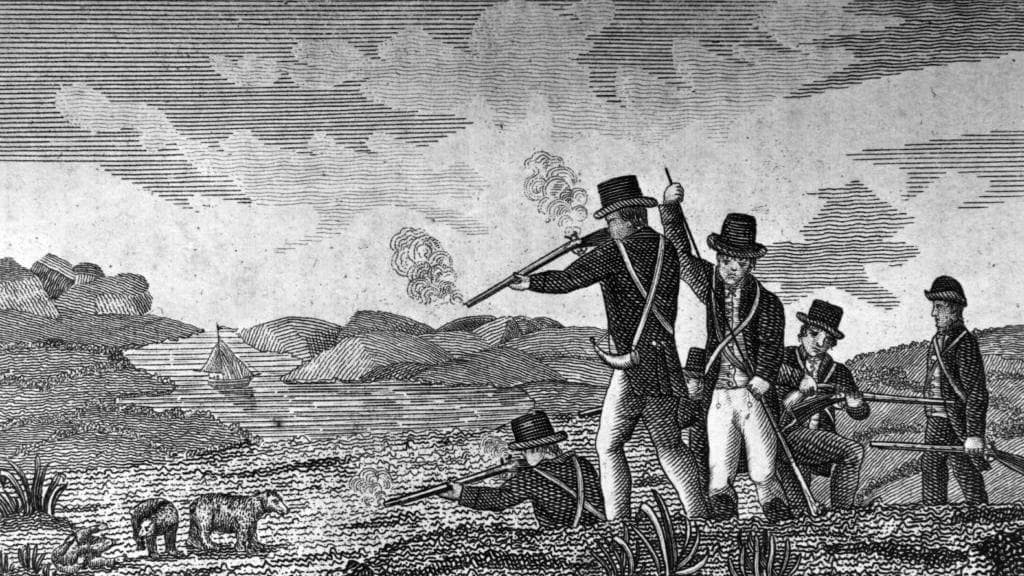
The United States grew by buying land, seizing land, and remaking the map around who was allowed to stay. From the Atlantic seaboard republic that declared independence on July 4, 1776, to the continental power that followed, expansion was never just geography. It was also a political project that tied national greatness to borders, settlement, and control.
From seaboard republic to continental power
The clearest symbol of that growth is the Louisiana Purchase. Signed on April 30, 1803, the deal gave the young republic 828,000 square miles west of the Mississippi River for $15 million and effectively doubled its size. Thomas Jefferson’s government treated the transaction as a leap toward continental reach, but the map it redrew was already home to Native nations whose futures were being decided without them.
That pattern did not end with a single treaty. It became policy. Congress passed the Indian Removal Act in 1830, authorizing the federal government to negotiate exchanges that would push Native lands in the East into the trans-Mississippi West. In practice, those negotiations became instruments of coercion, and the result was not peaceful relocation but mass displacement.
Dispossession as a nation-building tool
The Trail of Tears, in 1838 and 1839, remains the most searing example. Cherokee people were forcibly removed from their homelands in Georgia, Alabama, and Tennessee and taken to what is now Oklahoma. The National Park Service describes the trail as a place to remember and commemorate Cherokee survival, while the Smithsonian National Museum of the American Indian presents Native removal as a difficult chapter in the history of both Native Nations and the United States.
That language matters because it rejects a softer civic myth in which expansion appears inevitable and benign. Native Governance Center says the federal government stole more than 90 million acres of Indigenous land during the allotment era, a figure that shows how removal did not end with the 1830s. It continued through legal mechanisms that broke up tribal land bases, transferred control to outsiders, and left generations to rebuild around loss.
The historical record also shows how expansion became a moral story about destiny, not just a sequence of land deals. As the country widened, its leaders and institutions often described movement westward as proof of national strength. The cost was carried by Native communities whose displacement made the new map possible.
How the 250th anniversary is being framed now
That same language of strength and destiny is back in the political moment surrounding America’s 250th anniversary. The White House says July 4, 2026 will mark 250 years of American independence, and Donald Trump’s January 29, 2025 executive order created Task Force 250 to plan an “extraordinary celebration” and coordinate with the bipartisan U.S. Semiquincentennial Commission. The task force is set to terminate on December 31, 2026 unless the president extends it.
The official commission, known as America250 and established by Congress in 2016 as the U.S. Semiquincentennial Commission, was designed for something broader than spectacle. Its original purpose was a nonpartisan, community-focused commemoration built around local programs, history, service, and reflection. That approach points to a very different anniversary, one that treats the 250th not as a national victory lap but as a civic reckoning.
The Trump White House has instead built its own branding around “Freedom 250.” That framing casts the anniversary as an assertion of power and unity, but it also narrows the story by emphasizing celebration over contradiction. When expansion, borders, and national pride are placed at the center, the people most affected by U.S. growth can easily be pushed back to the margins.
What the clash is really about
This fight is about more than who plans the fireworks in Washington, D.C. It is about whether the country tells its own history as a march of progress or as a record of expansion that depended on dispossession. The difference is not semantic. It shapes how schools teach the past, how public commemorations present it, and how Americans understand the relationship between sovereignty and land.
A patriotic pageant can acknowledge the founding while skipping over removal. A historical reckoning can hold both facts at once: the United States declared independence in 1776, bought 828,000 square miles from France in 1803, passed the Indian Removal Act in 1830, and then forced the Cherokee along the Trail of Tears in 1838 and 1839. Those are not competing footnotes. They are the structure of the story.
The next chapter will depend on whether the semiquincentennial becomes a stage for triumphant mythmaking or a public accounting of how the country grew, who paid for that growth, and which communities are still living with the consequences.
This article was produced by Prism’s automated news system from verified source data, official records, and press releases, then run through automated quality and moderation checks before publishing. The system is built and supervised by the people who set the standards it runs under. Read our full AI policy.
Did this article answer your question?