How America’s founding creed became a battleground over equality
America’s equality creed was contested from the start, and the fight over who it includes still powers today’s battles over citizenship and rights.
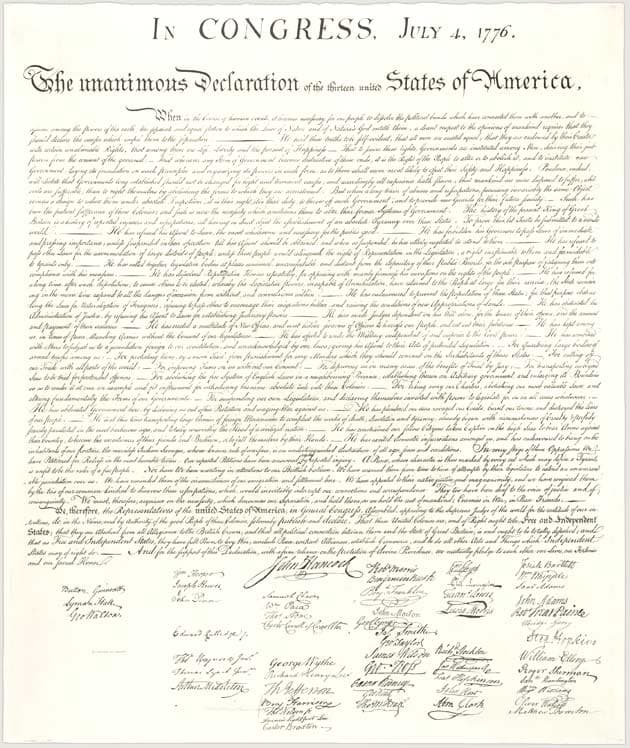
The phrase “all men are created equal” was never a settled promise. It entered American life as a political claim, then became a tool for challenge, exclusion, and expansion, depending on who wielded it. That is why the nation’s founding language still sits at the center of fights over citizenship, equality, and who gets to define the American creed.
The founding line that launched a debate
Thomas Jefferson drafted the Declaration of Independence between June 11 and June 28, 1776, then submitted revisions to John Adams and Benjamin Franklin before the Continental Congress adopted the final version on July 4, 1776. The National Archives notes that the Declaration is not legally binding, but it has remained one of the most powerful statements of American identity. Its authority comes less from law than from the moral force of its opening claims, especially the sentence that declares that “all men are created equal.”
That sentence has never belonged to one interpretation. The Library of Congress notes that, from the beginning, readers disagreed over whether “all men” meant all humanity or whether it quietly excluded women, children, and others left outside the political community of the era. In that sense, the line was both universal and limited, a promise that could be read as expansive or evasive depending on the political moment. The ambiguity is exactly why it has remained so useful in arguments over who counts as fully American.
Jefferson’s draft and the fight over slavery
The contradictions inside the Declaration were already visible in Jefferson’s rough draft. According to the National Archives and the Library of Congress reconstruction of Jefferson’s “original Rough draught,” Jefferson included an anti-slavery passage condemning the slave trade, but Congress removed it before adoption. That deletion matters because it shows that the nation’s first great statement of equality was edited by lawmakers who were unwilling to confront slavery directly.
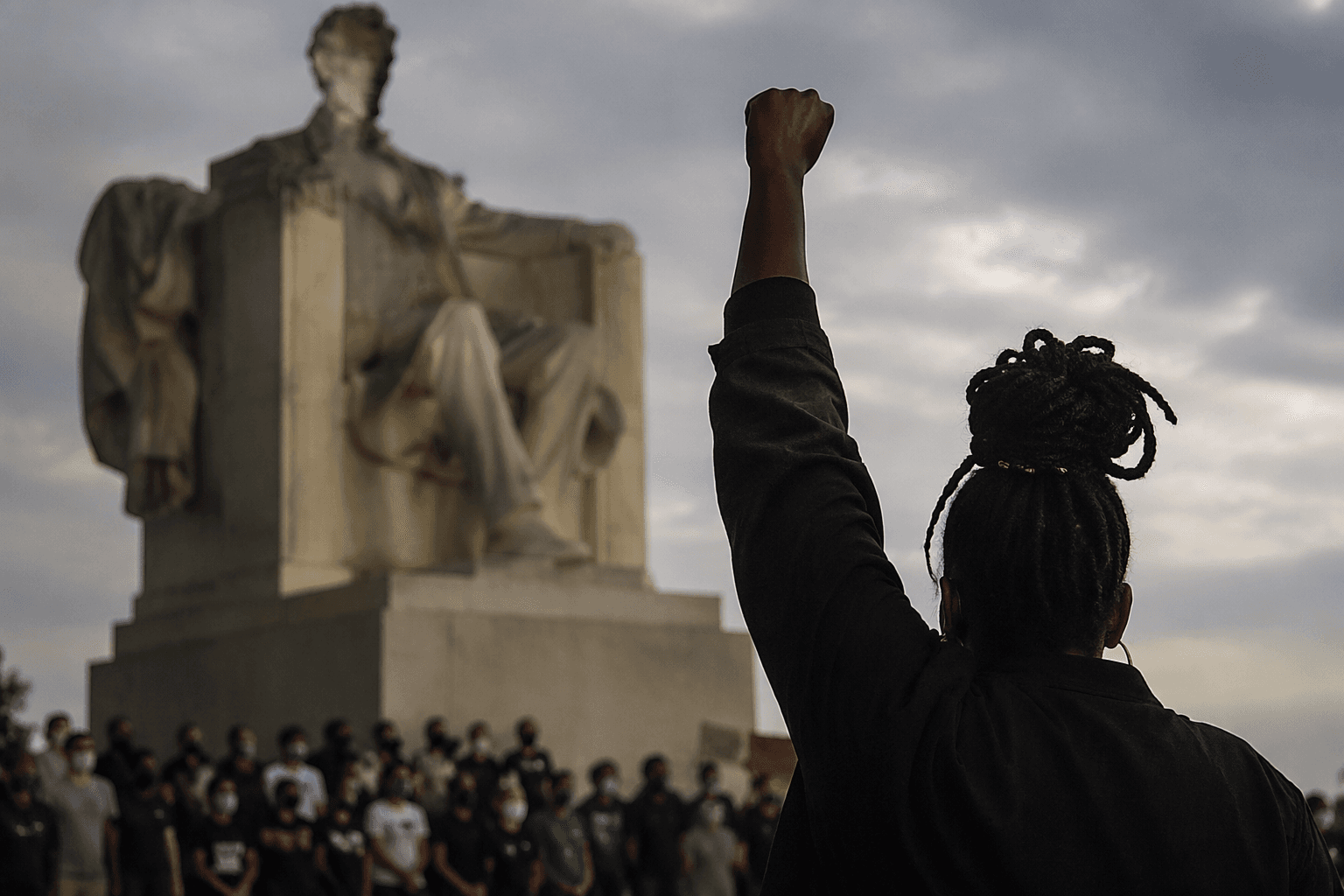
The result was a founding document that asserted universal principle while sidestepping a central injustice. That gap between ideal and reality has fueled American politics ever since. It is also why modern disputes over the founding language are not just about history lessons. They are about whether the creed should be read as a narrow inheritance from 1776 or as a standard that keeps getting expanded by later generations.
Equality as a weapon in the hands of reformers
One of the most important re-readings came at the Seneca Falls Convention in Seneca Falls, New York, on July 19-20, 1848. There, Elizabeth Cady Stanton’s Declaration of Sentiments deliberately echoed the Declaration of Independence by declaring that “all men and women are created equal.” That wording was not accidental. It was a direct challenge to the original document’s limits and a claim that the nation’s foundational promise applied to women as well as men.
The convention produced 100 signatures on the Declaration of Sentiments, a striking measure of how quickly the language of equality could become a mobilizing force. The National Park Service preserves the phrase as a defining line of the women’s rights movement: “We hold these truths to be self-evident; that all men and women are created equal...” In other words, Stanton and her allies did not reject the founding creed. They seized it, amended it, and used it against the exclusions embedded in the original order.
Adams, Lincoln, and the struggle over meaning
Not everyone thought equality meant equal standing in every sense. In 1814, John Adams wrote that teaching that all people are born with equal powers, influence, and property was a “fraud.” His criticism shows that even a Revolutionary-era leader could embrace political independence while rejecting the idea of full social and economic equality. The founding generation itself was divided over how far equality should reach.
Later interpreters pushed the phrase in the opposite direction. Stanford historian Jack Rakove has said Americans in the decades after 1776 began reading the Declaration’s equality language differently than the framers intended. Abraham Lincoln later used the Declaration to argue for a broader understanding of equality, and Martin Luther King Jr. drew on the same language to press claims for human dignity and civil rights. The Library of Congress captures the stakes plainly: within the context of the times, “all men” could be read as a euphemism for humanity, and those who invoked the Declaration to demand equality for African Americans and women claimed both historical and moral high ground.
Why the fight still matters now
That long struggle explains why the nation’s founding creed remains so politically explosive. The same words can be used to defend tradition or to demand expansion, to justify narrow citizenship or to argue for inclusion. When Americans fight over the meaning of equality today, they are not only debating policy. They are fighting over who gets to inherit the authority of 1776 and how far that authority should reach.
The enduring power of “all men are created equal” lies in its unfinished meaning. Jefferson’s line was adopted into a nation that still tolerated slavery, contested women’s rights, and argued over the limits of democracy. Every major reinterpretation since then, from Seneca Falls to Lincoln to King, has tried to pull the creed closer to its universal promise. That is why the phrase remains a battleground: it is not simply a record of what America once said, but a test of what America is still willing to mean.
This article was produced by Prism’s automated news system from verified source data, official records, and press releases, then run through automated quality and moderation checks before publishing. The system is built and supervised by the people who set the standards it runs under. Read our full AI policy.
Know something we missed? Have a correction or additional information?
Submit a Tip