How Apache County residents can find meeting agendas and submit public comment
Learn where Apache County business is posted, what to expect on agendas, and the exact steps to request meeting links, minutes, and public‑comment rules from county and town clerks.
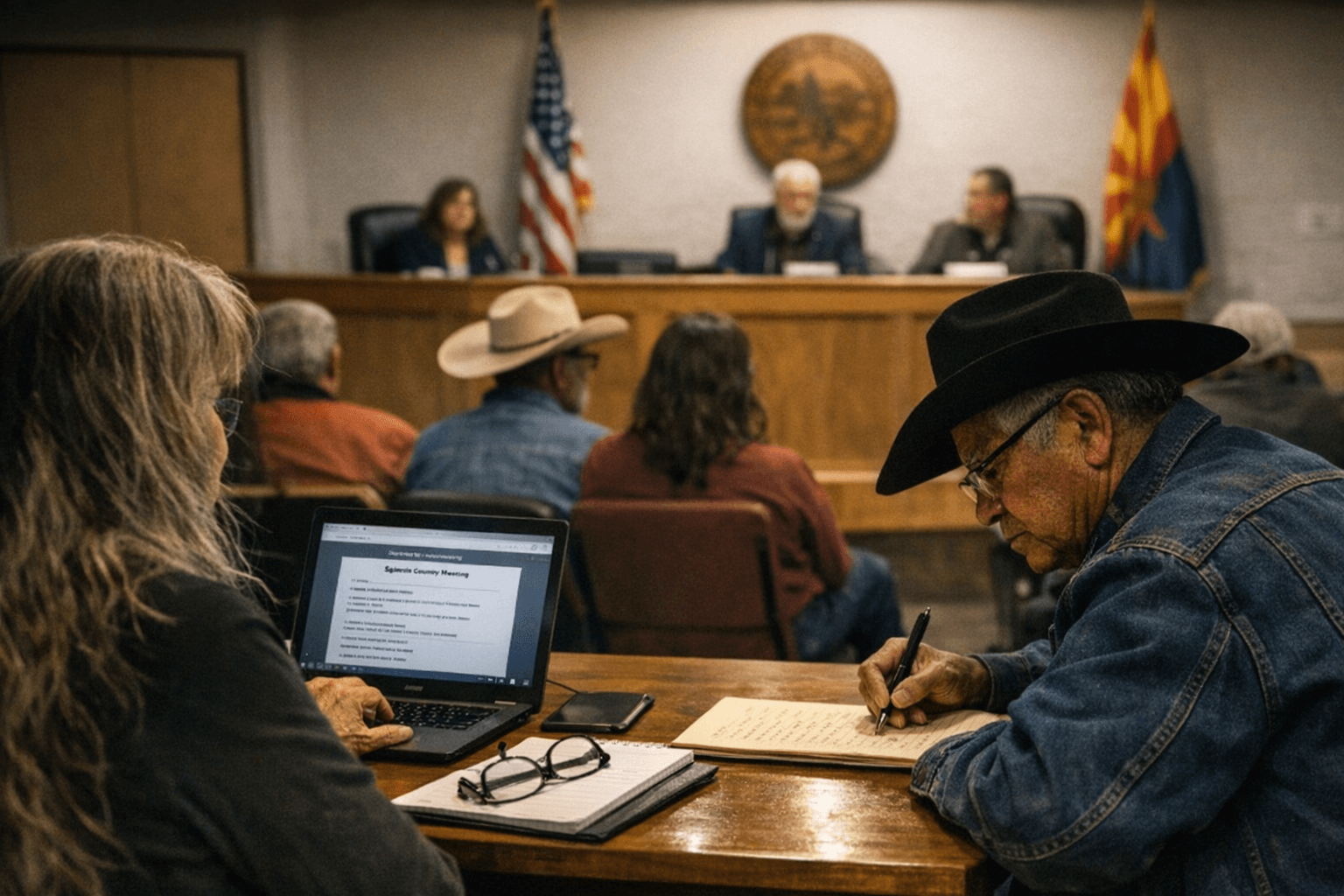
Start here: why this matters and what you can demand. The original report frames the problem plainly: "Why this matters: Apache County residents who want to influence local decisions, request services, or follow official business need to know where and how to find meeting agendas, minutes, how to submit public comment, and whom to contact. Meetings are the primary way county supervisors, town council" — that sentence cuts off in the source, but its point stands: access to agendas, minutes and public‑comment procedures is the gateway to influence local government. Use the numbered steps below to find what is available now, what the public access pages typically contain, and exactly which local officials you should contact to fill the remaining gaps.
1. Understand the core documents you must locate
Meetings produce three essential public records you should expect to find: meeting agendas, supplemental agenda item attachments (packets), and meeting minutes — the Apache Junction excerpt specifies "supplemental agenda item attachments, videos, and meeting minutes." Agendas list items to be decided and often include submission deadlines; packets contain the documents supervisors or councilors will review; minutes record final votes and official action. Insist on all three when you request records from the county or a town clerk.
2. Start with the Apache County Board of Supervisors and the county clerk
The original compilation centers on Apache County supervisors as primary actors; your first formal step is to contact the Apache County Clerk to ask where the Board of Supervisors posts its agenda and minutes. The research notes identify the county supervisors as a top-level body but do not include the Clerk’s URL, phone or email — that missing information is part of the factual gaps you must obtain. When you call or email, request the public access portal URL, the supervisor meeting calendar, and the documented public‑comment rules.
3. Check town clerks for St. Johns, Springerville, Eagar and Chinle
The executive summary specifically names St. Johns, Springerville, Eagar and Chinle as towns you should follow for local decisions. The research does not provide their meeting URLs or clerk contacts, so contact each town clerk directly and ask for: a) where agendas and minutes are posted online, b) the regular meeting schedule and physical meeting location, and c) the town’s public‑comment policy (deadlines, written vs. spoken comment, time limits). Treat each town as a separate jurisdiction — the research highlights that municipal details are often posted on local sites rather than a single county portal.
4. Look for a municipal "public access page" — and note any missing links
The Apache Junction website language included in the research shows a common municipal layout: "Please visit our public access page at to view all of the Planning & Zoning Commission agendas, including supplemental agenda item attachments, videos, and meeting minutes as they become available." The excerpt leaves the URL blank in the provided text, which underscores a recurring problem: pages often reference a public access portal without a clear, copy‑pasted link. When you see that language on any town or county page, demand the exact public access page address or the name of the portal used so you can bookmark it.
5. Use account features and notification subscriptions when available
The municipal excerpt also instructs users to "Create a Website Account - Manage notification subscriptions, save form progress and more." If the county or a town offers account creation, enroll and subscribe to meeting notifications for the Board of Supervisors and for the councils in St. Johns, Springerville, Eagar and Chinle. Accounts commonly allow you to receive agenda postings by email and to save the online comment forms — both features reduce the chance you miss a posting or a comment deadline. If a site does not offer an account option, request email distribution lists from the clerk.
6. Expect videos and attachments but confirm where they are hosted
The Apache Junction text explicitly mentions "videos" alongside agendas and minutes, which is increasingly common for local governments. However, the research does not confirm where meeting videos are hosted (embedded on the public access page, posted to YouTube, or archived elsewhere). Ask the clerk or webmaster whether videos are available, where they are posted, and whether recordings are indexed to agenda items — if you rely on a video to verify what was said, you will need to know the hosting location and timestamp conventions.
7. When submitting public comment, ask for the written policy before you act
The research says residents "need to know ... how to submit public comment," but it does not include the specific rules for any Apache County body. Before making a comment, obtain the official public‑comment policy for the Board of Supervisors and for each town council or commission you plan to address. Request written rules that specify whether comments must be submitted by email, online form, or in person; any word or time limits; deadline for written submissions; and procedures for remote participation or ADA accommodations.
8. If an agenda isn’t posted, follow a documented checklist to request it
The research identifies a checklist of missing items reporters will need for a complete guide — use that checklist yourself to push for transparency. When you cannot find an agenda online, request from the clerk: the meeting date and time, the posted agenda or the packet, any supplemental attachments, the voting record or draft minutes, and the public‑comment procedure for that meeting. Keep a log of your requests — date, who you spoke with, and what they promised — and if you are denied, ask for the reason in writing.
9. Ask specific, concrete questions when you contact officials
The research recommends precise document and interview requests. Use these targeted questions when you contact the county or a town clerk: Where is the county/town public access portal? Do you post agendas X days before meetings and where? Are videos posted, and if so on what channel? Who is the records custodian or webmaster? What is the official rule for public comment? Which email address or form should residents use to submit comments? These are the exact items the research flagged as necessary to complete a public‑access guide.
10. Use social channels and newsletters as supplemental routes — verify first
The Apache Junction page lists social channels and outreach options by platform name: "Facebook", "Instagram", "Twitter", "1024px-LinkedIn_logo_initials", "Newsletter Icon", and "YouTube." While those names suggest municipalities may push meeting notices through social media or newsletters, the research does not confirm that Apache County towns use the same channels. Treat social feeds and newsletters as secondary — use them to double‑check postings or get reminders, but always confirm the official agenda and packet on the public access page or with the clerk.
- Call the Apache County Clerk and ask for the Board of Supervisors public access portal, the agenda posting timeline and the public‑comment rules.
- Email or call the town clerks of St. Johns, Springerville, Eagar and Chinle with the same requests and ask for meeting schedules and regular locations.
- If a site mentions a "public access page" without a link, request the exact URL or portal name and, if offered, create a website account to subscribe to agenda notifications.
Practical final steps to take today
Conclusion Access to agendas, packets, videos and minutes is the basic infrastructure of local democracy. The research shows municipal sites often use a "public access page" model and encourage account creation — but it also surfaces a consistent gap: URLs, contact names and public‑comment rules are not reliably published in the materials provided. Start by asking the county clerk and each town clerk for the concrete items listed above; demanding those specifics makes it easier to weigh upcoming votes, prepare testimony, and hold elected officials to account.
Know something we missed? Have a correction or additional information?
Submit a Tip