How Apple's 1984 Super Bowl Ad Helped Define the Macintosh Legacy
Apple's 1984 Super Bowl ad almost never aired, yet it redefined advertising and computing in 60 seconds, two days before Jobs pulled the Mac from a bag.
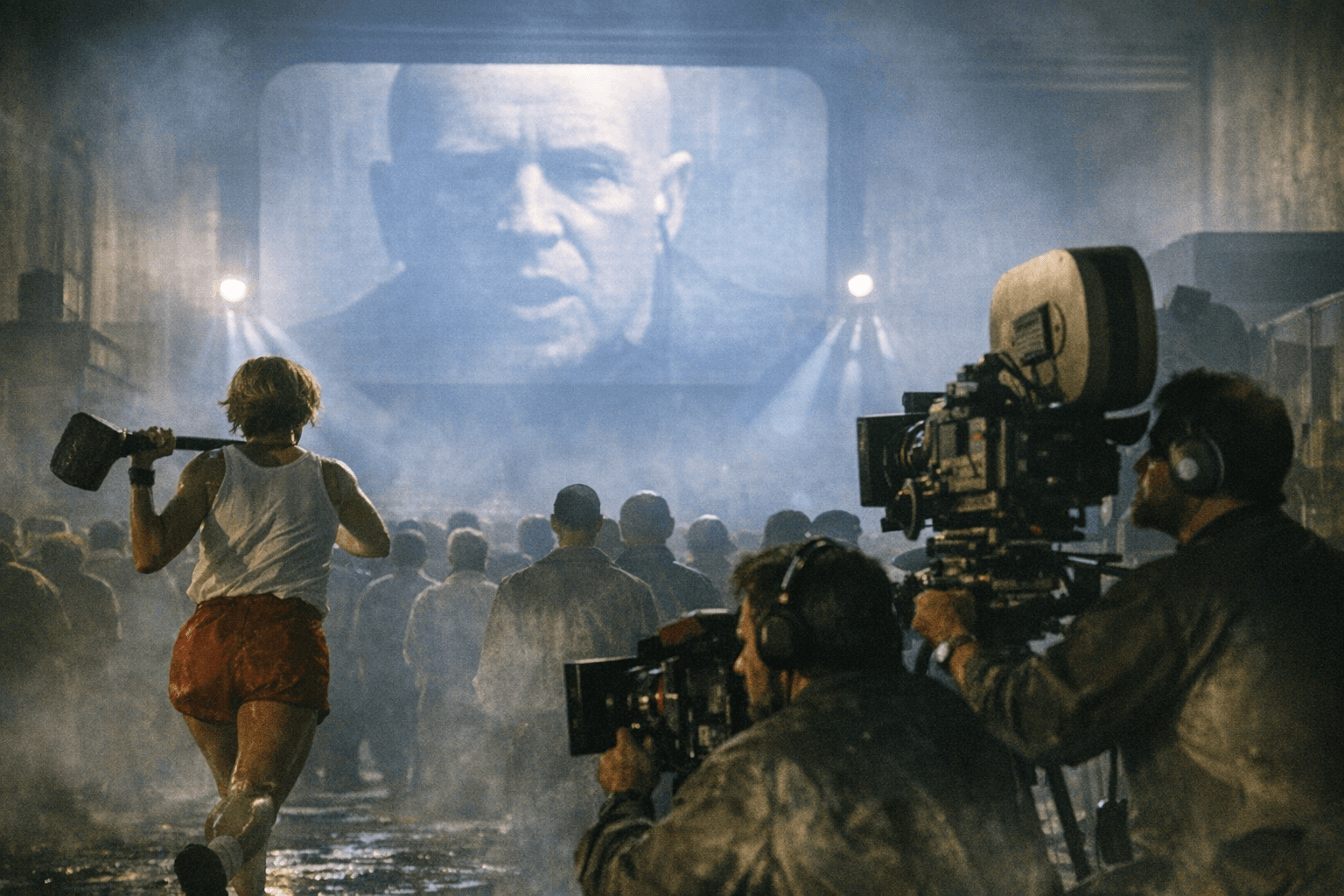
The 60 Seconds That Changed Everything
More than 77 million Americans were watching Super Bowl XVIII on January 22, 1984, when the Los Angeles Raiders paused their dismantling of the Washington Redskins for a commercial break in the third quarter. It's 1984. More than 77 million Americans, nearly one-third of the country, are tuned in to their televisions to watch Super Bowl XVIII. What followed had nothing to do with football. A brass instrument sounded. Bald men in gray uniforms marched toward a screen. A young woman in bright red running shorts sprinted into frame, swung a sledgehammer, and exploded the screen into white light. Then came the words: "On January 24th, Apple Computer will introduce Macintosh. And you'll see why 1984 won't be like '1984.'"
Nobody outside Apple's inner circle had any idea what a Macintosh was. But they were about to find out.
The World the Ad Was Born Into
In 1983, the personal computing market was up for grabs. Apple was selling its Apple II like hotcakes but was facing increasing competition from IBM's PC and clones made by Compaq and Commodore. Most businesses and governments still employed large, expensive, and technically intimidating mainframes. And while the first personal computers of the early 1980s were smaller and less intimidating, they still featured black screens with green text-based commands.
Jobs saw IBM not merely as a competitor but as an existential threat to individual freedom. He saw IBM as Big Brother, and wanted to position Apple as the world's last chance to escape IBM's domination of the personal computer industry. The Mac was scheduled to launch in late January of 1984, a week after the Super Bowl. IBM already held the nickname "Big Blue," so the parallels, at least to Jobs, were too delicious to miss.
The Making of a Masterpiece
The commercial was conceived by Steve Hayden, Brent Thomas, and Lee Clow at Chiat/Day, produced by New York production company Fairbanks Films, and directed by Ridley Scott. Scott was the logical choice: directed by Sir Ridley Scott, the same director behind Alien and Blade Runner, and created by Apple's former advertising agency Chiat/Day, the 60-second advert was inspired by George Orwell's novel 1984, which envisioned a dystopian future, controlled by a televised Big Brother-like figure.
The production was staggering in its ambition. The 60-second mini-film was shot in one week at a production cost of about $500,000. Two hundred extras were paid $125 a day to shave their heads, march in lock-step, and listen to Big Brother's Stalinist gibberish. Shot in dark, blue-gray hues to evoke IBM's Big Blue, the only splashes of color were the bright red running shorts of the protagonist, an athletic young woman who sprints through the commercial carrying a sledgehammer, and Apple's rainbow logo. The commercial never showed the actual computer.
The tagline "Why 1984 Won't Be Like 1984" references George Orwell's 1949 novel. It was written by Brent Thomas and Steve Hayden of Chiat/Day in 1982, and the pair tried to sell it to various companies, including Apple for the Apple II computer, but were turned down repeatedly. When Steve Jobs heard the pitch in 1983, he was sold.
The Board Said No
Apple's "1984" ad during Super Bowl XVIII is arguably the most famous Super Bowl commercial of all time. It almost never ran at all. Steve Jobs and John Sculley were so enthusiastic about the final product that they purchased one and a half minutes of ad time for the Super Bowl, annually the most-watched television program in America. In December 1983 they screened the commercial for the Apple Board of Directors. The board hated it.
When Jobs told Woz the ad was in trouble, he immediately offered to pay $400,000 out of pocket, half of what the airtime cost for the ad would have been, saying: "Well, I'll pay half if you will." The gesture turned out to be unnecessary. With the enrollment of people like Jay Chiat, the famous adman, the Apple board agreed to run the ad just once.
Lee Clow, chairman and global director of TBWA/Worldwide, recalled: "Steve demanded, 'I want something that will stop the world to introduce Macintosh.'" Clow added: "We kind of conspired to not sell the already purchased air time so we could run it one time. We got a pretty big impact just running it once."
Two Days Later: Jobs Pulls the Mac from a Bag
On this day 41 years ago, Apple's first Macintosh went on sale, just two days after being introduced to the world during a commercial break in the third quarter of Super Bowl XVIII. The unveiling took place at the Flint Center for the Performing Arts in Cupertino, California. The event featured the iconic unveiling of the first ever Macintosh 128K, with Apple's co-founder Steve Jobs pulling the computer out of a bag and demonstrating its capabilities, including a graphical user interface and a mouse, both of which were revolutionary for personal computing at the time.
Jobs then presented perhaps the greatest new product demonstration in history. Jobs walked over to a black bag, unzipped it, and set up the Macintosh to wild applause. The crowd had already been primed by two days of replayed Super Bowl footage and breathless press coverage. The machine that appeared before them was unlike anything the public had touched.
What the Mac Actually Changed
The Macintosh wasn't just a product launch. It was a philosophical argument about who computers were for. Drawing inspiration from the pioneering Xerox Alto and improving on the underperforming Apple Lisa, Jobs and the Apple team built the Apple Macintosh with several revolutionary new features that are now taken for granted.
PARC enhanced ease of use with the desktop metaphor, representing mouse-selectable functions by screen images such as file cabinets, printers, and paper. The Mac took those ideas, refined them for mass consumption, and bundled software to prove the point. The Mac bundled MacPaint, which brought computer "art" design to the average user, and MacWrite, a simple word processor that was the first WYSIWYG product of its kind on the consumer market. WYSIWYG, meaning "what you see is what you get," meant for the first time that the text on your screen looked exactly like what would emerge from the printer. Pull-down menus, overlapping windows, the trash can icon on the desktop: these were not decorative flourishes. They were a grammar of interaction that brought computing to a human scale.
The Mac offered an engaging, visual way to interact with computers. The ripple effect was seismic. Programmers set out to show that IBM's PC could do the same, developing graphics-based operating systems such as IBM's TopView and Digital Research's GEM. In 1986, Microsoft introduced Windows 1.0, which emulated the Mac's approach. Four years later, Windows 3.0 got many of the bugs out, and by the mid-1990s, more than 95% of computers worldwide ran Windows. The desktop metaphor the Mac popularized had, in effect, conquered the planet.
A Legacy Written in Two Acts
The story of the Macintosh cannot be separated from the story of its advertisement, and the advertisement cannot be understood without the hardware that followed it. The ad created expectation on a scale no product launch had ever managed; the machine delivered. The computer history museum notes that the Mac's "coming out party was a mass media phenomenon" and that the commercial "invited viewers to reject conformity and explore a new way of computing."
A year after the ad aired, a clash between Jobs and Sculley led the board to force Jobs out of the company. Chiat/Day, the agency that created the ad people are still talking about 40 years later, was fired by Apple soon afterward. The irony is layered: the ad that best captured Jobs' vision of liberation was made possible only by the man who would eventually expel him.
Yet the design choices made in that Cupertino building in January 1984 are the ones your fingers navigate every time you drag a file, click a menu, or watch a document reshape itself on screen before you print it. The mouse, the desktop, the folder, the font. Every icon you tap on a smartphone descends from decisions made under Jobs' watch in the months before Ridley Scott's crew shaved 200 heads and marched them toward a camera. Professor Marcus Collins of the University of Michigan put it plainly: "In my opinion it's the best ad ever made." The Macintosh itself may have earned that same verdict in the history of computing, but only because someone first dared to imagine an audience of 77 million people watching a sledgehammer swing.
Know something we missed? Have a correction or additional information?
Submit a Tip