How Arsenal can beat PSG in Champions League final
Arsenal's path to the trophy runs through control, not chaos. If they win the midfield and quiet PSG's bursts, history is there for the taking.

Arsenal do not need a glamour shootout to win this final. They need restraint, precision and a plan that turns Paris Saint-Germain’s attacking firepower into a series of isolated problems at the Puskás Aréna in Budapest on Saturday, May 30, 2026, with kickoff set for 18:00 CET, or 5pm UK time.
That matters because this is not just another final. It is the 34th in the UEFA Champions League era, and it carries two different kinds of pressure. Arsenal are chasing their first European Cup or Champions League title and their first continental crown in 55 years, while PSG are trying to become only the second club in the modern era to defend the trophy, after Real Madrid’s run of three straight wins from 2016 to 2018. The setting adds to the occasion, with The Killers headlining the Champions League Final Kick Off Show and Hungarian pianist Ádám György performing the anthem before the match.
Arsenal’s route to Budapest has been built on control. UEFA says Mikel Arteta’s side conceded just four goals in the league phase and kept nine clean sheets, while Arsenal say they went unbeaten in all 14 of their continental matches in 2025/26. That defensive profile is the reason they are one game away from joining the small group of teams to complete an unbeaten Champions League campaign, something only nine clubs have ever done. PSG, by contrast, have arrived with force: 44 goals in the competition this season, just one shy of Barcelona’s all-time single-season record of 45.
The final is really three games at once
Arsenal’s best route to victory is to win the game behind the game. First, they must keep PSG from turning the middle of the pitch into a launchpad. NBC Sports highlighted the importance of disrupting PSG’s midfield rhythm, and that is where Arsenal’s discipline can blunt the tempo that Luis Enrique’s team usually wants.
Second, Arsenal must survive the wide and central threat together. PSG can score in bursts, which means one lapse can undo 20 minutes of control. If Achraf Hakimi is fit enough to play a major role, Arsenal’s right side will have to manage his overlaps carefully while also tracking the runs and rotations of PSG’s attackers. Khvicha Kvaratskhelia and Ousmane Dembélé can both stretch shape and force defenders into decisions they do not want to make. Arsenal cannot allow those moments to stack up.
Third, Arsenal need composure in the areas where finals are often decided by one touch, one clearance or one second ball. That is where David Raya’s starting position, William Saliba and Gabriel’s duels, and Jurrien Timber’s timing become vital. Arsenal do not need to dominate every spell, but they do need to make PSG work for every entry into the box and every shot from a good angle.
The back line has to set the tone
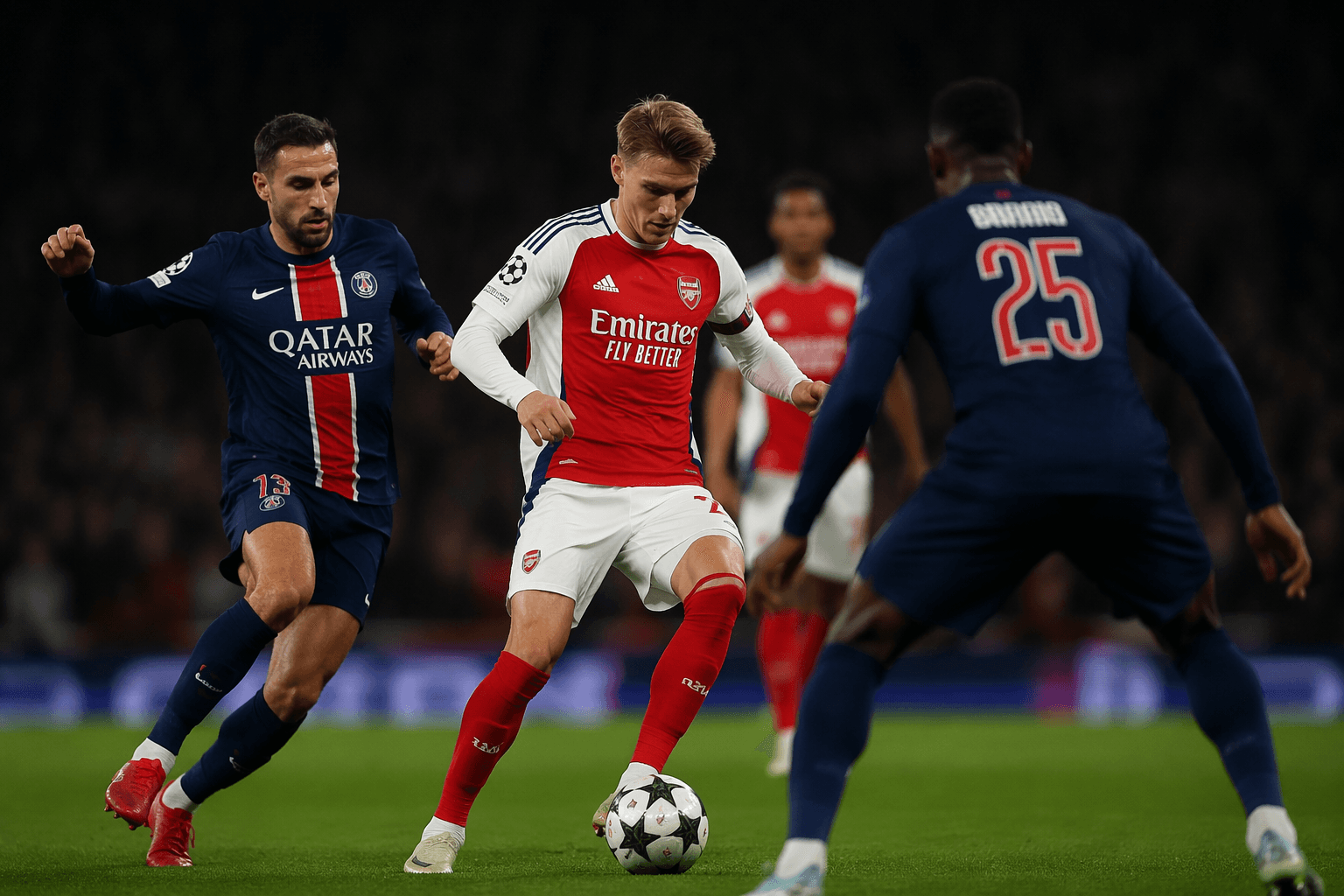
Arsenal’s defensive numbers are not cosmetic. Nine clean sheets and only four league-phase goals conceded tell you they have already shown they can compress space against elite opponents. That gives them a structure to lean on against a PSG side that has been more open-ended but also far more destructive in front of goal. PSG are one match from a title defense, but they also arrive with the burden of expectations that come with 44 goals and a team built to attack.
That is why the duel between Arsenal’s center backs and PSG’s front line is the most important matchup on the pitch. Saliba and Gabriel have to win the first contact, and Timber has to manage the moments when PSG try to drag Arsenal’s shape out of balance. The less Arsenal have to defend while facing their own goal, the more likely this becomes the kind of match in which their season-long habits hold.
Midfield control is where Arsenal can change the story
If the back line is the shield, the midfield is the steering wheel. Arteta’s selection choices in central midfield will shape whether Arsenal can slow PSG down early and keep them from building the kind of rhythm that turns possession into pressure. This is where Arsenal’s evolution under Arteta becomes visible: they are no longer just trying to stay in the game, they are trying to dictate the moments that matter.
Luis Enrique said the two clubs share “similar ideas but have taken different paths.” That is a useful way to read the final. PSG have been built to overwhelm opponents through volume and pace, while Arsenal have become a team that can win with control, patience and organization. If Arsenal can make the midfield feel crowded and uncomfortable, they can force PSG away from the patterns that have carried them all season.

The stakes only sharpen that contrast. Arsenal have now ended a 22-year wait to regain the Premier League trophy, according to the club’s own preview, and they believe this campaign could stand alongside the Invincibles as one of the defining seasons in their 139-year history. A first Champions League title would bring the trophy to north London for the first time and close a 55-year wait for a European crown. That is why this final feels like more than revenge for last season’s semi-final defeat.
Revenge is part of the backdrop, not the game plan
Arsenal and PSG have already met five times in Europe. PSG have won two, Arsenal have won once, and the other two meetings ended in draws. The most recent memory is brutal for Arsenal: PSG beat them 3-1 on aggregate in last season’s semi-finals and then went on to crush Inter 5-0 in the final to lift their first Champions League title.
That history explains why Arsenal frame this as a chance to answer last season’s loss, but revenge alone will not win in Budapest. What wins finals is execution under stress. Arteta’s side need the clarity he has asked for, the courage to play through pressure and the relentless desire to win that he believes must define them. If they bring those three things together, they can turn a matchup that looks tilted toward PSG’s attack into one that rewards Arsenal’s discipline.
The bigger lesson is that Arsenal have reached this stage by becoming harder to break and more mature under pressure. That is the real evolution. Against a PSG team built to finish the job and defend the crown, Arsenal’s opportunity is to prove that control can still beat chaos on the biggest stage in Europe.
This article was produced by Prism’s automated news system from verified source data, official records, and press releases, then run through automated quality and moderation checks before publishing. The system is built and supervised by the people who set the standards it runs under. Read our full AI policy.
Did this article answer your question?