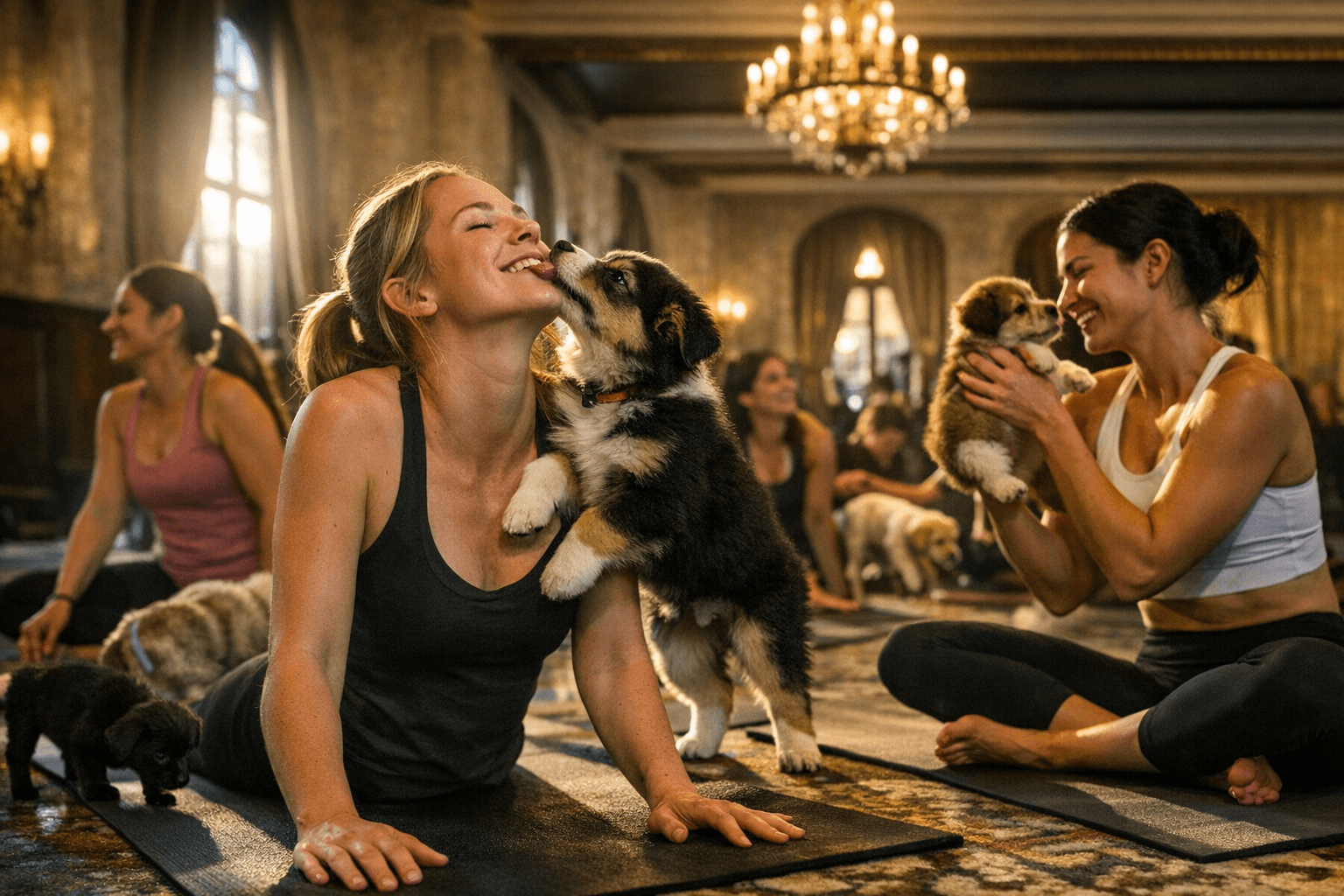
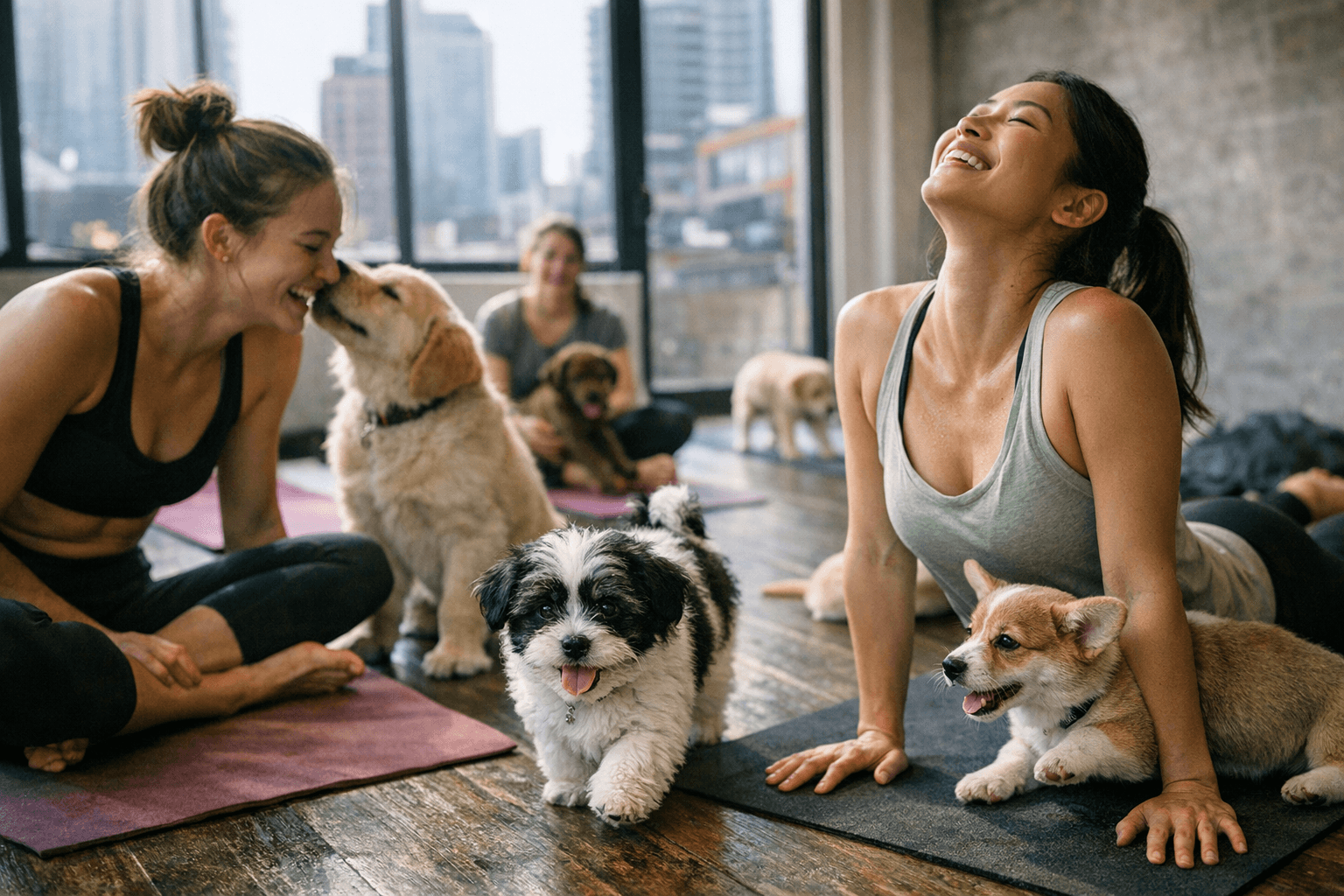
How Doga Began and Simple At-Home Moves for Bonding
Suzi Teitelman, widely credited with creating and popularizing doga in the early 2000s in New York City, developed a practice that merges yoga and dog companionship to strengthen bonding and encourage mindful presence. This primer explains the origins, the core idea of breathing and presence with your dog, and practical, low-risk moves and safety guidance owners can use at home.

Suzi Teitelman launched classes in New York City in the early 2000s that brought people and their dogs onto mats together, coining a practice now widely known as doga, a blend of dog and yoga. The core idea behind those early sessions was straightforward: working with your dog during yoga can deepen the human-animal bond and anchor owners in breathing and present-moment awareness. Over the past two decades the practice has carved out a niche in wellness and pet communities as a low-cost, accessible way to combine movement, stress reduction, and social connection.
Doga’s practical value lies less in contorting animals into poses and more in building calm interaction patterns. Focus on calming presence and breathing together rather than forcing dogs into specific positions. Sessions that prioritize human breath and stillness often invite dogs to join voluntarily, making the experience rewarding without risk. For many owners, the social and emotional benefits include reduced anxiety, a structured way to spend quiet time with a pet, and gentle exposure to other people or animals when classes are carefully vetted.
At-home moves to try are simple and intentionally low-impact. Begin with a relaxed child’s pose on a mat and allow the dog to approach or rest near you; the position brings your center of gravity low and creates a calming posture for both of you. Use gentle downward dog transitions for yourself while encouraging your dog to move around the mat naturally; avoid lifting or forcing a dog into a body position. Throughout, allow the dog to choose participation and respond to clear, calm cues rather than physical manipulation.
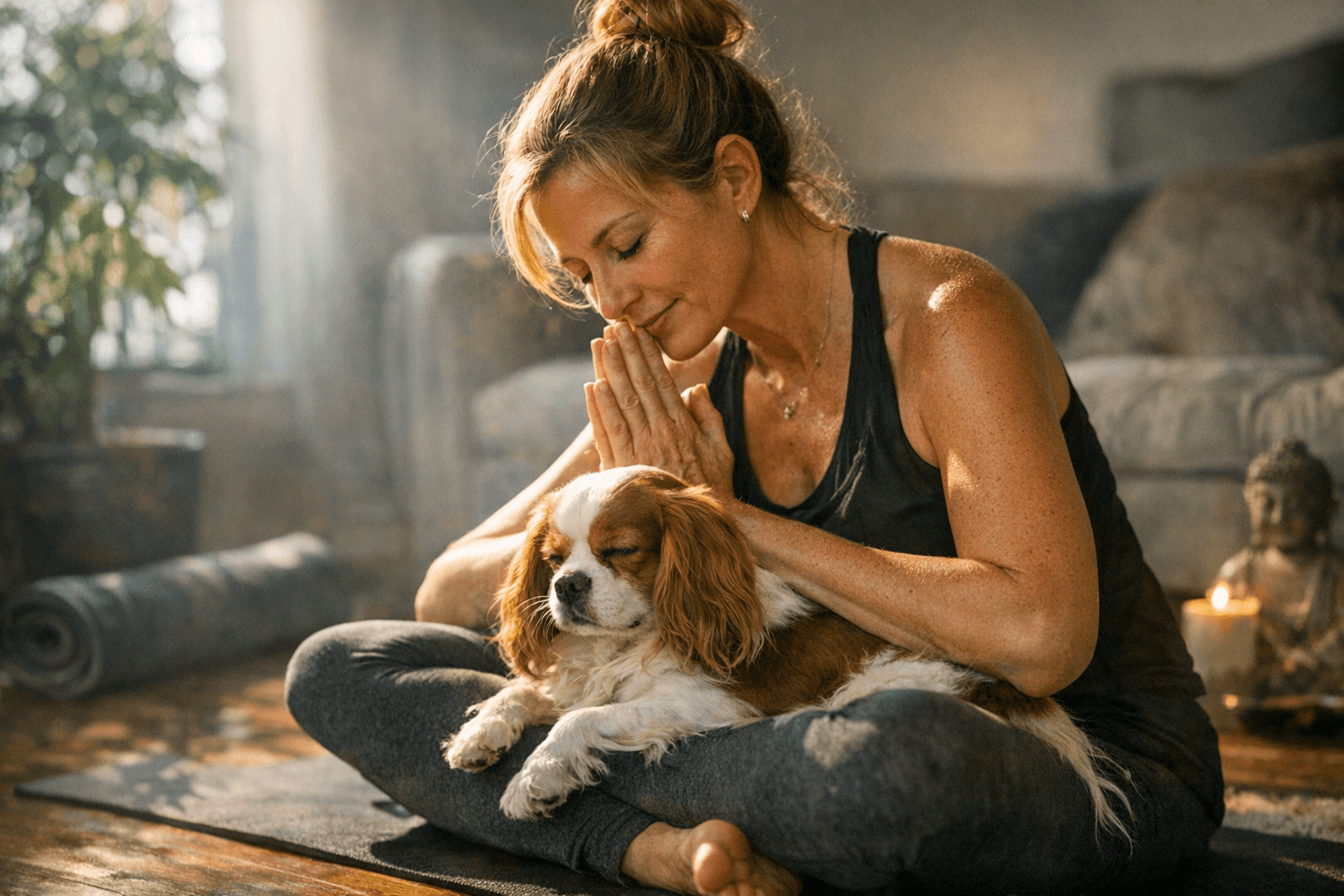
Safety and consent are central. Prioritize your dog’s comfort and watch for signs of stress such as tucked tail, pinned ears, lip licking, or avoidance. Avoid over-handling puppies and any animal that shows stress. Verify vaccinations and a recent health check before attending public classes, and ensure dogs are well-vetted and calm if you plan to socialize them in group settings. Keep sessions short and positive; end on a calm note.
Doga remains most useful as a gentle bonding practice and a shared relaxation ritual. Try short, repeatable sessions at home that emphasize breathing, presence, and choice. With attention to safety and consent, doga can expand how owners connect with their dogs while keeping activity low-risk and community-friendly.
Know something we missed? Have a correction or additional information?
Submit a Tip