How Driscoll’s turned berries into a global year-round staple
Driscoll’s turned berries into a year-round habit by pairing tight breeding control with global sourcing, but the model also concentrates power, water strain, and labor conflict.
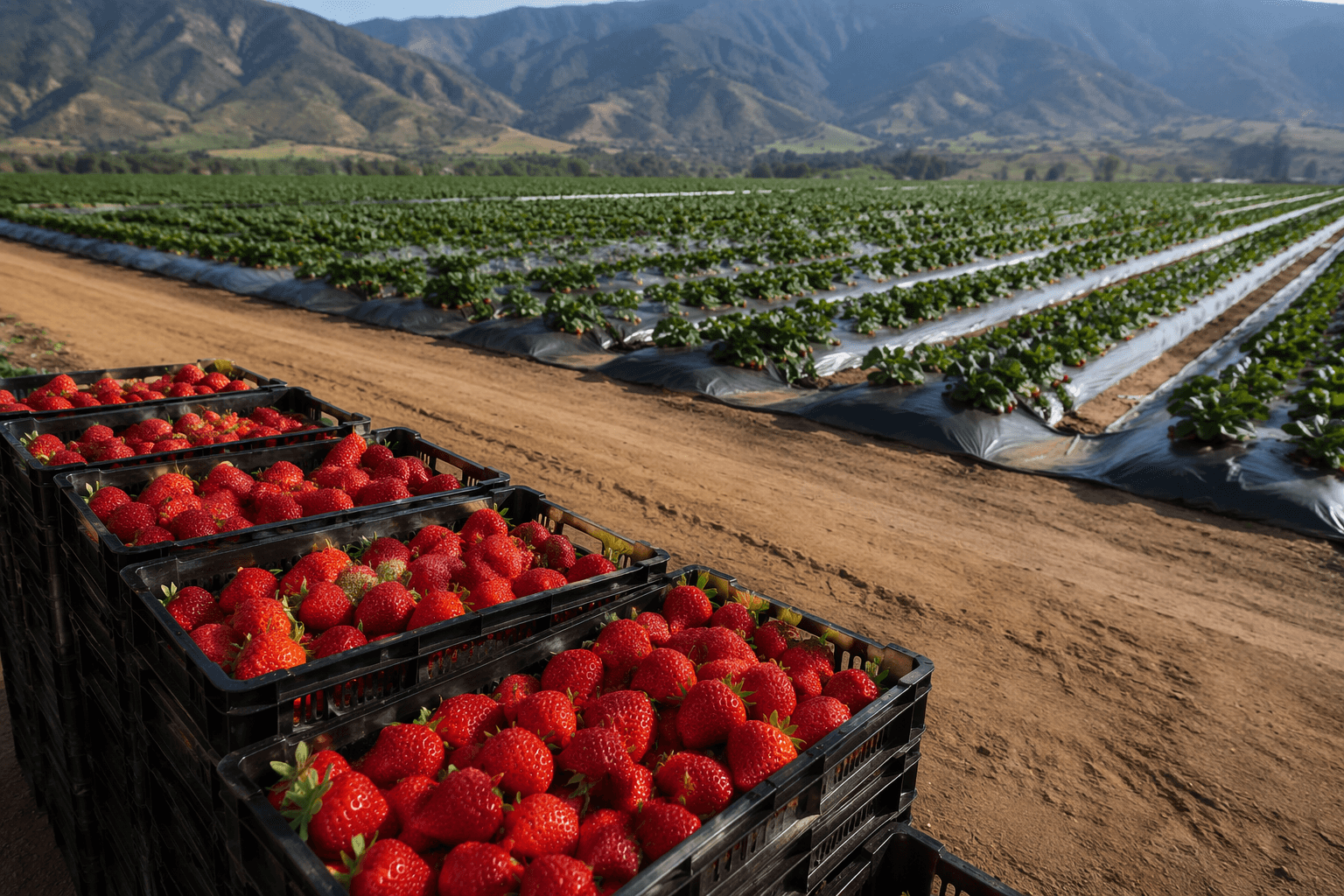
Driscoll’s made berries behave like a pantry item. What began as a California strawberry business in the Pajaro Valley near Watsonville became a system that now delivers strawberries, raspberries, blackberries, and blueberries across seasons, across continents, and into refrigerator drawers that once would have gone empty between harvests.
From Watsonville roots to a global berry house
The company’s roots reach back to the early 1900s, when J.E. Reiter and R.F. Driscoll were growing strawberries in California’s Pajaro Valley. In 1904, they planted the Banner strawberry, an early marker of the identity Driscoll’s would later build around berries that looked uniform, traveled well, and stayed attractive on store shelves.
Driscoll Strawberry Associates, Inc. was founded in 1953, and the business took a decisive step in 1958 with Z5A, its first proprietary strawberry variety. That berry mattered because it extended the season and made long-distance shipping easier, two advantages that would become essential as fresh fruit moved from local abundance to national and then global distribution.
Driscoll’s now says it has more than 100 years of berry-farming heritage and works with more than 900 independent growers worldwide. It also calls itself the global market leader in fresh strawberries, blueberries, raspberries, and blackberries, a claim that reflects not just farm scale but control over timing, quality, and the consumer experience of freshness.
Breeding for consistency, not just sweetness
The modern Driscoll’s model starts in the plant pipeline. Each year, the company says it studies thousands of potential plants, selects the top 1% for farming under the Driscoll’s name, and takes five to seven years to produce a seedling ready for commercial production. That process turns breeding into a long-cycle industrial bet, where appearance, yield, shipping durability, and shelf life all matter as much as flavor.
This is how berries became less seasonal in the shopper’s mind. A crop once tied to a narrow harvest window is now filtered through years of selection and testing, with only a tiny fraction of candidates making it to market. The result is a berry that is less a random farm product than a managed piece of intellectual property and agricultural logistics.
Driscoll’s expansion beyond strawberries also helped stabilize supply. By adding raspberries, blackberries, and blueberries, the company could offer a broader fruit mix through more of the calendar, and its sourcing network stretched beyond California into Mexico, South America, Europe, Australia, and Asia. That geography is central to the year-round promise: when one region is off-season, another can be in production.
How branding turned a basket into a signal
Driscoll’s growth was not only built in fields and breeding rooms. The company used packaging and branding to teach shoppers what premium berries should look like, and a 1982 in-store test in Seattle reportedly showed yellow baskets outsold green baskets 2-to-1. The yellow basket became a signature marker, turning color into a shortcut for quality recognition.
That kind of branding matters in produce because berries are bought quickly and judged visually. A familiar basket can do what a label does in packaged food: reduce uncertainty and suggest a consistent standard, even when the fruit comes from different growers and different countries. In a category defined by perishability, trust in presentation becomes a market advantage.
The larger implication is that Driscoll’s did more than build a recognizable logo. It helped reframe berries as an always-available branded product, not a seasonal treat tied to local harvest rhythms. Once that expectation settles in, consumers start to treat abundance as normal, even though the system required to support it is anything but natural.
The infrastructure behind year-round abundance
Year-round berries depend on a supply chain that is both geographically dispersed and tightly managed. Driscoll’s says it works with more than 900 independent growers, which means the company’s reach extends beyond owned farms into a network of partners who grow under its standards and branding. That structure creates scale, but it also makes the system dependent on coordination across weather, labor, transport, and water access.
The company presents sustainability as part of that operating model. Driscoll’s says it sets aside 2% of profits to invest in communities, and it describes water conservation and water quality as core priorities because water is critical to agriculture and many growing regions face supply and quality constraints. For a berry business that depends on irrigated production in multiple places, water is not a side issue; it is a core production input and a policy risk.
That makes Driscoll’s a case study in how global produce companies now manage scarcity. The same network that delivers winter berries to U.S. supermarkets also increases dependence on distant regions, transport corridors, and local water systems. Convenience for shoppers is built on agricultural coordination that can shift pressure from one region to another.
The costs of convenience
The model has also brought persistent labor scrutiny. Farmworker groups and advocates have accused growers tied to Driscoll’s of wage theft, poor working conditions, and other labor abuses. Familias Unidas por la Justicia and allied workers organized a boycott campaign against Driscoll’s berries, showing that the company’s supply chain has become a focal point for broader fights over farm labor power.
Those disputes reveal the tension inside the berry aisle. A fruit that appears fresh, abundant, and harmless in a clamshell can sit atop a system that concentrates value at the branded end of the chain while leaving growers and workers to absorb volatility in wages, conditions, and weather. The farther berries travel from their original seasonality, the more the costs of that convenience move out of view.
Driscoll’s helped make berries feel like a standard weekly purchase rather than a short-lived local indulgence. It did that through breeding, branding, and a globe-spanning grower network, and it did it so successfully that many shoppers now expect winter strawberries as readily as summer ones. The catch is that the miracle of year-round fruit depends on a highly managed agricultural machine, one that keeps freshness coming while continually negotiating labor, water, and farmer power.
This article was produced by Prism’s automated news system from verified source data, official records, and press releases, then run through automated quality and moderation checks before publishing. The system is built and supervised by the people who set the standards it runs under. Read our full AI policy.
Did this article answer your question?