How Holmes County Residents Can Request Public Records From Local Offices
A practical, office-by-office guide to requesting public records from Holmes County county and municipal offices, with clear steps and what to include in each request.
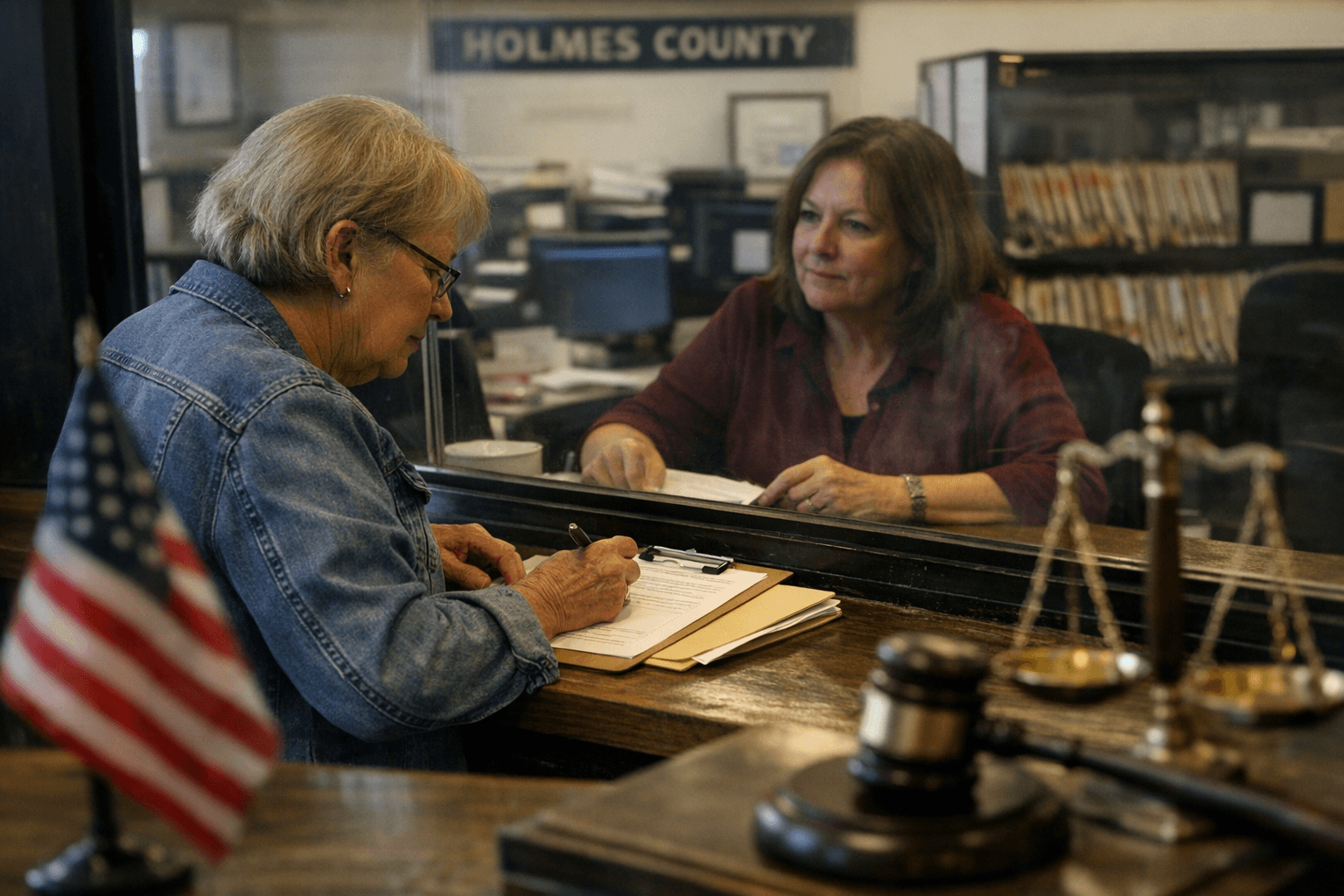
This guide explains how Holmes County residents and members of the public can request public records from local offices—specifically the Board of Commissioners, Sheriff’s Office, Auditor, Recorder, Courts and municipal agencies—and what to include so requests are processed efficiently.
1. Board of Commissioners — what records to request and how to describe them
The Board of Commissioners oversees county budgets, contracts, meeting minutes and resolutions; requestors commonly seek minutes, vendor contracts, and procurement records. When asking the commissioners’ office, identify the meeting date, resolution number or vendor name and provide a specific date range; vague requests (for example, “all emails”) slow processing. Include your full name, phone number and preferred delivery method (paper copies, email or in-person pickup) so staff can clarify or produce records quickly.
2. Sheriff’s Office — public safety records and access limits
The Holmes County Sheriff’s Office holds incident reports, arrest records, daily activity logs, dash-cam and body-worn camera footage and jail records; some material may be restricted for ongoing investigations or privacy reasons. When requesting reports or footage, list the incident date, exact location, names involved and, for video, an approximate time window; note that requests for footage frequently require staff review and redaction before release. Expect staff to confirm whether records are available and to provide an estimate of copying fees or review time when you submit a written request.
3. Auditor — property and tax records, and how to identify parcels
The county auditor’s office maintains property valuations, tax duplicate records and parcel histories tied to parcel numbers; these records are commonly requested for research into property sales or tax assessments. Always supply the parcel number, property address and the tax year or range of years you need; parcel numbers reduce back-and-filing searches and speed production. If you need certified copies (for legal or transaction use), state that explicitly in your request so the auditor’s office can prepare the correct format and fee estimate.
4. Recorder — deeds, mortgages, and recorded instruments
The recorder’s office stores deeds, mortgages, liens and other recorded instruments; requests here are document-specific and often tied to a recorder document number or book/page reference. Provide the precise grantor/grantee names, property address and recording date range to narrow searches in older books or digital indexes. If you want certified copies or full-resolution scans, ask for those options in your request and request a fee schedule in advance to avoid surprises.
5. Courts — civil, criminal and probate records handled by clerks
Holmes County courts (including common pleas, municipal and probate divisions) maintain case files, dockets, judgments and sentencing documents; access rules differ by record type and by court division, and some files may be sealed or partially redacted. Direct requests to the clerk of the specific court that handled the case and include the case number, party names and filing year to help clerks locate records in the docket. Be prepared for per-page copy fees and for clerks to require formal motions or court orders where files are restricted; always request a written statement of any fees or access limitations.
6. Municipal agencies — city and township records vary by office
City halls, village offices and township trustees each maintain their own records—zoning files, building permits, council minutes and local contracts—and their procedures are set at the municipal level. Identify the municipal office (for example, a village clerk or township trustee) and provide exact meeting dates, permit numbers or addresses when you file a request; municipal staffs are usually the quickest to respond if the request is precise. If you are unsure which municipal office holds the record, begin with the municipality’s clerk or administrative office and ask them to direct you to the correct custodian.
7. How to structure an effective written request
A clear written request is the single best way to speed production across all county and municipal offices. Start with a short subject line (for example, “Public records request — Board of Commissioners minutes, July–December 2025”), then list precisely which records you want (dates, names, document numbers), state your preferred format (PDF by email, printed copies, certified copy) and include full contact information. Ask for an estimated cost and expected date of completion in the same message so you have a written record of the office’s timeline and fee estimate.
8. Practical details: fees, timelines and redaction
Most offices will charge copying or certification fees and may require staff time for redaction; because time and costs vary by office and record type, always request a written fee estimate before work begins. Provide a willingness to pay small fees or suggest electronic delivery to reduce costs and turnaround. If an office needs to redact or withhold records, request a written explanation that states the reason and the statute or policy cited for the restriction so you can decide whether to pursue further action.
9. If a request is denied or delayed
When you receive a denial or an unexpected delay, ask the office to provide the denial in writing and to cite the specific reason for withholding the record. Keep copies of your original request, any follow-up correspondence and the office’s response; those documents are essential if you later seek review or file an appeal through appropriate channels. Document dates and names of staff you spoke with to create a clear timeline of the request process.
- Tip: Be specific. Identify dates, names, parcel numbers or case numbers.
- Tip: Put requests in writing and request a fee estimate and completion date.
- Tip: Save all correspondence and note the names of staff you speak with.
Conclusion Requesting public records in Holmes County is a procedural exercise: identify the office (Board of Commissioners, Sheriff’s Office, Auditor, Recorder, Courts or municipal agency), be precise about the records you want, submit a clear written request with contact details and ask for a written fee and timeline. Keeping requests focused and documented increases your chance of a timely, complete response and creates a record you can use if you need further review or clarification as of Feb 26, 2026.
Know something we missed? Have a correction or additional information?
Submit a Tip