How juries decide criminal cases, and why deliberations matter
Verdicts turn less on courtroom drama than on a narrow legal test: did prosecutors prove every element beyond a reasonable doubt, unanimously?
What a jury is really deciding
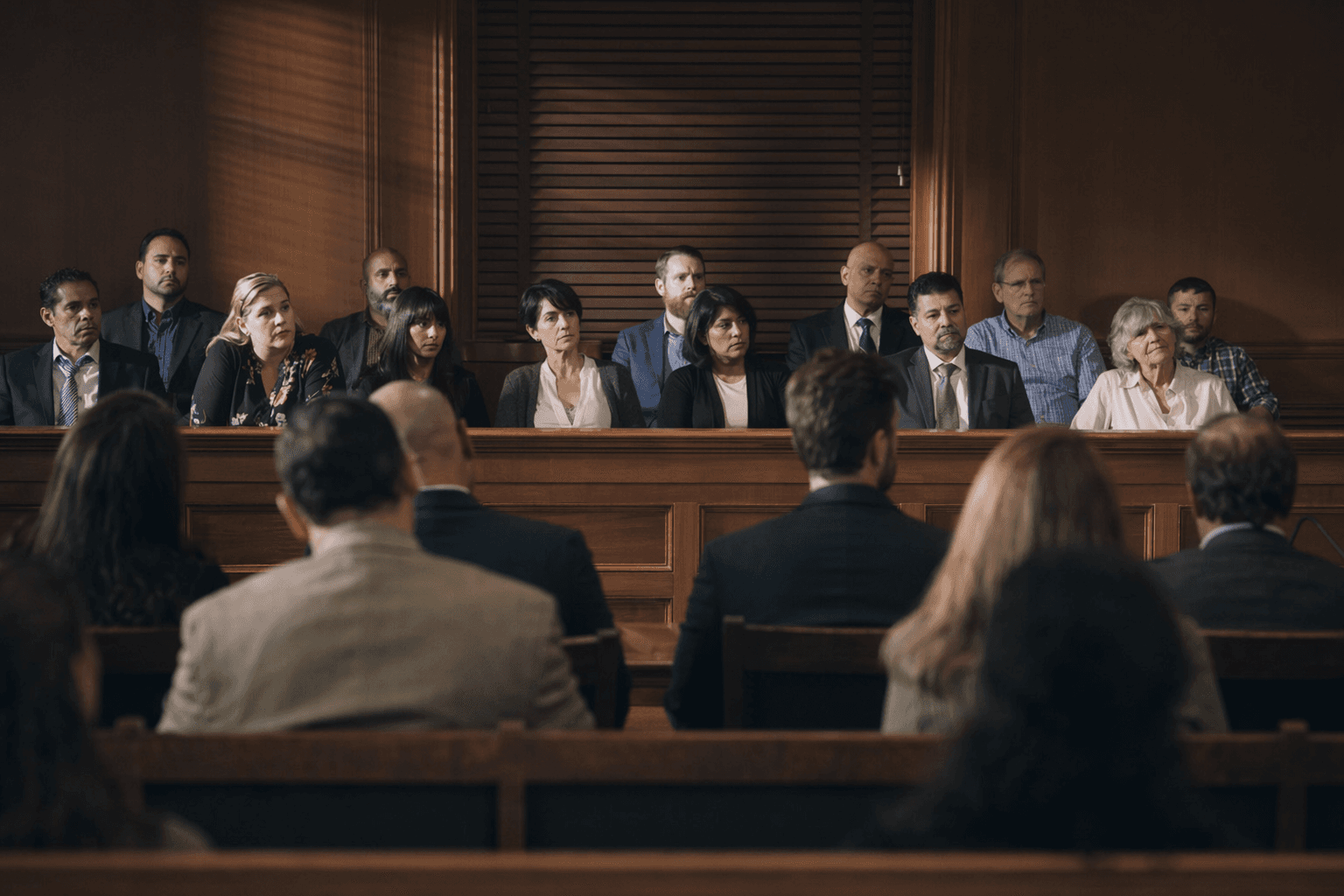
A criminal jury is not asked to solve a mystery in the abstract. It is asked to do three things in order: weigh the admitted evidence, decide the facts, and apply the law as the judge gives it. The U.S. Department of Justice says jurors are selected to listen to the facts of the case and determine whether the defendant committed the crime, which is why deliberations matter so much. The verdict usually turns on whether the jurors can agree, unanimously in federal criminal cases, that the prosecution met its burden on each required element.

The burden of proof is the center of the case
In criminal court, the prosecution must prove each element of the charged offense beyond a reasonable doubt. That standard is not a slogan; it is the core legal test jurors use when they sort strong evidence from weak evidence, and when they decide whether gaps in the record matter. If there is a serious unresolved doubt about an element of the charge, that doubt can control the verdict.
Civil cases work differently. There, jurors generally apply the preponderance of the evidence standard, which is lower than beyond a reasonable doubt. That distinction matters because the same testimony, the same documents, and the same conflicts in the record can lead to different results depending on whether the question is guilt in a criminal case or liability in a civil case. In a criminal trial, the jurors are not asked whether a story is merely more likely than not; they must decide whether the proof is strong enough to eliminate reasonable doubt.
Why unanimity changes the deliberation room
Federal criminal verdicts must be unanimous, and that requirement changes the entire structure of deliberations. A juror cannot simply tally a private vote and move on. Each juror has to test the evidence against the law, explain doubts, and try to reconcile differences with the rest of the panel until everyone reaches the same conclusion. That is why federal jury instructions emphasize a foreperson and direct jurors to deliberate together rather than independently.
The Ninth Circuit model instructions capture the basic job with unusual clarity: jurors must weigh and evaluate all the evidence received in the case, decide the facts, and then follow the law. That sequence matters. Jurors do not get to rewrite the law to fit a preferred outcome, and they do not get to ignore evidence because it is inconvenient. They must work from the record the judge allows them to consider, and only from that record.
Deliberations are where hard cases get sorted out
The public often imagines verdicts emerging from a single dramatic moment. In practice, deliberations often involve a methodical review of testimony, exhibits, and legal instructions. In the Trump hush-money trial, jurors asked to review several portions of testimony and to rehear the judge’s instructions on the first day of deliberations, and the day ended without a verdict. That kind of request is revealing: it shows that jurors frequently focus first on the exact legal and factual points that could control the outcome.
The same pattern appears in penalty phases. In the Boston Marathon bombing case, jurors were told to weigh mitigating factors against aggravating factors when deciding Tsarnaev’s sentence. That is a different task from determining guilt, but it uses the same disciplined approach: identify the governing legal standard, compare the competing facts, and decide which side carries more weight under the instructions. Deliberations are where jurors translate broad accusations into a specific legal judgment.
The most important questions jurors ask themselves
For a criminal jury, the verdict usually comes down to a small number of factual and legal questions, not the emotional force of the case. The first is whether the prosecution proved every element of the offense. The second is whether the evidence is strong enough to meet the beyond-a-reasonable-doubt standard. The third is whether the judge’s instructions allow the jury to connect those facts to the law.
Those questions can become especially sharp in cases with novel theories or complicated charges. In the Delaware cyberstalking case mentioned in recent deliberation examples, jurors were weighing an unprecedented verdict theory, which shows how much the final decision can depend on precisely how the law defines the conduct at issue. When the legal theory is unusual, deliberations often turn into a close reading of the instructions rather than a broad debate over whether the defendant seems blameworthy.
Why the jury room stays private
American jury-room practice is built around secrecy and independence. Deliberations are generally meant to stay private, and courts have long protected that principle because open-ended post-verdict scrutiny could chill honest debate inside the jury room. The point is to let jurors speak freely, change their minds, and test each other’s reasoning without worrying that every comment will later be dissected in public.
There are limited exceptions, and racial bias is the most important one. Supreme Court precedent has recognized that some constitutional concerns can justify looking behind the usual wall of secrecy. Even so, the baseline rule remains privacy, which is why the public usually learns only the verdict and not the internal argument that produced it. That silence is not a flaw in the system; it is part of how the system protects candid deliberation.
Why deliberations matter more than the theater around them
Courtroom arguments, closing statements, and headlines can make a trial feel like a public performance. Juror deliberations are the opposite: quiet, procedural, and governed by legal rules that are easy to miss if you focus only on the drama. The real work is deciding whether the prosecution proved the charge beyond a reasonable doubt, whether the evidence supports each element, and whether every juror can agree on the result.
That is why deliberations matter. They are the point at which a criminal case becomes a verdict, and the verdict becomes the law’s answer to the facts.
This article was produced by Prism’s automated news system from verified source data, official records, and press releases, then run through automated quality and moderation checks before publishing. The system is built and supervised by the people who set the standards it runs under. Read our full AI policy.
Did this article answer your question?

