How Labour Could Trigger a Challenge to Keir Starmer’s Leadership
Starmer can only be forced into a contest if 81 Labour MPs back a challenger or he quits. The rulebook makes a revolt possible, but far from simple.

Keir Starmer’s leadership is not vulnerable to gossip alone. Under Labour’s rules, the only ways to force a challenge are a resignation or nominations from 20% of Labour MPs, which means 81 MPs in a parliamentary party of 405. That is the real threshold that turns Westminster noise into a formal contest.
How a leadership challenge would start
A challenger cannot emerge from nowhere. The contender must be a Labour MP, and if the required backing is assembled, the incumbent leader is automatically placed on the ballot. That matters because it prevents an internal move from simply clearing the field and handing opponents a managed succession. It also means any serious plot has to build enough numbers to trigger a contest while knowing Starmer would still be on the paper.
The current rules make that harder than they used to be. Labour raised the MPs’ nomination threshold from 10% to 20% in 2021, a change that significantly increased the number needed to force the party into a leadership election. In practical terms, the bar is no longer a small bloc of discontented MPs. It is a sizeable parliamentary rebellion that would have to be disciplined, public enough to matter, and large enough to survive pressure from the whips and the wider party.
There is another procedural wrinkle that matters. Labour MPs cannot formally hold a vote of confidence in the leader. They can, however, initiate a leadership challenge each year before the annual party conference. That gives dissatisfied MPs a route to action, but only within a narrow time window and only if they can convert private frustration into enough coordinated signatures.
Who controls the process once a challenge begins
If a challenge reaches the ballot stage, the party machine takes over. Labour’s National Executive Committee controls the timing and the procedures for any leadership ballot, which means the contest is not simply a free-for-all among MPs. The NEC decides how the process runs, how quickly it moves, and the rules that govern the vote.
If Labour is in government and the leader is also prime minister, there is a further safeguard built into the system. Should the leadership become vacant, the Cabinet, in consultation with the NEC, appoints one of its members to serve as party leader until a contest can be organised. That means even a successful push to remove a sitting leader does not create an instant vacuum at the top of government. The party and the Cabinet would have to manage continuity first, then organise the full leadership contest.
Why the local-election defeats changed the mood
The immediate pressure on Starmer comes from the scale of Labour’s local-election losses. Reuters described the results as among the worst local-election performances for a governing party in Britain in more than three decades. Labour lost hundreds of seats and control of multiple councils, while Reform UK made large gains. For a new government, that kind of result does more than bruise morale. It tests whether the leadership still has authority over its own MPs.
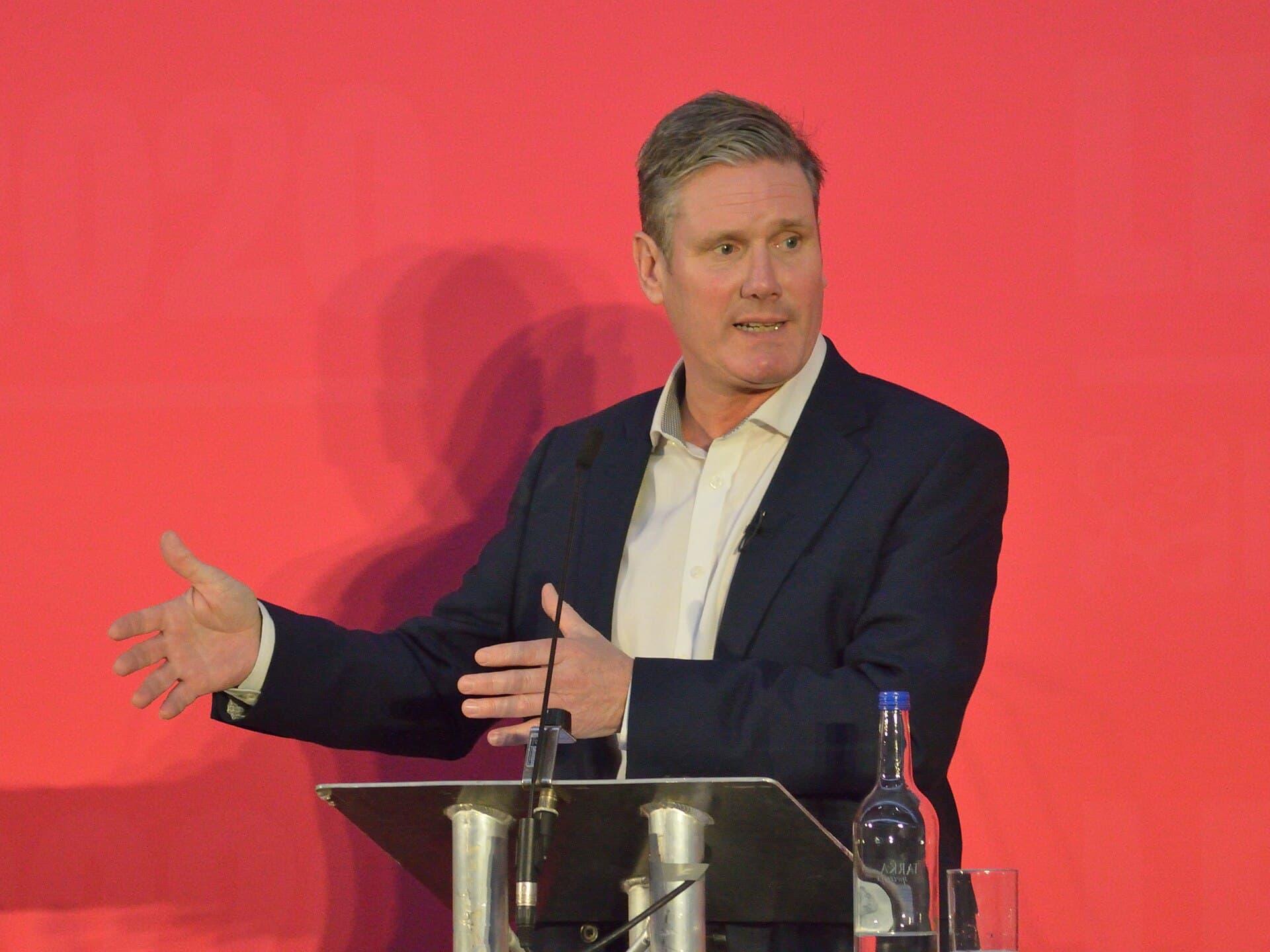
That is why speculation inside Westminster sharpened so quickly. More than 30 Labour MPs were reported to have broken ranks and called on Starmer to set out a departure timeline. Catherine West, the MP for Hornsey and Friern Barnet and a former foreign minister, said on radio that she had put the Cabinet “on notice” until Monday and would seek MPs’ backing for a contest if ministers did not move first. The point was not only to register anger. It was to signal that patience among backbenchers was thinning fast enough to move the conversation from criticism to procedure.
The names now circulating in the background show how quickly a leadership crisis can become a succession debate. Wes Streeting, Angela Rayner, Louise Haigh, Andy Burnham, David Lammy, Gordon Brown, Baroness Harman and Catherine West have all been drawn into the wider chatter around possible alternatives. That does not mean a challenge is imminent. It does show that once a leader looks weakened, Labour’s internal conversation moves immediately to who could plausibly unite MPs, members and affiliates if the rules are activated.
What the recent deputy leadership race tells you
Labour’s 2025 deputy leadership election is a useful reminder that the party can move quickly when it needs to. Angela Rayner resigned as deputy leader and as a government minister on 5 September 2025, nominations closed, the process moved through its two stages, and Lucy Powell won on 25 October 2025 with 54.3% of valid votes on a 16.6% turnout. That sequence shows the party’s formal machinery can be activated at speed once the political decision has been made.
It also shows that a leadership process is never just about MPs. If a challenge reaches the membership ballot, the wider Labour membership and affiliated organisations become decisive. The NEC sets the timetable and the voting rules, but the final outcome then depends on whether the challenger can persuade members, unions and constituency activists that a change at the top is worth the risk before the next general election.
What Starmer’s actual vulnerability looks like
The numbers make the central point clear. Starmer is not exposed to a casual parliamentary mutiny; he is exposed only if 81 Labour MPs decide that a challenge is worth the cost. That is a high threshold, especially when ministers, whips and potential successors all have an interest in preventing a public fracture.
So the immediate question is not whether Westminster chatter exists. It is whether the post-local-election anger can be converted into a disciplined bloc large enough to meet the 20% rule. Until that happens, Starmer remains under pressure but not yet inside a formal leadership contest. If it does happen, the rules ensure the fight would be real, structured and far broader than the handful of MPs currently speaking out.
Know something we missed? Have a correction or additional information?
Submit a Tip