How Pizza Hut frontline workers should identify and report workplace hazards
Frontline Pizza Hut crew, drivers, and support staff can reduce injuries by learning to spot slip/trip hazards, chemical exposures, and equipment risks—and follow clear steps to document and report them.
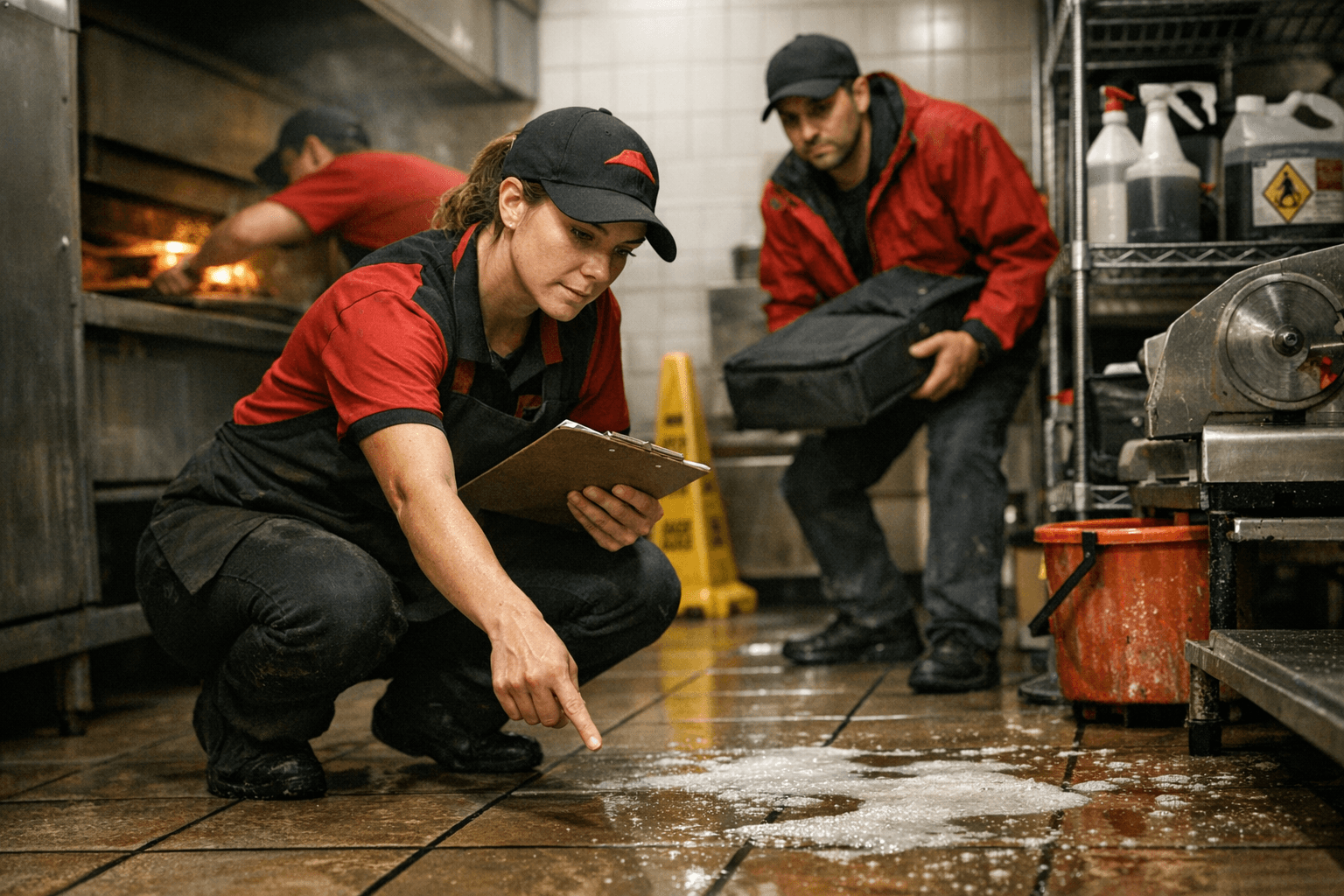
Pizza Hut frontline workers — crew members, delivery drivers, and support staff — regularly encounter on-shift hazards that range from slip and trip risks to chemical exposures and high‑risk equipment. This guide lays out clear, sequential steps for identifying those hazards, taking immediate safe action, and reporting them so problems get fixed.
1. Know who this guide covers and why it matters
This guide is for Pizza Hut crew, delivery drivers, and support staff who face day‑to‑day operational risks. Those roles are exposed to the three core danger categories named in company safety conversations: slip/trip risks, chemical exposures, and high‑risk equipment. Recognizing hazards early protects co‑workers, keeps stores open, and reduces the likelihood of lost shifts or injuries.
2. Memorize the three hazard categories you’ll see most
The hazards to watch for at Pizza Hut break down into three clear buckets: slip and trip risks, chemical exposures, and high‑risk equipment failures. Slip/trip risks include anything that makes floors unstable; chemical exposures refer to cleaning agents and other substances used in kitchens; high‑risk equipment covers ovens, cutters, delivery vehicles, and conveyor systems. Keeping these categories in mind makes it faster to diagnose a problem on a busy shift.
3. How to identify slip and trip risks on the line and in the dining area
Slip and trip hazards are the most common on‑shift danger. Look for wet or greasy floor surfaces near dish stations, entrances with tracked‑in water, uneven mats, or boxes blocking walkways. As a delivery driver, pay attention when loading in wet weather or when parking lot surfaces are icy or poorly lit — those are extensions of the same risk that affect in‑store crew. Noticing the pattern (same spot, same shift) helps when you report.
4. How to spot chemical exposure hazards safely
Chemical exposures often come from cleaning products used in back‑of‑house and front‑of‑house areas. Be alert to strong odors, vapors, skin irritation after contact, or residue left on surfaces after cleaning. If you suspect a chemical exposure, move to fresh air if you feel lightheaded, and avoid further contact while reporting the issue; personal protective equipment and correct dilution are typical controls for these hazards.
5. How to recognize equipment and mechanical risks
High‑risk equipment includes ovens, slicers, mixers, conveyor systems, hot boxes, and delivery vehicles. Warning signs include unusual noises, overheating, sparks, frayed cords, guards that don’t seat properly, or equipment that fails to shut off. Delivery drivers should add vehicle issues — brakes, lights, tires, and cargo restraints — to the equipment checklist because vehicle failures create immediate safety risk for the driver and the road.
6. Take immediate, safe actions on shift
If you encounter an immediate hazard, prioritize personal safety and the safety of co‑workers. For slip/trip risks, cordon off the area with cones or signage if available and clean up spills following your store’s approved procedures. For chemical exposure, move affected people to fresh air and avoid mixing chemicals. For equipment issues, turn off machines only if you can do so safely and without bypassing lockout/tagout requirements. Never attempt repairs beyond your training.
7. Document what you saw: the facts managers need
Accurate documentation speeds fixes. Record the exact location (e.g., back dish station, store front counter, or delivery parking area), time, what you observed (surface conditions, odors, sounds), and who was present. Note recurring patterns — for example, “floor near prep table becomes slippery during evening rush.” If safe and allowed, take a photo to attach to the report; that visual evidence helps managers prioritize repairs.
- Include the name of the on‑shift manager you told and what they said.
- Write down the names of any witnesses and the shift time to create a clear record.
- If an injury occurred, note whether first aid was provided and who responded.
8. Report internally in this order: on‑shift manager, store manager, then escalation
Start by telling the on‑shift manager immediately so the hazard can be isolated or mitigated. If the on‑shift manager cannot resolve it, inform the store manager and provide your recorded facts. If the store manager does not act or the hazard remains unresolved, request escalation to district or regional leadership or the corporate safety team so the issue receives a documented response. Keeping the chain of reporting chronological and factual makes escalation effective.
9. When an incident involves injury: preserve evidence and seek care
If an injury occurs, get appropriate medical attention first. After medical needs are addressed, preserve the scene as much as possible — do not remove or clean up the area unless required for safety. Document the incident with time, location, witness names, and the sequence of events. This preserves facts for the store’s incident record and any subsequent safety review.
10. Follow up until the fix is implemented
A single report is only the start. Check back with the store manager or safety contact to confirm corrective actions — repairs, training, or changes in procedure — have been completed. Keep copies of your documentation and any responses you receive. Persistent hazards that repeat across shifts indicate systemic problems that require district or corporate intervention.
- Rotate visually checking high‑risk spots on each shift — entrances, dish areas, ovens, and delivery bays.
- Use available PPE and follow dilution and handling instructions for cleaning chemicals.
- Keep delivery vehicles inspected before each route; a quick brake and light check reduces roadside risk.
11. Practical tips to reduce hazards during daily work
12. What to expect after a report and why your records matter
After you report, a manager should document the issue and take corrective steps proportionate to the risk. Your notes and any photo evidence help identify trends — for example, a slippery prep counter during dinner rushes — and drive fixes like better mats, schedule changes for cleaning, or equipment servicing. Clear, factual reporting turns isolated problems into actionable safety improvements.
Safety at work is a team responsibility: you get the first look, you get the earliest warnings, and your documentation is the lever that forces repairs. By spotting the three core hazards—slip/trip risks, chemical exposures, and high‑risk equipment—and following these sequential steps to contain, document, and report them, Pizza Hut frontline workers can reduce injuries and keep shifts running reliably.
Know something we missed? Have a correction or additional information?
Submit a Tip