How to convert courts for pickleball and keep neighbors happy
A practical checklist helps facilities convert tennis or basketball courts into dual-use pickleball venues while reducing conflict and protecting surfaces.

Converting underused tennis or basketball courts into dual-use pickleball venues can boost participation, generate revenue, and make better use of community space, but it needs careful planning to avoid friction. This checklist lays out the essentials facilities managers and clubs should follow to make conversions work for players and neighbours alike.
Start with a thorough audit of court dimensions and surfaces. Mark where permanent or temporary lines will go and favour modular lines or removable paint so courts can revert to original layouts if needed. On a single tennis court you can usually fit four pickleball courts if space and fencing allow; basketball courts typically accommodate two to three pickleball layouts with clear play windows. Confirm fencing, sightlines, and run-off areas before committing to a layout.
Equipment and infrastructure determine player experience. Install portable nets rated for regular play and provide durable boundary tapes. Where venues are pickleball-heavy, consider semi-permanent net posts to speed setup and improve consistency. Stock spare net straps, replacement tapes, and basic tool kits to keep courts match-ready.
Scheduling and shared-use policy are the heart of dual-use success. Publish predetermined time windows for each sport, offer advance bookings, and reserve community-access hours to prevent last-minute clashes. Predictable scheduling reduces complaints and creates clear expectations for local clubs and casual players.
Noise and neighbour management require proactive steps. Run community consultations before major changes, set sensible evening curfews, and consider noise-mitigation surfaces or low-bounce balls in locations prone to disputes. Clear communication about event schedules and sound limits helps defuse tensions before they begin.
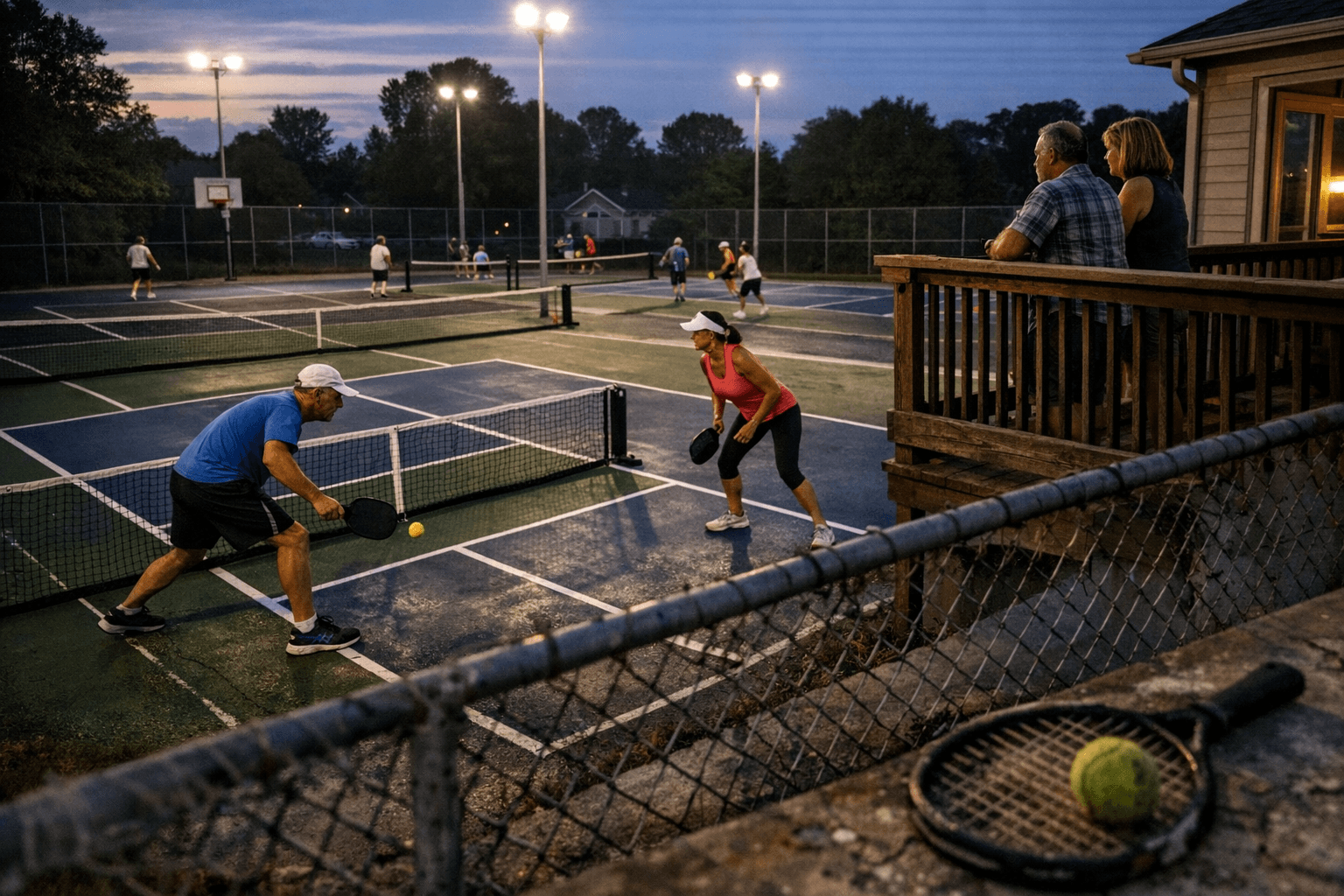
Safety, signage, and maintenance keep courts welcoming and durable. Post rules, warm-up area locations, and court etiquette signs. Supply a first-aid kit and mark entry and exit routes. Select pickleball-appropriate ball types to limit surface abrasion, monitor wear, and schedule regular line refresh and surface cleaning to preserve investment.
Funding and activation matter in Asia, where mall partnerships and corporate sponsorships are common. Seek municipal grants or private partners and present metrics such as court-hours and participation growth when requesting public funds. Build demand with free introductory clinics, school programs, and festival tie-ins to create sustained usage that justifies permanent installations.
The most critical elements are predictable scheduling and clear community communication; get those right and conversions move from nuisance to neighbourhood asset. Our two cents? Dink responsibly, plan for the long run, and treat neighbours as partners. Practical planning and steady community activation will turn temporary pickleball layouts into lasting wins for clubs and players.
Know something we missed? Have a correction or additional information?
Submit a Tip