How to follow meetings, comment, and track land‑use in Douglas County
Follow the Board of County Commissioners, town councils, and planning commissions: where to watch, how to submit oral or written public comment, and what timelines and rules to verify for land‑use and budget items.
1. What this guide covers and the first verification you must make
This guide explains how to find and watch Douglas County governing‑body meetings (Board of County Commissioners, town councils, planning commissions), how to submit public comment, and where to track agenda packets and minutes for land‑use and budget items. First step for any reader or reporter: confirm which state this Douglas County is in, because state open‑meetings laws and statutory duties (for example, Washington’s OPMA) change what bodies must provide and when.
2. Find official meeting calendars and sign‑up pages
Locate the county BCC meeting calendar, each incorporated town’s council page, and the planning commission docket on the county and municipal websites; look for “notify me” or email subscription options. The research notes advise: “To learn the rules for public meetings in your area, check your local government’s websites or reach out to your public officials directly – here’s a resource to help you do that,” and you should add those local subscription pages to your bookmarks and calendar.
3. Where to watch meetings and get agenda packets or minutes
Meetings may be in‑person, virtual, or hybrid; check each body’s meeting page for livestream links and instructions for joining. Agenda packets and minutes are formal documents you should monitor because publication can trigger comment timelines and are the official record for land‑use and budget items.
4. Types of public meetings and why they matter
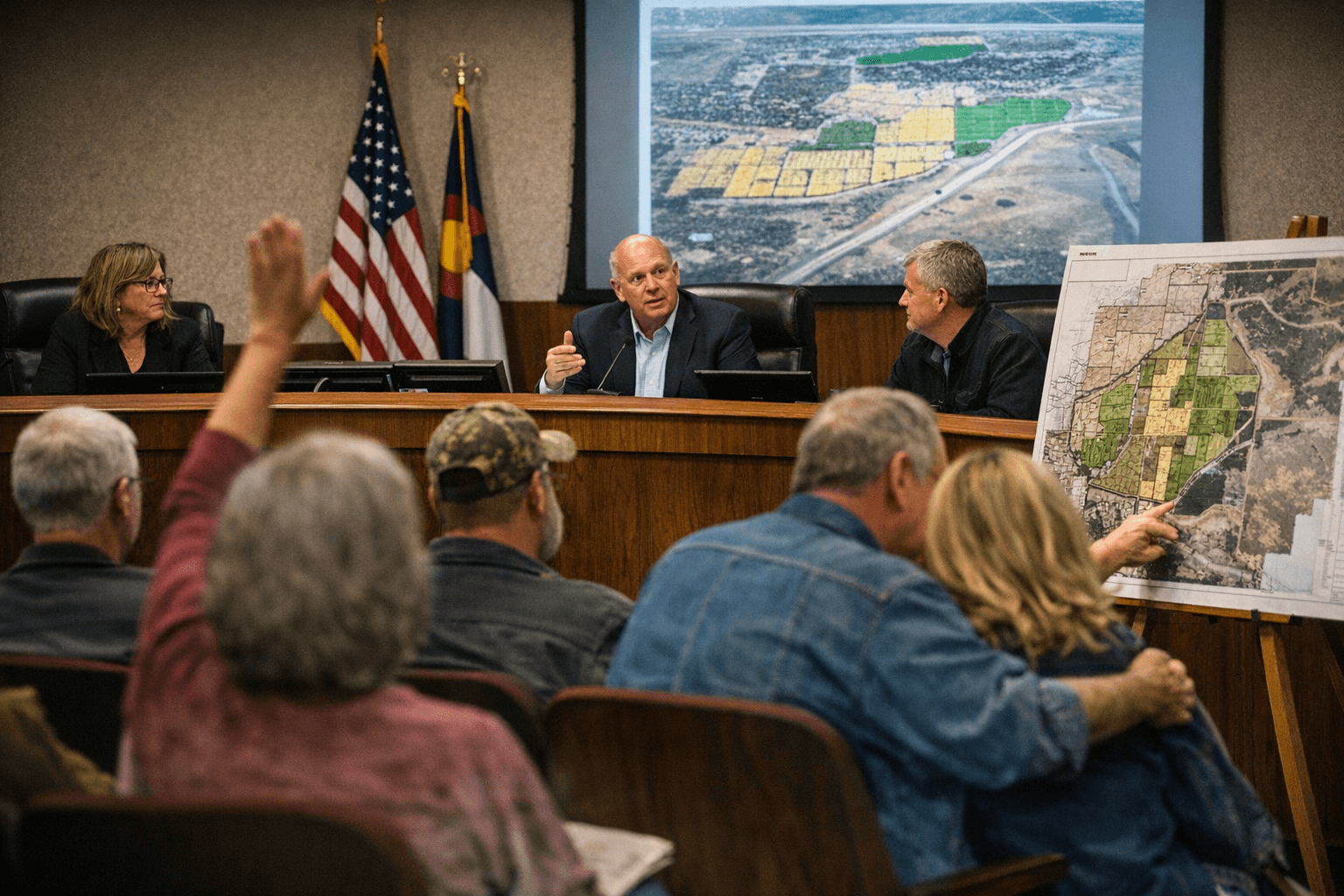
Local bodies (county boards, city councils, planning commissions) typically include a public comment section on regular agendas, while higher bodies such as state legislatures or federal agencies usually rely on formal “public hearings” for input. As Public Interest Network explains: “In a government meeting, ‘public comment’ is a dedicated section of the meeting agenda where any person can speak on any issue they want.”
5. Administrative rulemaking timelines versus meeting comment deadlines
Some processes use long administrative timelines: “There is normally a 60‑day period that starts right after the publication for public commenting. This period is called the notice and commenting period,” followed by “The public comment period is typically followed by a 30‑day reply period.” Those 60/30 timelines (Ejgreenbook) often apply to rulemaking or environmental notice processes, not to short municipal deadlines tied to a single meeting.
6. Municipal meeting deadlines can be much shorter — Orlando example
Municipal examples show much tighter deadlines and formatting rules: “If you would like to participate during a public meeting, please submit a request to speak at orlando.gov/publiccomments and indicate whether you will be participating in‑person or virtually.” Orlando requires written public comment to include name, address, phone number and topic and caps comments at 700 words per item, with a 24‑hour deadline for agenda attachment — a concrete model to compare against Douglas County’s rules.
7. Oral vs. written comment: form, timing, and agency discretion
As ACLU‑WA notes, “Public comment may be spoken during the meeting or submitted in writing prior to the meeting. The agency gets to decide which form public comment will take; if testimony is taken in written form, the body must set a ‘reasonable deadline’ for how long prior to the meeting the testimony must be submitted.” Confirm locally whether Douglas County accepts oral comment, written only, or both — and what “reasonable deadline” the body has set.
8. Registration or preregistration requirements
“Members of the public are sometimes required to provide notice or to register with their local officials before a specific meeting if they want to make a public comment. If you want to make sure you will have a chance to speak at a meeting, contact the meeting officials well in advance and notify them.” That Ejgreenbook instruction is practical: call the county clerk or meeting administrator ahead of a meeting if you plan to speak.
9. Limits on topics, time, decorum, and viewpoint neutrality
Local bodies can impose viewpoint‑neutral “place, time, and manner” rules in a limited public forum; as ACLU‑WA explains, councils “can enact viewpoint‑neutral restrictions on speech (‘place, time, and manner’), if there is a legitimate and compelling government interest.” Expect topic limits (agenda items), time limits per speaker, and decorum rules — verify Douglas County’s exact minute or word limits and any spokesperson rules for groups.
10. Common municipal rules you should check against Douglas County
Orlando’s template shows common items to verify: required contact fields for written comments, word limits, 24‑hour deadlines for agenda attachment, three‑minute oral limits and the request that “large groups are requested to name a spokesperson.” Use those as a checklist when you read Douglas County or town rules so you know whether your submission will be attached to the packet or admitted at the dais.
11. Managing difficult meetings and the emotional context
Meeting management guidance stresses tone as much as procedure: “Give the message that you welcome public comment” and “How governmental bodies speak to their public at meetings is a critical factor in building trust and emotional connection to make a strong community.” If you represent a community group, prepare a concise pitch and a calm presentation to avoid inflaming already tense meetings.
12. Parliamentary procedure and meeting order
Most local bodies use Robert’s Rules of Order to run meetings; as the ACLU‑WA notes, the rules “originated in 1876 with U.S. Army Major Henry Martyn Robert” and remain widely used. Knowing the basic motion and voting language will help you follow when a “final action” occurs — important because some laws require public comment when a body takes final action.
13. Washington State statutory example and when it applies
If this Douglas County is in Washington State, note that “As of 2022, governing bodies subject to OPMA must provide periods for public comment at every meeting in which the body takes a ‘final action.’ RCW 42.30.240,” and that a “final action is a collective decision or a vote by a majority of the body on a motion, proposal, resolution, order, or ordinance. RCW 42.30.020(3).” If the county is not in Washington, treat those RCWs as a state‑specific example and verify your own state law.
14. Practical templates and sample announcement language you can expect or propose
Use the Jurassic Parliament sample wording at meetings to set tone and instruction: “Now is the time to hear from our community. We welcome your comments which are very important to us.” Also consider the administration’s sample: “Please go to the podium, speak into the microphone, and give your name and city of residence. Address your comments to the board as a whole, not to individuals. Courtesy is appreciated.”
15. Land‑use and budget tracking: specific actions to take
For land‑use or budget items, subscribe to agendas, download staff reports in advance, and watch for formal notice publications that may open a 60‑day administrative comment window for rule changes or permitting. Interview the county planning staff to learn whether certain land‑use processes use the longer notice/comment/reply sequence described in Ejgreenbook and to obtain the planning docket for current applications.
- Verify Douglas County’s state and the applicable open‑meetings statute.
- Bookmark BCC, town council, and planning commission calendars and sign up for notifications.
- Call the county clerk to confirm preregistration, oral‑comment time limits, and written‑comment deadlines.
- If preparing evidence for an appeal or quasi‑judicial hearing, ask whether documentary submissions must be uploaded in advance (Orlando requires 24‑hour pre‑submission for appellants).
16. Immediate checklist for readers and reporters
17. Contacts and resources to use now
For practical meeting‑management guidance and sample language, the Jurassic Parliament contact info preserved in the notes is: “P.O. Box 77553, Seattle, WA 98177 tel 206.542.8422 | email info@jurassicparliament.com www. jurassicparliament.com.” Use that as a starting point for best practices and adapt their templates to local rules.
Conclusion: Follow the verification checklist above before you act — confirm the county’s state, bookmark the BCC and town pages, and test the procedure by submitting a small written comment on a non‑controversial item so you know whether Douglas County accepts written submissions, the deadline, and how the material appears in the agenda packet. Track procedural differences carefully: municipal meeting deadlines and administrative 60/30 comment windows are distinct processes that require different timing and tactics.
Sources:
Know something we missed? Have a correction or additional information?
Submit a Tip