How to Spot Fake Labubu: Telling Pop Mart Figures from 3D-Printed Replicas
Pop Mart has pursued legal action and platform takedowns against sellers, but 3D-printed and homemade Labubu replicas still circulate online; learn the specific visual and tactile cues collectors use to tell fakes from originals.

Pop Mart’s legal action and resulting platform takedowns have moved many clear-cut copy listings offline, yet cheap 3D-printed and homemade Labubu replicas continue to pop up across marketplaces and social apps. That pulse of enforcement changed where and how fakes appear, but it did not stop them; collectors still encounter knockoffs in private groups, secondary markets, and in loose-photo posts. Because enforcement is uneven, you need a practical, detail-level checklist to spot a replica before you buy or trade.
Why this matters: authenticity affects value, community trust, and shelf life. Pop Mart releases and collaborations are often the baseline for value, and when a figure is misrepresented as authentic, it distorts prices and trade fairness. The recent wave of platform takedowns tied to Pop Mart’s legal moves shows marketplaces respond, but the circulation of 3D-printed and homemade copies means visual inspection and seller vetting remain your first line of defense.
How fakes are being made and sold: most of the copies moving through fan spaces are not factory counterfeits but small-batch crafts: hobbyists use consumer 3D printers to recreate forms, then sand, prime, and paint figures by hand. Others use silicone molds and resin casts to reproduce a final piece. These methods produce items that can look convincing in a phone photo but reveal telltale differences in person. Because platforms have removed many public listings following Pop Mart’s actions, sellers increasingly offer replicas via private messages, closed groups, or aftermarket auctions.
Material and finish: look for plastic quality and surface texture. Pop Mart originals are produced at scale with smooth, even vinyl or ABS finishes; 3D-printed parts often show layer striations, rough sanding marks, or uneven primer under the paint. Run your finger gently along a suspected fake’s surface: consistent friction and a factory gloss indicate mass-produced vinyl, while faint ridges or a slightly grainy matte feel point toward an FDM print or a rushed resin cast. Lighting exaggerates or hides these faults; always inspect under diffuse daylight when possible.
Paint detail and color matching: Pop Mart paint apps tend to be crisp at edges, with consistent color matching for series pieces. Homemade paint jobs commonly show tiny specks, overspray, or feathered edges where fine lines should be sharp. Compare colors to known authentic photographs from Pop Mart’s official channels; if the hue or saturation is off, that is often a giveaway. Be wary of figures whose metallics or pearlescent paints look flat in person after appearing vibrant in photos, as novice spray jobs and smartphone filters can mislead.
Mold lines, seams, and assembly: factory-manufactured Labubu figures have controlled mold lines in predictable locations and clean assembly joins. Homemade resin casts or glued 3D-prints can show irregular seam placement, visible fill spots where seams were sanded, or small gaps at joints. Check ears, base seams, and the underside of a figure where sloppy cleanup is easiest to spot. If you see inconsistent seam thicknesses or putty marks, it is likely a small-batch reproduction rather than a Pop Mart release.
Weight and sound: originals produced in factory runs have a consistent heft and internal sound when tapped, due to uniform material density. Replicas made from lightweight resin or hollow 3D prints can feel noticeably lighter. Gently tap polymer areas like the head or base; a dull, hollow sound suggests a handmade hollow cast or thin-walled print, while a denser, muted thump is more typical of industrial vinyl.
Packaging and paperwork: platform takedowns have targeted listings that falsify packaging, so sellers sometimes show fake boxes or no box at all. Pop Mart packages are printed at scale and include consistent logo placement and finishing. Homemade replicas often come with plain or generic packaging, hand-addressed shipping, or printed inserts that lack precise typography or gloss quality. If the seller cannot supply matching retail photos on request, treat the lack of proper packaging as a red flag.
Photographic red flags in listings: after takedowns pushed many sellers to private channels, photos became a chief battleground. Look for repeat-use props, inconsistent shadows, and phone-camera filters that hide surface detail. Sellers who will not provide high-resolution, unedited images under neutral lighting or who refuse a short video demonstrating a figure rotated 360 degrees are increasing the risk. Because many 3D-printed sellers rely on staged single-angle shots, demand multiple angles and close-ups of seams and the base.
Seller behavior and provenance: Pop Mart’s actions moved some counterfeit activity out of open markets into private sales. That makes vetting the seller more critical. Ask for purchase provenance: where and when was the figure obtained, and can the seller show payment records or the original receipt? If the seller refuses or offers evasive answers, treat the listing with caution. Trusted community members and known retailers remain your best sources for confirmed authentic pieces.
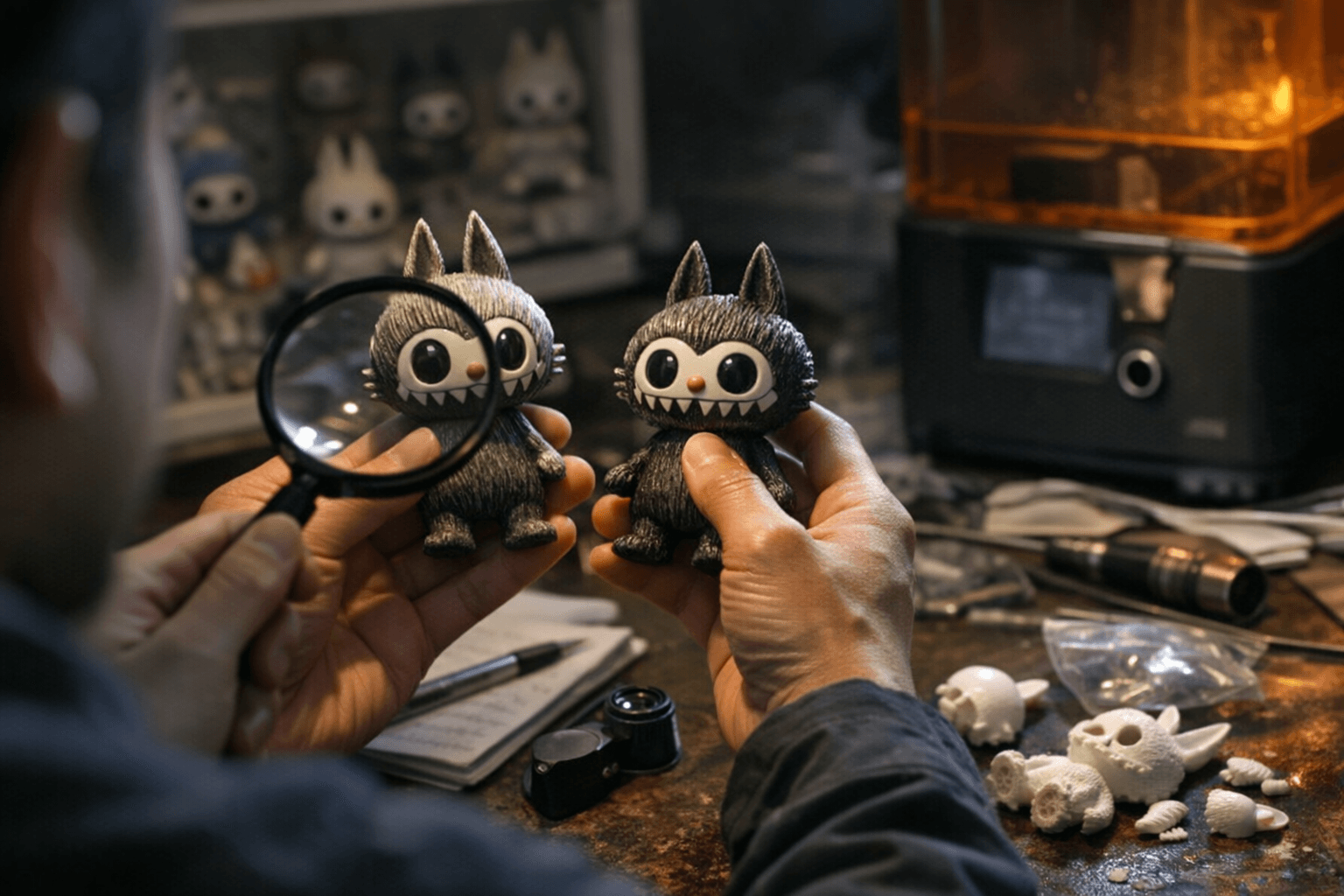
Tools collectors use for authentication: collectors don’t need lab equipment to spot most fakes, but a small kit helps. A magnifier or loupe that provides 10x to 20x detail reveals layer lines, paint splatter, and sanding marks. A neutral white LED lamp exposes surface sheen and color fidelity better than selfies. Some collectors carry a small scale for weight checks or ask for a short video of a figure being tapped to hear density. Because platform takedowns make direct inspection harder, these simple tools up your odds when a seller allows close photographs or video.
How to proceed if you suspect a fake: be cautious but factual. Request clearer images, a short unedited video of the figure rotating, and documentation of purchase. If a seller responds with hostility or insists on no returns, treat the sale as too risky. When you find a probable fake being sold as Pop Mart, report the listing to the platform so enforcement actions that followed recent legal moves can continue to reduce circulation.
The bottom line: Pop Mart’s legal pressure and marketplace takedowns have changed where copies are sold, not the fact that they exist. By combining material checks, paint and seam inspection, packaging scrutiny, and sensible seller vetting you can spot most 3D-printed and homemade Labubu replicas before they enter your collection. Enforcement will keep shifting the battleground; your best defense remains a practiced eye, a few basic tools, and buying from channels with verifiable provenance.
Know something we missed? Have a correction or additional information?
Submit a Tip