How veterinarians recommend safe, tailored exercise for dogs
Veterinarians urge personalized, steady exercise plans for dogs to boost physical and mental health and prevent obesity-related problems.
Like humans, dogs derive health benefits from regular exercise," says VCA / vcahospitals, and the message matters for every owner whose dog races through the backyard or struggles to make it up the stairs. Regular, tailored activity improves physical fitness, sharpens mental stimulation, strengthens the caregiver-dog bond, and reduces the risk of obesity and its consequences, including an increased risk of developing diabetes, an increased risk for cancer, and a high probability of joint injury and subsequent osteoarthritis.
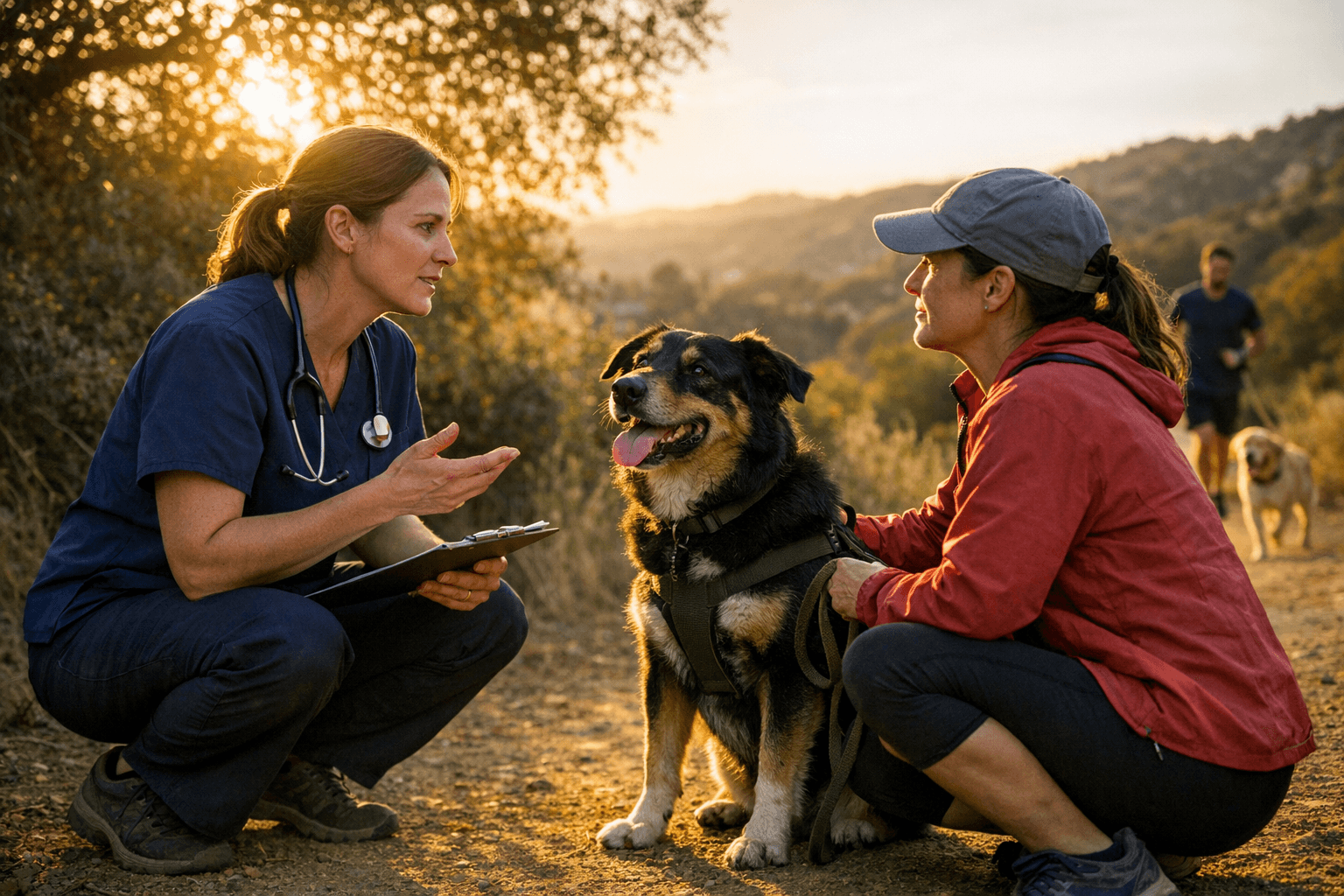
Before you start a new routine, VCA / vcahospitals is clear: "Before initiating any regular physical fitness plan for your dog, it is best to consult your veterinarian." A vet will review age, body condition, and overall health to set realistic targets for session length and intensity, and to adapt activities for medical conditions or breed traits. That step helps avoid pushing puppies, seniors, or dogs with chronic problems into unsafe work.
VCA / vcahospitals lays out the training arc: "Steady, progressive conditioning is the best approach for dog fitness, just as it is for human fitness." Progress should be gradual and measured. When increasing activity, aim for small week-to-week increments in time and intensity so muscles, joints, and cardiovascular systems adapt without injury. "When conditioning a dog to increase fitness, consistency is key. It is better to take a 20-minute walk every day than a 2-hour walk on Sunday." Daily shorter sessions are more effective and kinder on a dog’s body than infrequent marathon outings.
Owners looking for performance outlets can advance a conditioned dog into higher intensity sports. VCA / vcahospitals notes options such as field trialing, flyball, or agility competition for dogs that need extra challenge and have the right health profile. Veterinarians can help map that path and set safe benchmarks for training volume and recovery.
Practical readiness checks are available in clinic-style checklists used by community caregivers. Evhkirkland (checklist excerpt provided) lists observable indicators to confirm before increasing exercise:
Does not tire easily after moderate exercise. Does not have seizures or fainting episodes.
Has a normal appetite, with no significant weight change. Does not vomit or regurgitate food.
Has normal appearing bowel movements (firm, formed, mucus-free). Doesn’t scoot on the floor or chew under the tail excessively.
Has a full glossy coat with no missing hair, mats or excessive shedding. Doesn’t scratch, lick or chew excessively.
Has skin that is free of dry flakes, not greasy, and is odor-free. Is free from fleas, ticks or mites.
Has a body free from lumps and bumps. Has ears that are clean and odor-free.
Doesn’t shake head or scratch at ears.
Doesn’t rub face and ears on the carpet after eating. Has eyes that are bright, clear and free of discharge. [...] • Has normal hearing and reactions to the environment. Walks without stiffness, pain or difficulty.
Has healthy looking feet and short nails (including dewclaws). • Breathes normally, without straining or coughing.
Has normal thirst and drinks the usual amount of water at the same frequency.
Urinates in the usual amount and frequency; color is normal, no unusual odor. • Has a moist nose, free of discharge.
Has clean white teeth, free from plaque, tartar or bad breath.
Has gums that are moist and pink with no redness, swelling or offensive odor.
Has no offensive habits (biting, chewing, scratching, or spraying urine, or aggressive behavior. [...] • Prevent “accidents” at night or when left alone.
Effectively confine your dog when over-excited or bothered. • Travel with your dog without risk of the driver being distracted or your dog getting loose YOUR DOG CAN • Enjoy the privacy and security of a “den” of their own.
Easily learn to control their bowels and to associate elimination only with the outdoors or other designated locations.
Be conveniently included in family outings, visits, and trips instead of being left behind.
Use the checklist as a practical snapshot: if your dog meets most items, a vet-approved conditioning plan can begin. For dogs that lag on one or more checks, prioritize a vet visit before stepping up activity.
What this means for readers is straightforward. Start with a veterinary check, favor daily steady sessions over occasional long efforts, and increase time and intensity slowly. Follow observable health cues and work with your veterinarian to keep tails wagging and paws healthy as you level up your dog’s fitness.
Know something we missed? Have a correction or additional information?
Submit a Tip