Humanoid Robots at CES Show New Dexterity, Card Dealing to Grocery Fetching
At CES in Las Vegas, humanoid robots demonstrated sharper manual skills, performing tasks from dealing cards at a blackjack table to autonomously fetching items from store shelves and working in warehouses and pharmacies. The demonstrations underscore potential service uses in retail, logistics and hospitality while highlighting persistent technical, economic and ethical barriers that will shape how and when these machines enter everyday life.
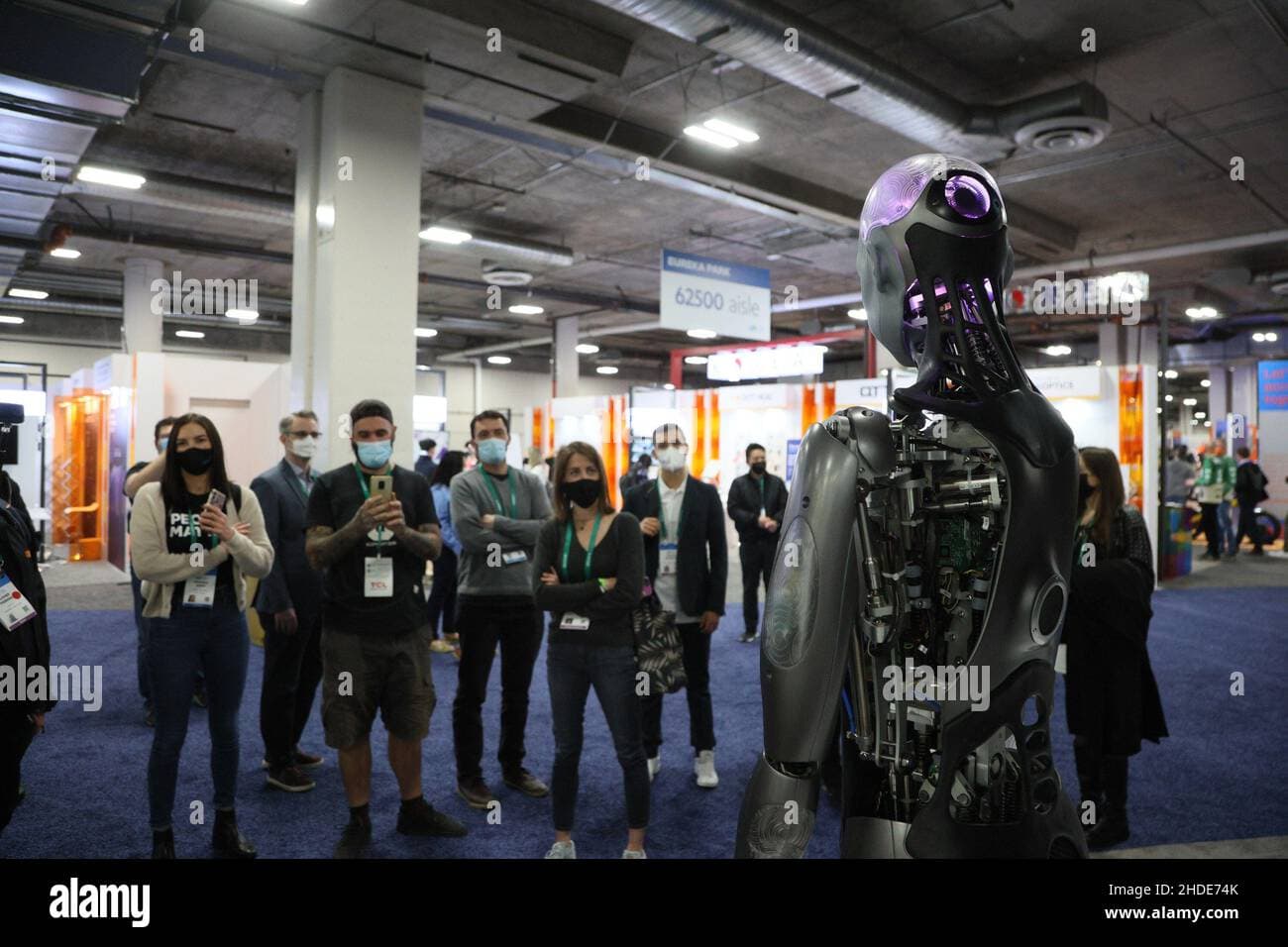
Humanoid robots on the CES show floor in Las Vegas are moving past stage tricks toward tasks that resemble real-world service work. Today exhibitors ran demonstrations of machines picking specific items from shelves, operating in warehouse and pharmacy settings, assisting customers in retail spaces and undertaking hospitality roles that require face-to-face interaction. One particularly striking manipulation demo showed a robot dealing cards in a blackjack simulation, a test of handling small, delicate objects.
Companies displayed a range of designs, from compact companions intended for entertainment or casual interaction to larger, near-humanoid devices built for kitchens, laundries and commercial logistics. A device called NOSH was presented as a robo-chef for the home; the exhibitor described its vision system and control software as able to manage cooking processes and ensure meals are cooked "to perfection." On the show floor engineers pointed to possible applications spanning private kitchens, restaurant or hotel back-of-house tasks and pharmacy fulfillment.
A central technical advance highlighted at the event is tactile-sensor technology aimed at giving robotic hands better touch and feedback. XELA Robotics showcased a product called U-Skin, a flexible sensor layer designed to improve grip and manipulation. Alexander Schmitz, the company's chief executive, framed the technology as a complement to human labor: "We don't want to replace humans, we want to assist humans." Exhibitors said the sensor improvements and advances in computer vision are helping robots perform tasks that have traditionally been hard to automate.
Despite the demonstrations, limitations remain pronounced. Machines on display operated more slowly than human workers, required significant power and were comparatively costly to build and run. Developers acknowledged that many systems are still in trial phases; some are already being tested in kitchens and warehouses, while others remain years from commercial deployment. All told, exhibitors and analysts framed the rollout as incremental, with one characterization that "the future of robotics will arrive in pieces."

Ethical and safety questions attended the optimism. Engineers and ethicists at the show warned that technologies capable of tracking human movement or business patterns could create privacy and surveillance risks if deployed without safeguards. There are also concerns about safety in mixed human-robot environments and the potential for workforce disruption as certain tasks become automatable.
Visually, the machines are approaching more humanlike motion but remain recognizably robotic. Observers noted that companies are "edging closer" to human-like behavior, while also pointing out that "none of the robots on display would be mistaken for actual humans." The demonstrations at CES underscore a practical reality for the industry: advances in sensing and manipulation are expanding what robots can do, but broad commercial adoption will depend on improving speed, energy efficiency and cost, and on addressing the regulatory and ethical frameworks that must accompany deployment.
As firms move from demos to trials in retail, hospitality and logistics, policymakers and employers will face questions about where these machines are useful and how to manage the social trade-offs they create. The work shown in Las Vegas makes clear that the next phase of robotics will be more about augmenting specific workflows than about instant, wholesale automation.
This article was produced by Prism’s automated news system from verified source data, official records, and press releases, then run through automated quality and moderation checks before publishing. The system is built and supervised by the people who set the standards it runs under. Read our full AI policy.
Did this article answer your question?
%3Amax_bytes(150000)%3Astrip_icc()%2FCertificate-of-deposit-2301f2164ceb4e91b100cb92aa6f868a.jpg&w=1920&q=75)