Hundreds promoted in Goldman Sachs MD rounds reshape pay, staffing and careers
Hundreds of bankers moved into managing director ranks in Goldman's multi-hundred MD cycles, shifting pay bands, bonus pools and team structures with wide effects for employees.
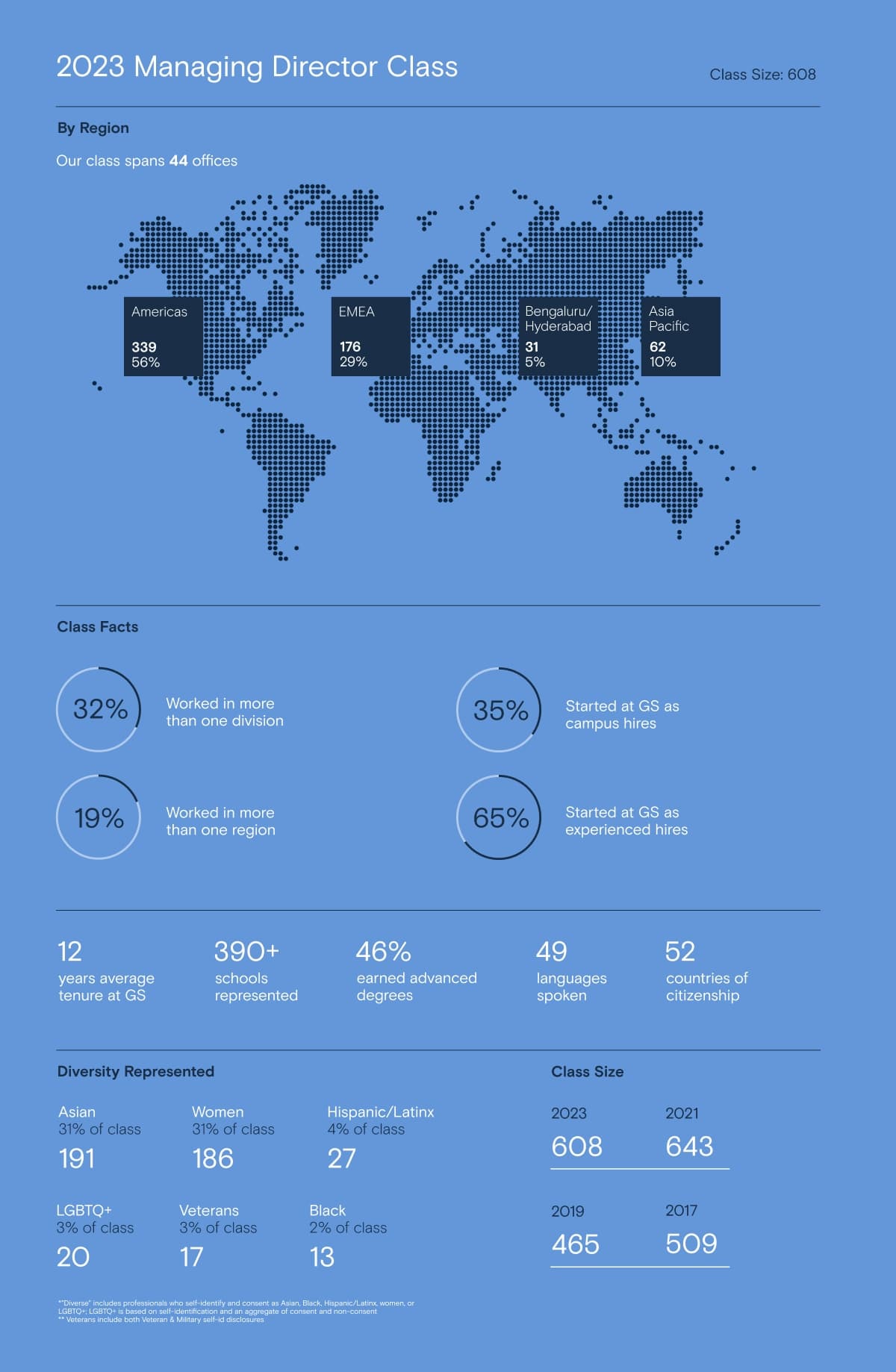
Goldman Sachs' periodic promotion rounds to managing director continue to be a seismic event for the firm’s workforce, redistributing pay, authority and staffing across businesses. Large cohorts - a recent example included a 638-person class in 2025 - push compensation bands higher, reconfigure leadership slates and create knock-on effects for promotions, hiring and retention across regions from the Americas to EMEA and APAC.
At the top of the inverted pyramid, MD promotions alter how bonus pools are allocated and expand the number of people carrying formal leadership responsibilities. That expansion changes expectations for coverage partners and deal teams: newly minted MDs typically take on larger client relationships, more origination duties and oversight of junior bankers. The result is both immediate changes to pay for promoted individuals and a broader reshuffling of who manages workstreams and who is on the bench waiting for the next promotion window.
For junior and midlevel staff, multi-hundred MD classes tighten the ladder in the short term even as they open leadership slots over time. As more people move up to MD, the firm often backfills with senior vice presidents and directors promoted into greater responsibility, which then creates openings for associates and analysts. But the pacing matters: big cohorts can lead to a period of compressed progression and alter internal mobility patterns, prompting some employees to look laterally or to other firms if they expect slower upward movement.
Geography and business mix also shape outcomes. Large promotion rounds that include substantial representation from the Americas, EMEA and APAC mean that staffing changes are felt globally rather than concentrated in a single office. Investment banking, markets and asset management each absorb promotions differently; front-office revenue generators tend to receive the most visible role shifts, while support functions see the effects through changed reporting lines and headcount planning.

For managers, the rounds force rapid updates to team structures and succession plans. Compensation committees and heads of business must account for increased fixed and variable pay commitments, while human resources and talent teams rework mentoring, evaluation and development programs to accommodate a larger MD population. That can alter next-cycle promotion criteria and the cadence of performance conversations.
What this means for employees is practical and strategic. Track the promotion cadence at your business, seek clarity from managers on the criteria that matter for promotion, and use mentoring relationships to position for longer term mobility. Watch compensation band movements and bonus pool signals to understand where leadership is prioritizing investment.
As Goldman continues to run large MD promotion cycles, employees should expect recurring shifts in pay structure, team leadership and internal mobility. Those dynamics will shape career planning, hiring activity and retention across the bank in the months and years ahead.
Sources:
Know something we missed? Have a correction or additional information?
Submit a Tip