Hyperenergetic Dogs Thrill Crowds at Masters Agility Championship, 150th Westminster
Border collies, whippets and golden retrievers raced through about 20 obstacles in the Masters Agility Championship at Westminster, showcasing split-second handler-dog communication and high-stakes tactics.
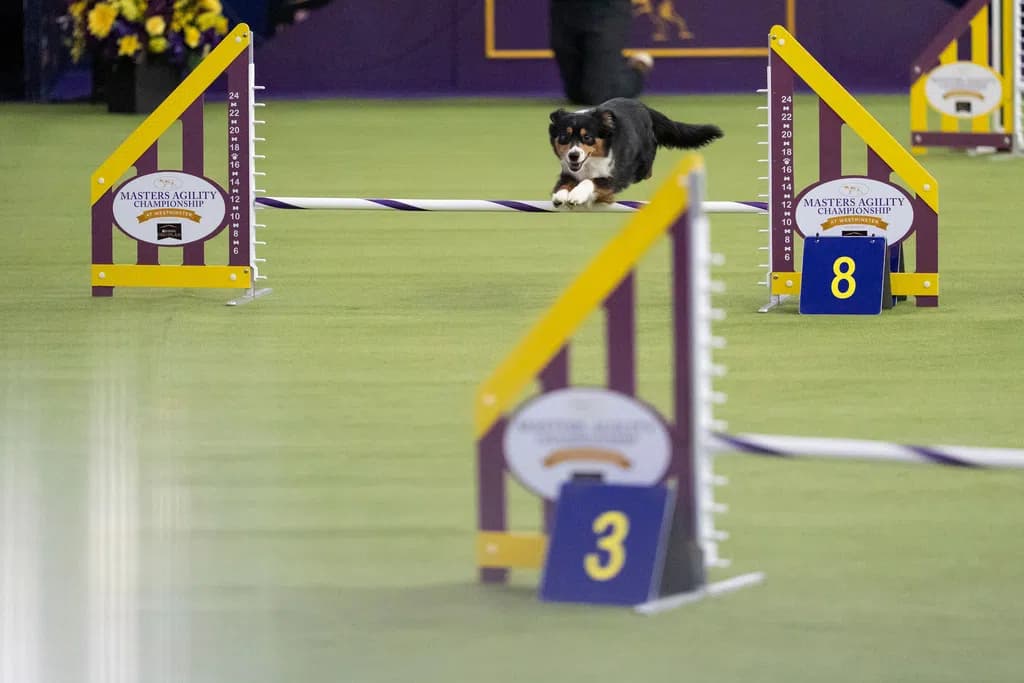
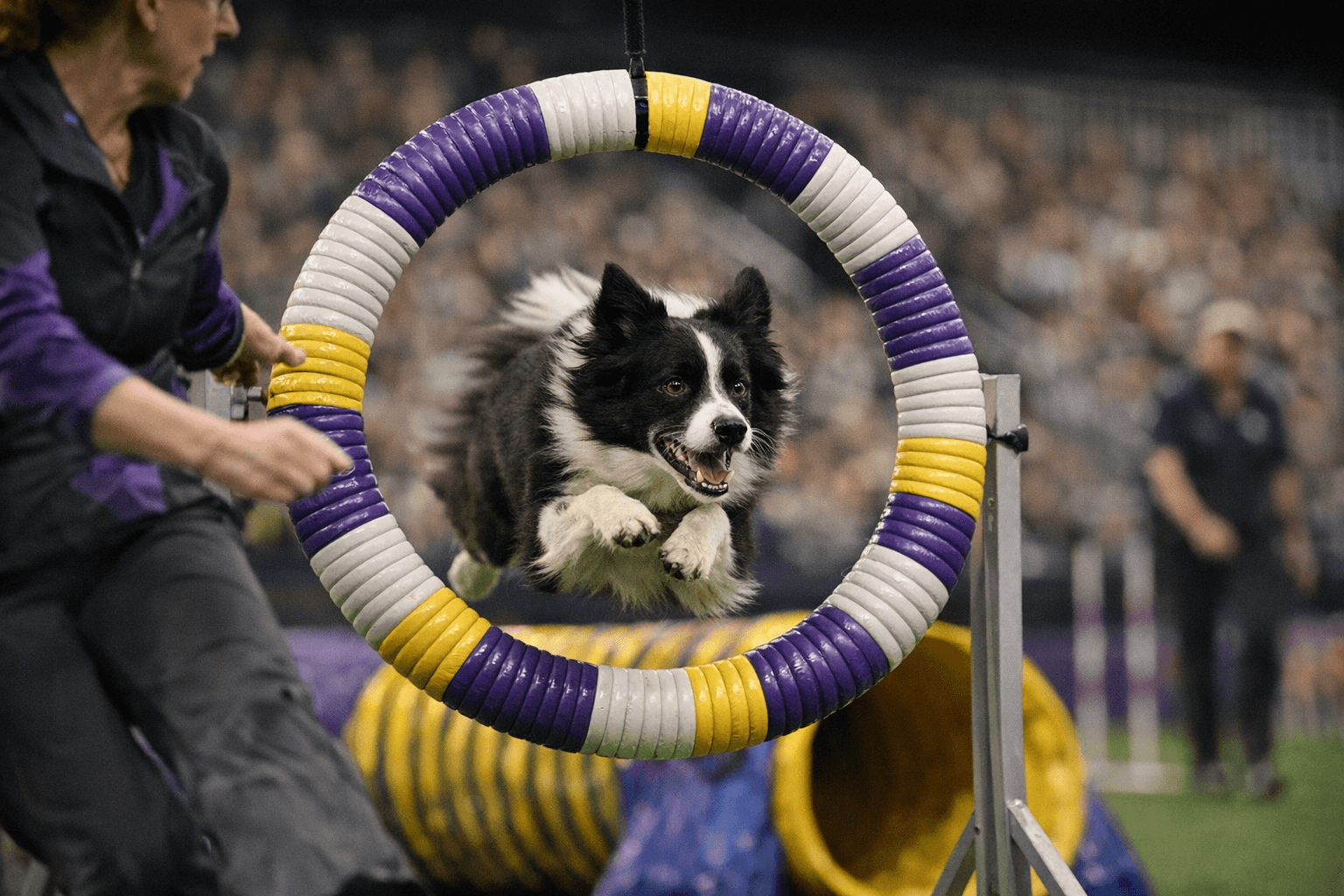
Border collies, whippets and golden retrievers thrilled the crowd at the Masters Agility Championship finals held during the 150th Westminster Kennel Club Dog Show in New York on Jan. 31, 2026. The event underscored why agility has become a centerpiece of Westminster since it was added in 2014: fast, athletic, and fiercely tactical runs that test both dogs and handlers.
Agility trials at Westminster demand precision. Dogs run without leashes, treats or toys on course and must move through about 20 obstacles while handlers rely on memorized pathways and split-second decisions. Course maps are handed out only the morning of competition, and handlers get a few minutes to walk the layout and plan whether to cross ahead of or behind the dog on key turns. Scores hinge on both accuracy and time, forcing handlers to balance speed with clean contacts and correct turns.
Communication between handler and dog is central to success. "Agility is a big conversation that we’re having with our dogs," said Emily Klarman, the Westminster Masters Agility Championship-winning handler who practiced with her border collie Swish at UDog Agility in Huntingdon Valley, Pa., on Jan. 15, 2026. Klarman demonstrated the nuance of that conversation in practice, saying "Easy," and watching as Swish slowed "a touch" on a jump. She also noted that dogs "can definitely tell whether we're really excited and pumped up, or we're disappointed," and she kept her emotions in check when her previous winner, Vanish, faltered on a seesaw in last year’s finals.
Handlers mix verbal cues and body language to steer runs. Yelled commands such as "tunnel!" and "jump!" and, in some cases, "left!" and "right!" pair with gestures and the subtle turn of shoulders so dogs read intent and stay on target. "It's all about giving them the information they need," said Lee Ann Donner between runs with her whippet, Gus. Dogs frequently answer that information with barks of enthusiasm, and handlers watch their eyes and posture to anticipate distractions. McCune of Bedford, New Hampshire described that bond this way about singleton puppy Prove-It, whom she bottle-fed: Prove-It "has always 'run with the heart of a lion, just unabashed ambition, but it's our bond' … 'I'm just so grateful that I can be his person.'"
Practical takeaways for competitors and club-level trainers are immediate: expect course maps only on competition morning and practice fast mental mapping; prioritize reading your dog’s focus and body language during the brief course walk; and plan handling moves - crossing ahead or behind - before the whistle. Post-run rewards remain important because on-course incentives are banned; Cindy McGovern said Georgie, a golden retriever, "gets a toy stuffed with steak, meatballs or hot dogs" while awaiting a run.
Agility at Westminster continues to broaden the show's appeal and field — mixed-breed competitors like Nimble, a border collie–papillon mix that won in 2024, still place among the top performers. For handlers and clubs, the takeaway is clear: sharpen the "big conversation" with your dog, rehearse course-walk tactics, and focus on clean, fast runs — the sport rewards partnership as much as speed.
Know something we missed? Have a correction or additional information?
Submit a Tip