Hyundai union warns against humanoid robot rollout, citing job threats
Hyundai's Korean union demands approval before humanoid Atlas robots are deployed, arguing the plan risks widespread job losses and workplace upheaval.
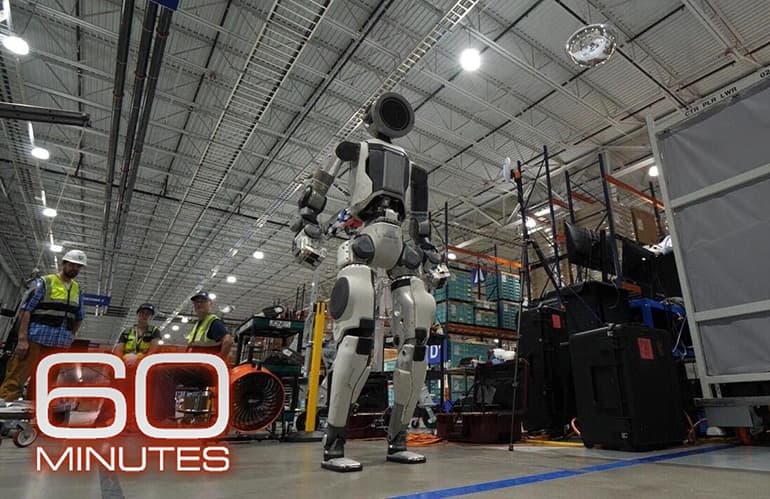
Hyundai Motor’s largest labour union has formally warned the automaker not to deploy humanoid robots across its factories without union approval, saying the planned rollout would cause “employment shocks.” The warning intensifies a debate between management’s push for advanced automation and workers’ fears over job security as the company prepares to introduce Atlas robots to its production lines.
Hyundai Motor Group plans to begin deploying Boston Dynamics’ Atlas humanoid robot at its U.S. manufacturing plant in Georgia starting in 2028, with intentions to expand adoption across its global manufacturing network once performance is verified. Hyundai controls Boston Dynamics and unveiled a production version of Atlas at a major trade show last month. The company positions the initiative as a move into “physical AI,” integrating artificial intelligence with hardware to carry out real-world tasks autonomously.
Hyundai has said Atlas will initially perform parts-sequencing tasks from 2028, move into component assembly by around 2030 and then take on heavier, repetitive and complex operations as safety and quality are validated. The robots are described as human-scale machines with tactile-sensing hands, the ability to lift up to 50 kilograms, and capability to operate across temperatures from minus 20 degrees Celsius to 40 degrees Celsius. Hyundai frames the program as a way to reduce physical strain and risk for human workers by taking on higher-risk tasks.
Financial markets have reacted to the announcement, with Hyundai shares rallying to record highs amid investor optimism about the company’s robotics ambitions. Yet the company has not disclosed the initial number of robots to be deployed, the project's cost, or detailed timelines beyond the 2028 start for parts sequencing. Unconfirmed business-circles claims circulating in Korea set a target of securing annual robot production capacity of 30,000 units by 2028, a figure Hyundai has not confirmed.

The labour warning comes amid broader unease across the auto industry about automation and workers’ rights. At Hyundai affiliate Kia, union representatives have pushed for new bodies to address labour issues in the AI era. Tensions at Hyundai’s U.S. operations have also been visible: a high-profile immigration raid at a Hyundai-operated battery plant in Georgia in September 2025 resulted in arrests and political fallout, underscoring the complex social and political context in which automation will be adopted.
Industry peers including Amazon, Tesla and BYD have similarly signalled interest in humanoid robotics, highlighting a wider shift toward integrating advanced robots in manufacturing. Company executives argue that human roles will persist in robot training, oversight and management, but unions contend that large-scale adoption without negotiated protections could displace many frontline workers.
The union demand for prior agreement places pressure on Hyundai to open talks on scope, safeguards, redeployment and retraining plans before any widescale deployment. Absent clearer disclosures on costs, volumes and transition policies, negotiations are likely to focus on employment protections, phased implementation, and independent safety verification. Regulators and policymakers will also face questions about how labour laws and industrial standards should adapt as manufacturers move from conventional automation to humanoid, physically autonomous systems.
This article was produced by Prism’s automated news system from verified source data, official records, and press releases, then run through automated quality and moderation checks before publishing. The system is built and supervised by the people who set the standards it runs under. Read our full AI policy.
Did this article answer your question?


