ICE Presence at Airports May Continue Even After TSA Pay Resumes
ICE agents deployed to 14 U.S. airports may stay even after 50,000 TSA workers receive paychecks, border czar Tom Homan said Sunday.
We'll see."
Those two words from White House border czar Tom Homan on CNN's "State of the Union" Sunday were the clearest signal yet that ICE agents, now stationed at airports across the country, may not leave even after the 50,000 TSA workers they were sent to supplement begin receiving paychecks.
Homan elaborated with conditions: "It depends how many T.S.A. agents come back to work. How many T.S.A. agents have actually quit and have no plan coming back to work? I'm working very closely with the T.S.A. administrator and the ICE director to decide what airport needs what."
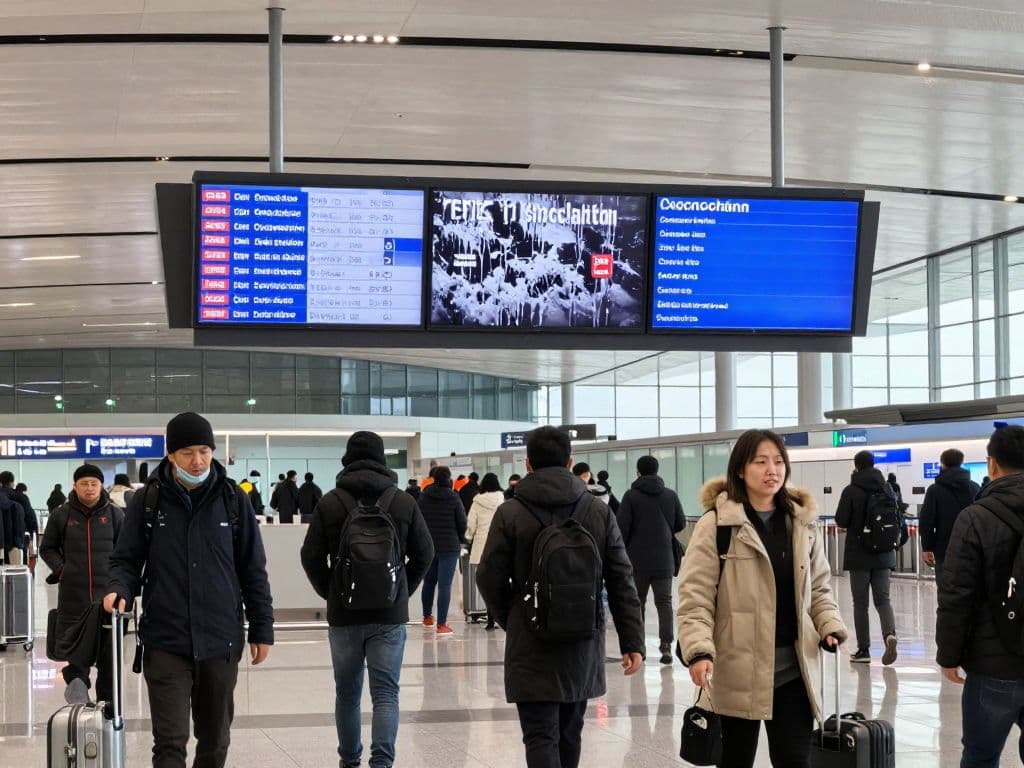
The ambiguity lands on travelers at 14 airports where ICE agents were deployed beginning March 23, as the DHS shutdown entered its sixth week. The airports span some of the busiest hubs in the country: Atlanta's Hartsfield-Jackson International, New York's JFK and LaGuardia, Houston's George Bush Intercontinental, and New Orleans' Louis Armstrong International, among others. At Chicago's O'Hare alone, Mayor Brandon Johnson said approximately 75 ICE officers were expected across multiple shifts. The total number of agents deployed nationally has not been made public.
Officially, ICE has been assigned to check identification and fill what Homan called "other security holes," freeing remaining TSA staff to focus on specialized tasks such as operating luggage-scanning equipment. TSA union officials pushed back, saying ICE agents lack the airport-specific training needed to meaningfully assist travelers at checkpoints. The American Civil Liberties Union warned that placing immigration enforcement officers inside screening environments blurs the line between security and immigration policing in ways that affect anyone who passes through.

That concern took on concrete form last week when ICE arrested two women, Angelina Lopez-Jimenez and Wendy Godinez-Jimenez, at San Francisco International Airport. DHS said both carried final removal orders from an immigration judge dating to 2019 and characterized the arrest as unrelated to the airport deployment program. But the episode, captured on video, prompted a bystander to file a complaint with the California Department of Justice and focused fresh scrutiny on whether ICE agents stationed at checkpoints might use access to DHS passenger databases for enforcement beyond the stated ID-checking mission.
The staffing collapse that brought ICE to airports is severe. TSA Acting Administrator Ha Nguyen McNeill told lawmakers last Wednesday that more than 480 TSA officers have quit since congressional disagreements triggered the DHS funding lapse in February. Absences at some airports reached 40 percent; at Hartsfield-Jackson, the world's busiest passenger airport, roughly 37 percent of TSA workers called out on a single Tuesday. Across the country, about 50,000 transportation security workers have been working without pay, missing multiple paychecks.
Pay appeared to be moving closer. President Trump signed a memo ordering TSA workers to be paid from existing funds, and a DHS social media post on Friday said paychecks could arrive as early as Monday. The funding mechanism remained unresolved; Congress has not allocated the money, and it was unclear which accounts would cover the cost.
Homan said security lines had already shortened. Legal advocacy organizations, including the Alameda County Immigration Legal Education Partnership, have advised travelers to carry proof of lawful status, build extra time into airport arrivals, and consult an attorney before flying if they have open immigration matters. One week after ICE arrived at checkpoints, the question for many travelers is no longer simply how long the line will be, but who will be asking for their documents when they reach the front.
Know something we missed? Have a correction or additional information?
Submit a Tip