Idaho boy invites special needs friends to birthday party
Grant Mullen asked for one birthday gift: invite everyone at Specialized Needs Recreation, because he knew they rarely get asked to parties.
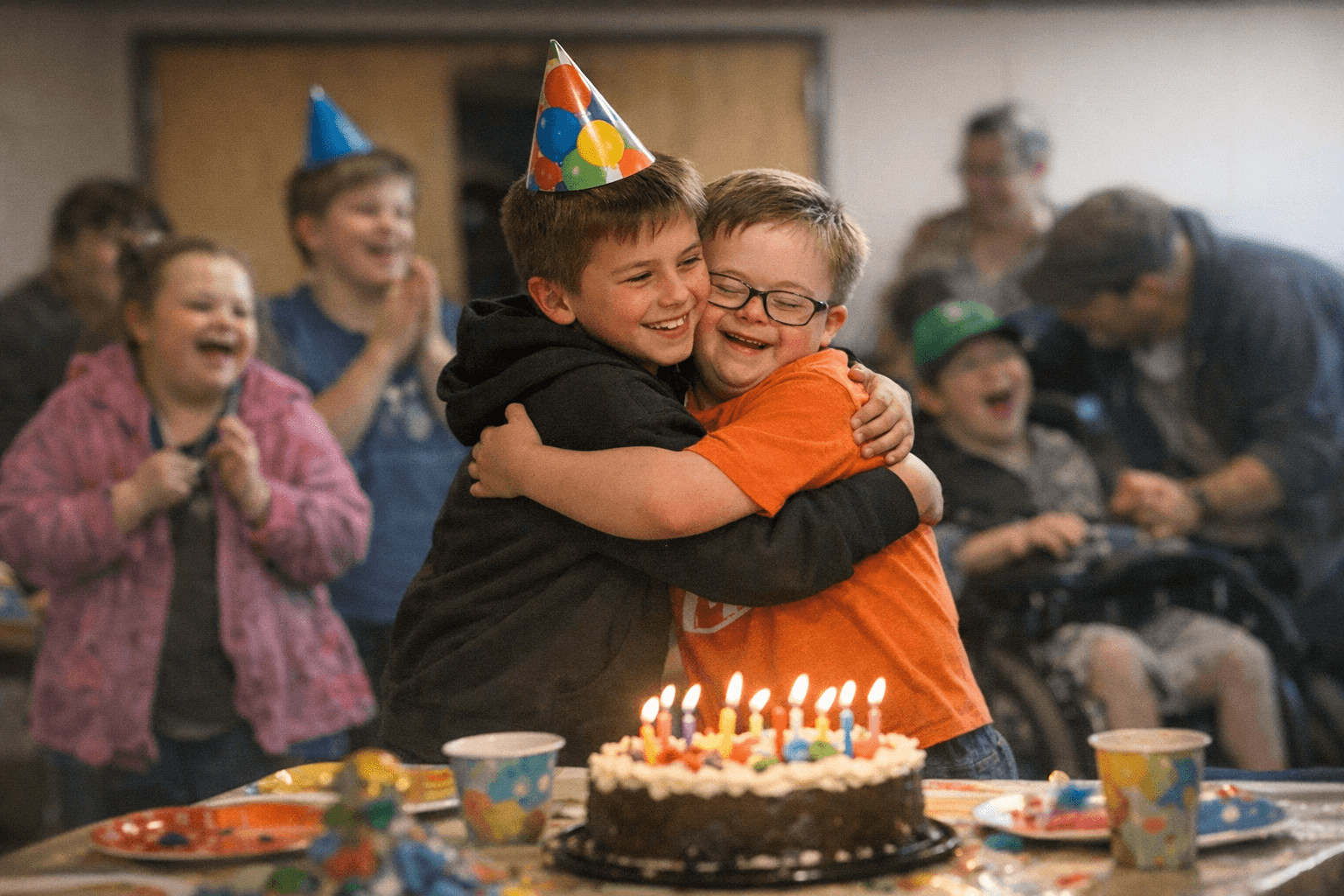
Grant Mullen did not want a bigger cake or a pile of presents for his birthday. The Coeur d'Alene boy wanted every friend he had made at Specialized Needs Recreation on the guest list, because, as he put it, they do not get invited to birthdays.
That instinct came from time spent alongside his father, Mark Mullen, at the nonprofit known as SNR. Mark had begun volunteering there first, then brought Grant along, turning a dad’s volunteer shift into a lesson in belonging. The result was more than a family gesture. It was a child recognizing that a basic social ritual, a birthday invitation, can be one of the first places where children with disabilities are left out.
SNR, short for Specialized Needs Recreation, has spent more than 40 years building those kinds of connections in North Idaho. Founded in 1984 by parents looking for recreational opportunities for children with disabilities, the organization serves youth and adults ages 8 and older from all North Idaho counties. Its programs are built around inclusive recreation and social opportunities, filling a gap that many families say remains visible long after school ends and organized services are over.
The scale of that need has grown alongside the organization. A 2021 local profile said SNR had 300 participants at the time, and by 2026 the nonprofit said it had outgrown its current 2,000-square-foot facility. Plans call for a 20,000-square-foot Building Belonging project, with a cost estimated at $3.5 million to $5 million, a sign that demand has outpaced the modest space the group has relied on for years.
Lindsay Patterson, SNR’s executive director, said the new facility would create a permanent, inclusive indoor recreation area for the community. That vision reflects the same social truth embedded in Grant Mullen’s birthday wish: inclusion is not just about access to therapy or structured programming. It is also about being remembered for ordinary things, like parties, games and being asked to come along.
Grant’s invitation was simple, but it exposed a larger problem. Families of people with special needs often have to fight for participation in spaces most children take for granted. In Coeur d'Alene, one 9-year-old understood that better than many adults, and his birthday became a small but vivid measure of what real inclusion looks like when it reaches beyond the walls of a nonprofit and into everyday life.
This article was produced by Prism’s automated news system from verified source data, official records, and press releases, then run through automated quality and moderation checks before publishing. The system is built and supervised by the people who set the standards it runs under. Read our full AI policy.
Did this article answer your question?

