Illinois College Students Help Reveal Umami-Like, Nutrient-Rich Orchid Nectar
Illinois College students helped identify nutrient-rich orchid nectar with an umami-like compound, strengthening local ties to international conservation and offering hands-on lab experience.
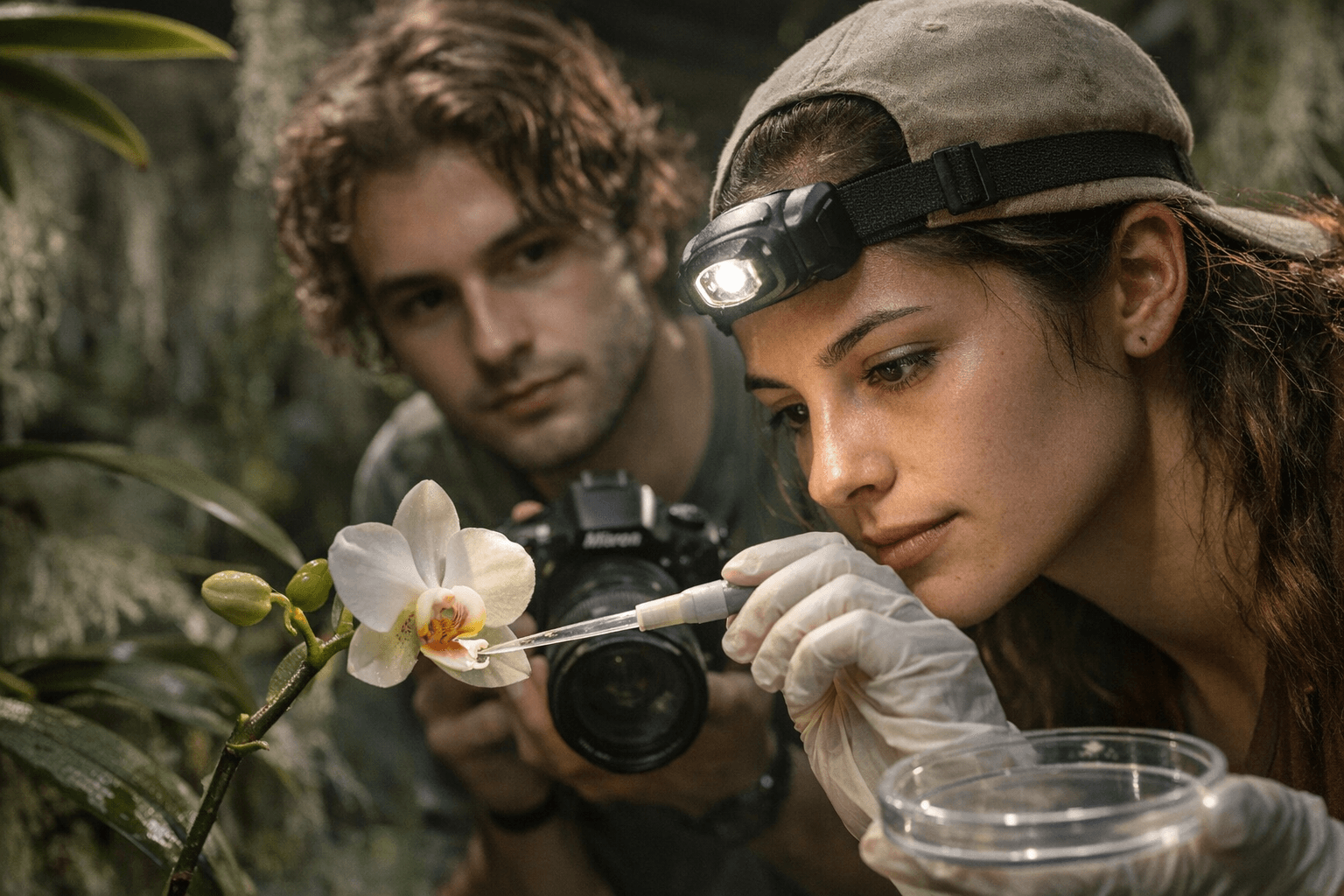
Illinois College students and faculty are helping reveal a surprising mix of nutrients and flavor cues in orchid nectar that may influence pollinator behavior and bolster local conservation efforts. Using high-performance liquid chromatography in the Parker Science Building, Associate Professor Brent Chandler and student Sydni Maggart analyzed nectar from Darwin orchids cultivated at Royal Botanic Gardens, Kew in London and found sugars, amino acids, and an unidentified compound with an umami-like profile similar to monosodium glutamate (MSG).
The finding, part of an ongoing international collaboration between Illinois College’s biology and chemistry departments and Kew, reframes orchid nectar as more than a simple sugar solution. Researchers describe the nectar as a nutrient-rich "power milkshake" for pollinators, combining quick energy from sugars with amino acids and a savory signal that may encourage repeat visits by insects and birds. Several scientific papers based on the work are forthcoming.
The methods and setting emphasize local technical capacity. The analyses were performed on campus equipment in the Parker Science Building, giving Illinois College students direct experience with advanced analytical chemistry tools such as high-performance liquid chromatography. That practical training links Morgan County students to global botanical conservation networks and raises the college’s profile as a site for meaningful research collaborations.
The partnership also connects to wider conservation success. The collaboration is part of Illinois College’s ongoing work with Orchid Conservation Chelsea, which recently won a gold medal at the Chelsea Flower Show, a high-profile accolade for horticultural science and public engagement. Those results help validate the scientific and public-facing aspects of the project and may attract further institutional support.
For Morgan County residents, the work matters on several fronts. Hands-on research opportunities at Illinois College provide local students with marketable lab skills that are useful in biotechnology and environmental sciences. The findings also have practical implications for regional conservation and agriculture: better understanding of what attracts and nourishes pollinators can inform habitat plantings in community parks, private gardens, and farm margins. Pollinator health remains a local concern for growers and gardeners who depend on insects and birds for crop pollination and ecosystem services.
Looking ahead, the research will produce peer-reviewed papers and sustained collaboration with Kew and Orchid Conservation Chelsea, and it may create new pathways for student internships, grant-funded projects, and public outreach in Jacksonville and greater Morgan County. The immediate takeaway for readers is that local students are at the center of international science that sheds new light on how plants feed and entice their pollinators, with potential benefits for conservation and local scientific opportunities.
Sources:
Know something we missed? Have a correction or additional information?
Submit a Tip