India and China discuss gradual normalisation at BRICS meeting
India and China said ties were moving toward gradual normalisation as Ajit Doval met Wang Yi in New Delhi, but the 2020 border rupture still hung over the talks.

Ajit Doval and Wang Yi used a BRICS security meeting in New Delhi to project cautious thawing between India and China, with India’s foreign ministry calling their discussion “constructive and forward-looking” and saying the two sides noted progress toward gradual normalisation. The language was deliberate: it pointed to movement without pretending the two powers had settled the core dispute that drove relations into a deep freeze.
That dispute remains the 2020 clash in Ladakh’s Galwan Valley, where 20 Indian soldiers and 4 Chinese soldiers were killed in the deadliest confrontation between the two countries since the 1962 war. The violence pushed relations to their lowest point in decades. They only began to improve in 2024, after years of friction, when India said in October that it had reached a deal with China to resolve the border conflict. That agreement helped open the door to better political and business ties, including a gradual resumption of direct flights and stronger investment and trade flows, but it did not erase military caution along the frontier.
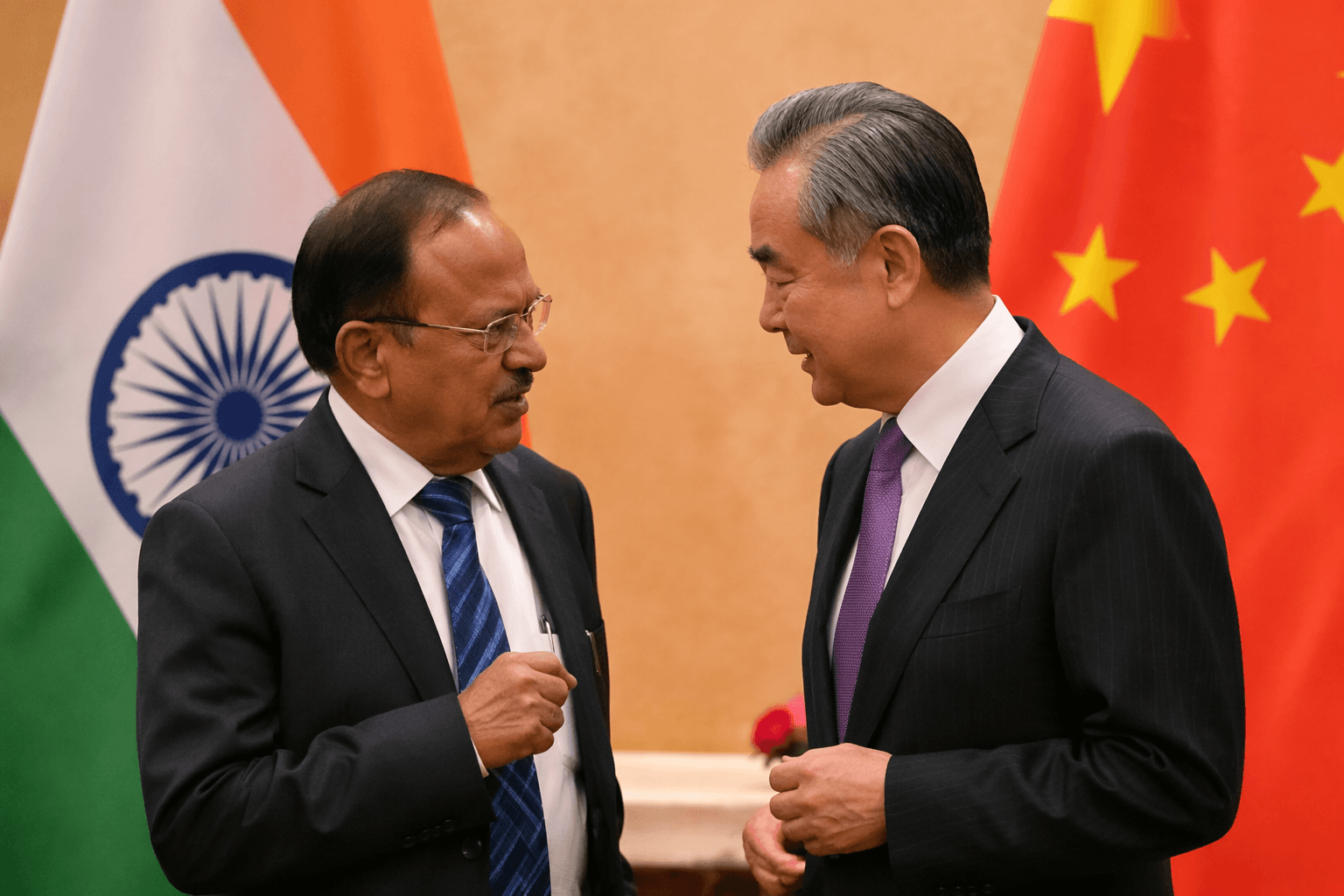
The Doval-Wang meeting took place on the sidelines of India’s BRICS National Security Advisers’ Meeting, which India hosted on June 22-23 in New Delhi and chaired through Doval. The agenda was practical as well as diplomatic, with the gathering expected to focus on non-traditional security challenges, emerging technologies and counter-terrorism cooperation. Wang’s participation came at India’s invitation, a sign that both governments kept channels open even while managing rivalry carefully.
The setting mattered because BRICS has expanded far beyond its original Brazil, Russia, India and China core, with South Africa added later and newer members now inside the grouping. India is also due to host a BRICS summit in September 2026, so the New Delhi exchange was part of a wider diplomatic run-up, not just a bilateral conversation. For all the warmer phrasing, the reality on the ground remains guarded: the frontier dispute has eased enough to allow more contact, but not enough to suggest trust, let alone a full reset, between the two Asian powers.
This article was produced by Prism’s automated news system from verified source data, official records, and press releases, then run through automated quality and moderation checks before publishing. The system is built and supervised by the people who set the standards it runs under. Read our full AI policy.
Did this article answer your question?