India begins first fully digital census, a major administrative shift
India’s first fully digital census will send more than 3 million workers into the field, testing whether self-enumeration and offline apps can reach the hardest-to-count households.

A census worker in Rongli market, Sikkim, captured the scale of India’s latest administrative gamble: the country has begun its first fully digital census, a nationwide count that will shape welfare targeting, public works and political representation in the world’s most populous democracy.
The Government of India says Census 2027 is the 16th census in India and the 8th since independence. It was notified in the Gazette of India on 16 June 2025, with phase I questions notified in January 2026, and it is being carried out in two phases that stretch across the country through 2027.
The first phase, Houselisting and Housing Census, runs from 1 April 2026 to 30 September 2026, within a 30-day window chosen by each state or Union Territory. A 15-day Self-Enumeration window comes just before house-to-house work begins. That phase records household housing conditions, amenities and assets. The second phase, Population Enumeration, will follow in February 2027, with the main reference date fixed at 00:00 hours on 1 March 2027. Ladakh and snow-bound non-synchronous areas of Jammu and Kashmir, Himachal Pradesh and Uttarakhand will be counted earlier, in September 2026, using 1 October 2026 as the reference date.
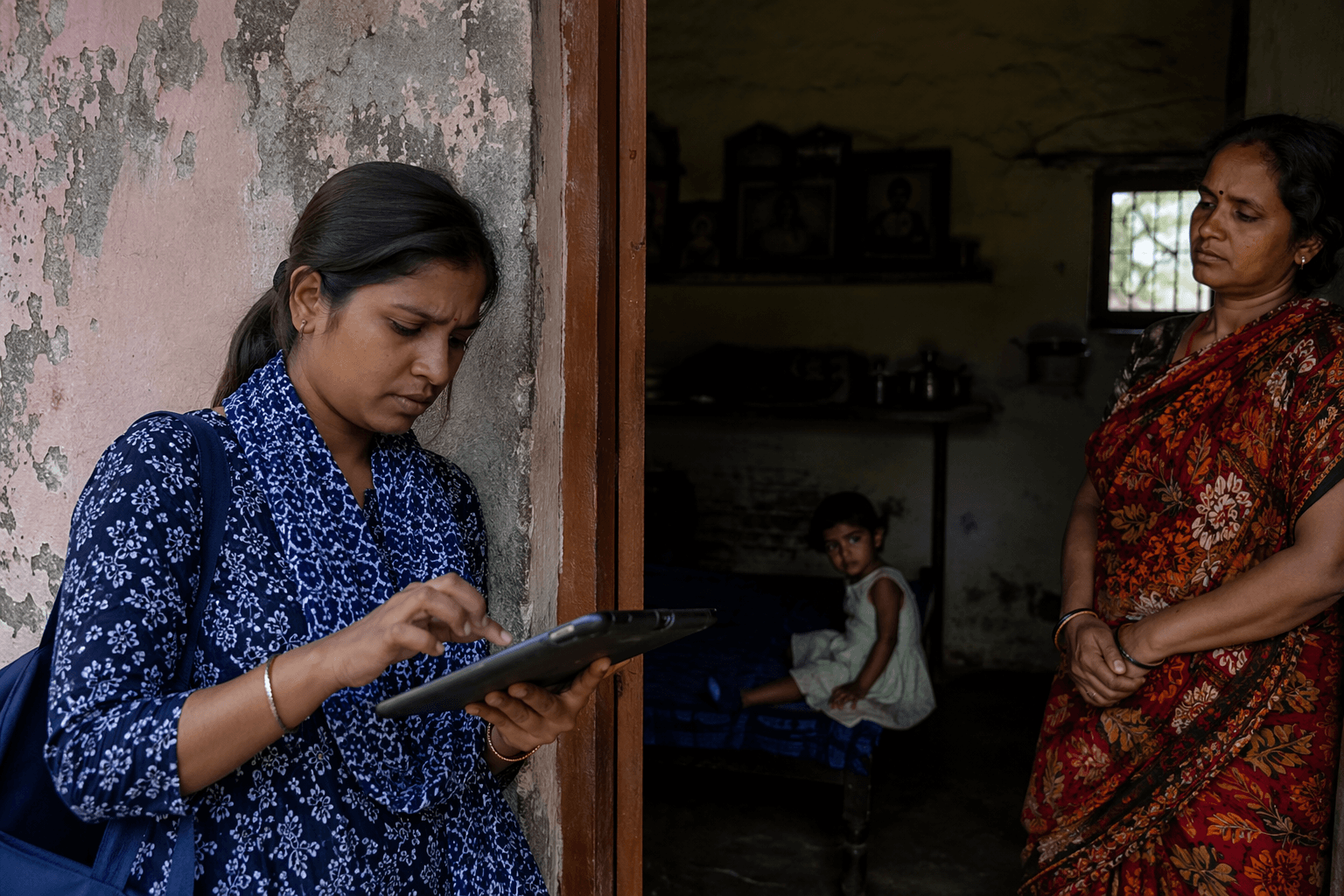
Officials say the census is being built around mobile apps for enumerators, a Census Management and Monitoring System portal, and a secure Self-Enumeration portal that allows residents to enter information online before door-to-door visits. The apps are offline-capable on Android and iOS devices, and paper collection is allowed only in unavoidable cases before later digitization at the charge level. More than 3 million enumerators, supervisors and other officials will take part, or about 30 lakh field functionaries, at a cost of Rs 11,718.24 crore approved by the Cabinet.
The scale of the shift makes the census a test of digital governance as much as of statistics. Better data could improve budget allocations, urban planning and social policy, but uneven connectivity, training gaps and device management could also distort the count for years. Rural residents, migrants, the poor and people with limited digital access are the groups most exposed to being missed if the backups do not work as intended.
The census will also include caste enumeration after the Cabinet Committee on Political Affairs decided on 30 April 2025 to add it. Officials say all individual census data will remain confidential and only aggregated figures will be published, leaving state and local administrators under pressure to deliver a count that is both technologically modern and politically credible.
Know something we missed? Have a correction or additional information?
Submit a Tip