Indiana Senate Rejects Trump Backed Map, Republican Majority Splits
The Indiana State Senate on Thursday voted 31 to 19 to reject a Republican drawn congressional redistricting plan aggressively backed by former president Donald Trump. The defeat exposed fractures within the state GOP, reshaping the national calculus for control of the U.S. House ahead of the 2026 midterm elections.
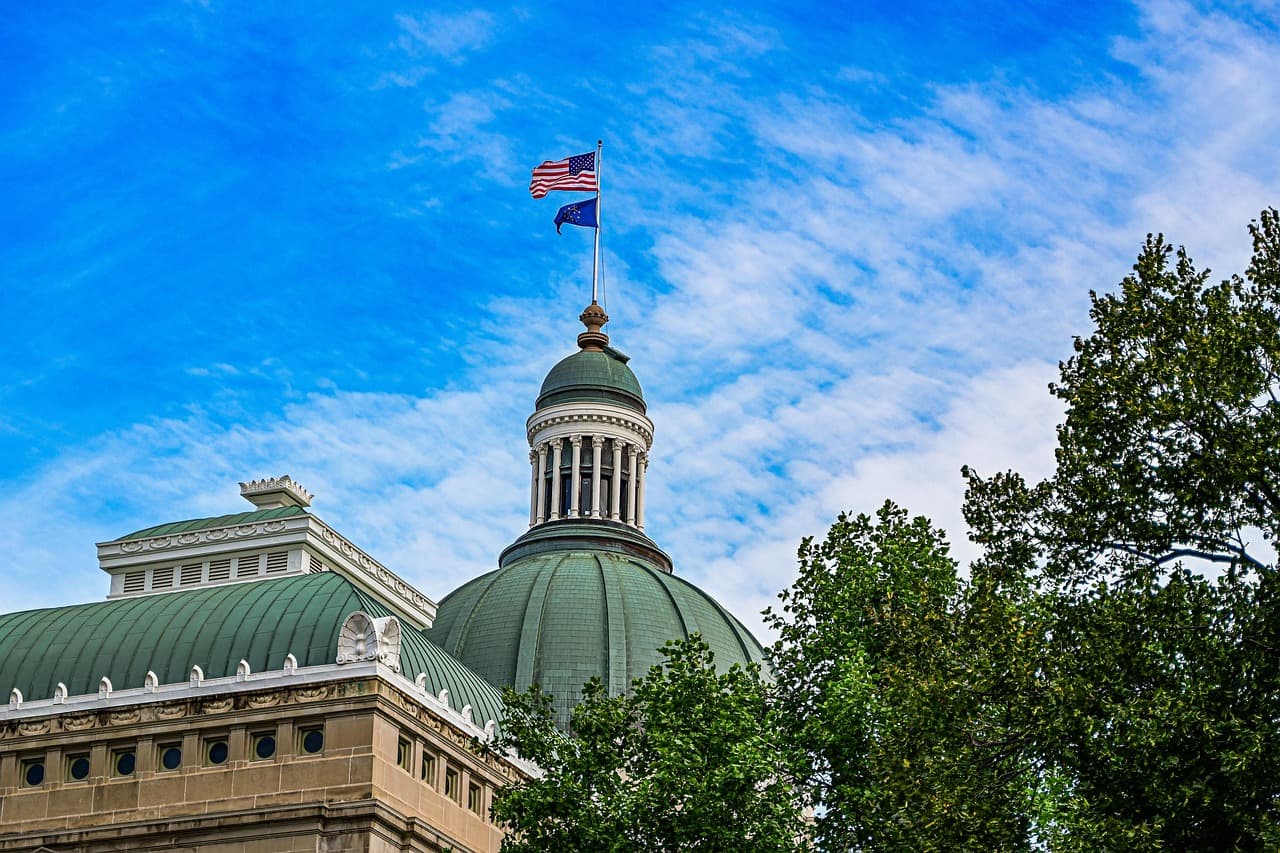
The Indiana State Senate dealt a rare rebuke to a nationwide redistricting push on Thursday when it rejected a Republican drawn congressional map that had been the subject of intense pressure from the White House. The 31 to 19 vote killed legislation that supporters said would have strengthened Republican prospects in upcoming federal contests.
The chamber has 50 members and a large Republican majority. Republicans hold 40 seats, yet in Thursday’s tally 19 Republican senators voted for the proposed map while 21 Republicans joined all 10 Democrats in opposing it. The alignment produced more than half of the GOP conference voting against a measure that had cleared the Indiana House of Representatives the prior week.
Legislative analysts, party strategists and press accounts said the map was designed to substantially tilt the state’s nine congressional districts toward Republicans. According to those accounts, the plan would likely have yielded a 9 to 0 Republican sweep in the next Congress, reshaping two districts then held by Democrats and splitting Indianapolis into four separate districts. State Republican strategists estimated the plan would net the party two additional U.S. House seats.
The vote capped months of lobbying from the former president and his allies. President Trump publicly and privately urged state Republicans to adopt the map and warned opponents that voting no would have political consequences. In a message cited by reporters, he warned that opposing the plan risked "putting the Majority in the House of Representatives, Washington, D.C., at risk and, at the same time, putting anybody in Indiana who votes against this Redistricting, likewise, at risk." Following the vote the president told reporters he had been unable to persuade enough Indiana senators and pointed to redistricting successes in other states.

Senate leadership initially hesitated to bring the measure to a vote. Reports described leadership member Bray as declining at first to hold a vote, citing insufficient support, before reversing course and convening the Senate. Republicans had expected to pick up two U.S. House seats if the plan passed. One lawmaker widely identified in coverage as a potential swing vote, Senator Greg Goode, ultimately voted against the map.
Observers said the result represents a notable setback for the former president’s broader effort to prod Republican controlled states to redraw maps in ways that would advantage the party ahead of the 2026 elections. Control of the U.S. House is narrowly held, with analysts noting Democrats would need to flip as few as three seats to secure a majority, a margin that magnifies the national implications of state level map fights.
Reactions among state and national Republicans were mixed in the immediate aftermath. Some framed the defections as driven by local political calculations and concerns about splitting Indianapolis, while others warned the defeat could complicate national Republican plans for regaining the House. The vote underscored how redistricting fights can produce intra party fracture when high stakes and intense external pressure collide with local electoral realities.
This article was produced by Prism’s automated news system from verified source data, official records, and press releases, then run through automated quality and moderation checks before publishing. The system is built and supervised by the people who set the standards it runs under. Read our full AI policy.
Did this article answer your question?

